


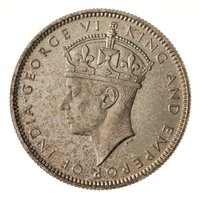
Obverse
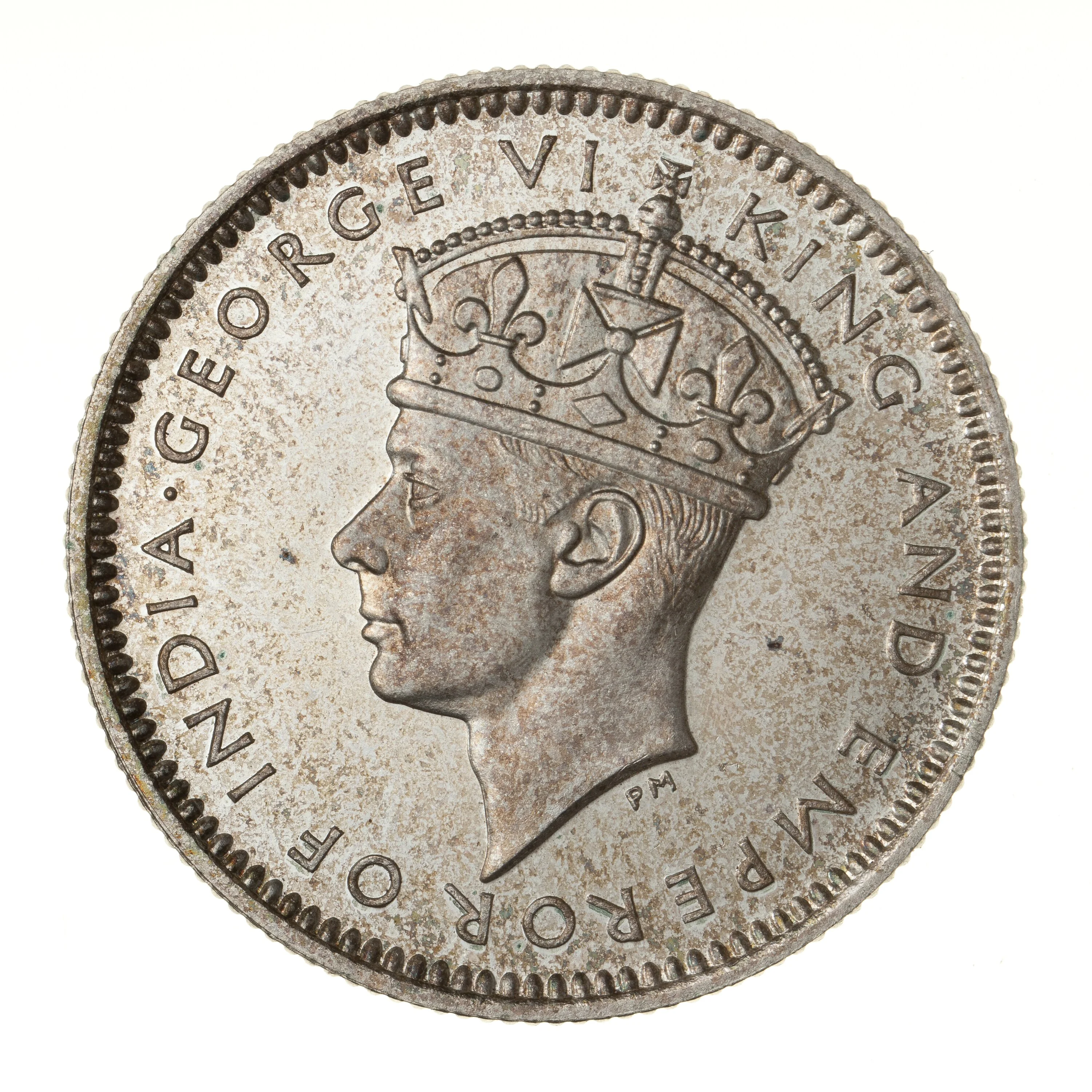
Description:
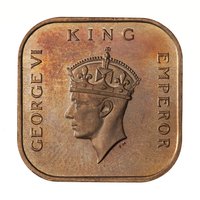
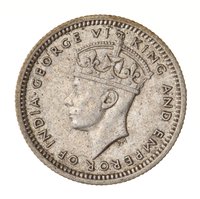
Crowned left-facing bust.
Inscription:
GEORGE VI KING AND EMPEROR OF INDIA ·
Translation:
GEORGE VI KING AND EMPEROR OF INDIA ·
Script: Latin
Language: English
Engraver: Percy Metcalfe
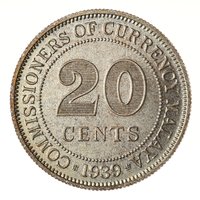
Reverse
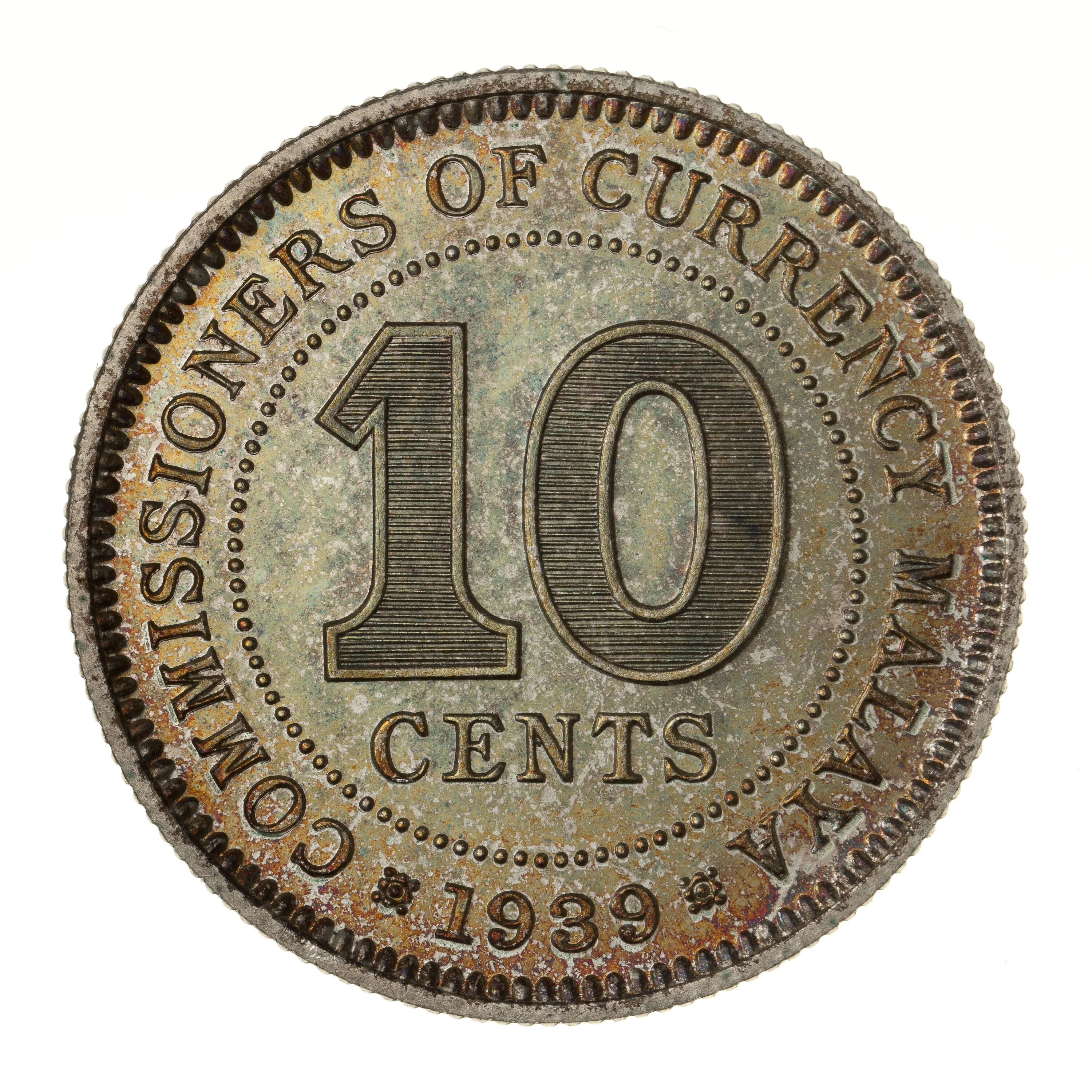
Description:
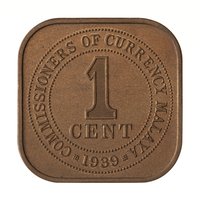
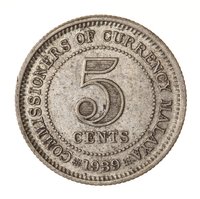
Beaded circle value
Inscription:
COMMISSIONNERS OF CURRENCY MALAYA
10
CENTS
1941
10
CENTS
1941
Script: Latin
Edge
Reeded
Mints
| Name | Mark |
|---|---|
| Royal Mint (Tower Hill) | — |
| Kolkata / Calcutta / Murshidabad | I |
Mintings
| Year | Mint Mark | Mintage | Quality | Collection |
|---|---|---|---|---|
| 1939 | — | 10,000,000 | ||
| 1939 | — | — | Proof | |
| 1941 | I | — | ||
| 1941 | — | 17,000,000 | ||
| 1941 | — | — | Proof |
Historical background
In 1939, the currency situation in British Malaya was uniquely robust and tightly controlled, centred on the Straits Settlements dollar issued by the Board of Commissioners of Currency, Malaya. This currency was on a sterling exchange standard, meaning its value was pegged to the British pound at a fixed rate of 2 shillings and 4 pence per Straits dollar. The system was backed by 100% sterling reserves held in London, ensuring full convertibility and immense stability. This made the Straits dollar one of the strongest and most trusted currencies in East Asia, facilitating the colony's booming export trade in rubber and tin.
The currency's stability was a direct pillar of colonial economic policy, designed to foster investor confidence and integrate Malaya firmly into the British imperial trading system. The currency board system operated with strict automaticity, issuing local currency only against the receipt of sterling and contracting the money supply when sterling was redeemed. This orthodox model prevented inflationary financing and ensured that Malaya's wealth was effectively stored in sterling assets in London, a point of both financial strength and colonial dependency.
However, this rigid peg also meant that Malaya had no independent monetary policy; its currency was entirely at the mercy of economic conditions in Britain. As the world moved towards war in 1939, this link provided a perceived safe haven, but it also meant that any pressures on the pound sterling would directly transmit to Malaya. The outbreak of World War II in September 1939 immediately tested this system, leading to the imposition of exchange controls to protect the sterling reserves and marking the beginning of a period of significant monetary upheaval that would culminate in the Japanese occupation and the replacement of the currency with occupation notes.
The currency's stability was a direct pillar of colonial economic policy, designed to foster investor confidence and integrate Malaya firmly into the British imperial trading system. The currency board system operated with strict automaticity, issuing local currency only against the receipt of sterling and contracting the money supply when sterling was redeemed. This orthodox model prevented inflationary financing and ensured that Malaya's wealth was effectively stored in sterling assets in London, a point of both financial strength and colonial dependency.
However, this rigid peg also meant that Malaya had no independent monetary policy; its currency was entirely at the mercy of economic conditions in Britain. As the world moved towards war in 1939, this link provided a perceived safe haven, but it also meant that any pressures on the pound sterling would directly transmit to Malaya. The outbreak of World War II in September 1939 immediately tested this system, leading to the imposition of exchange controls to protect the sterling reserves and marking the beginning of a period of significant monetary upheaval that would culminate in the Japanese occupation and the replacement of the currency with occupation notes.
Series: 1939 Malaya circulation coins
🌱 Common