

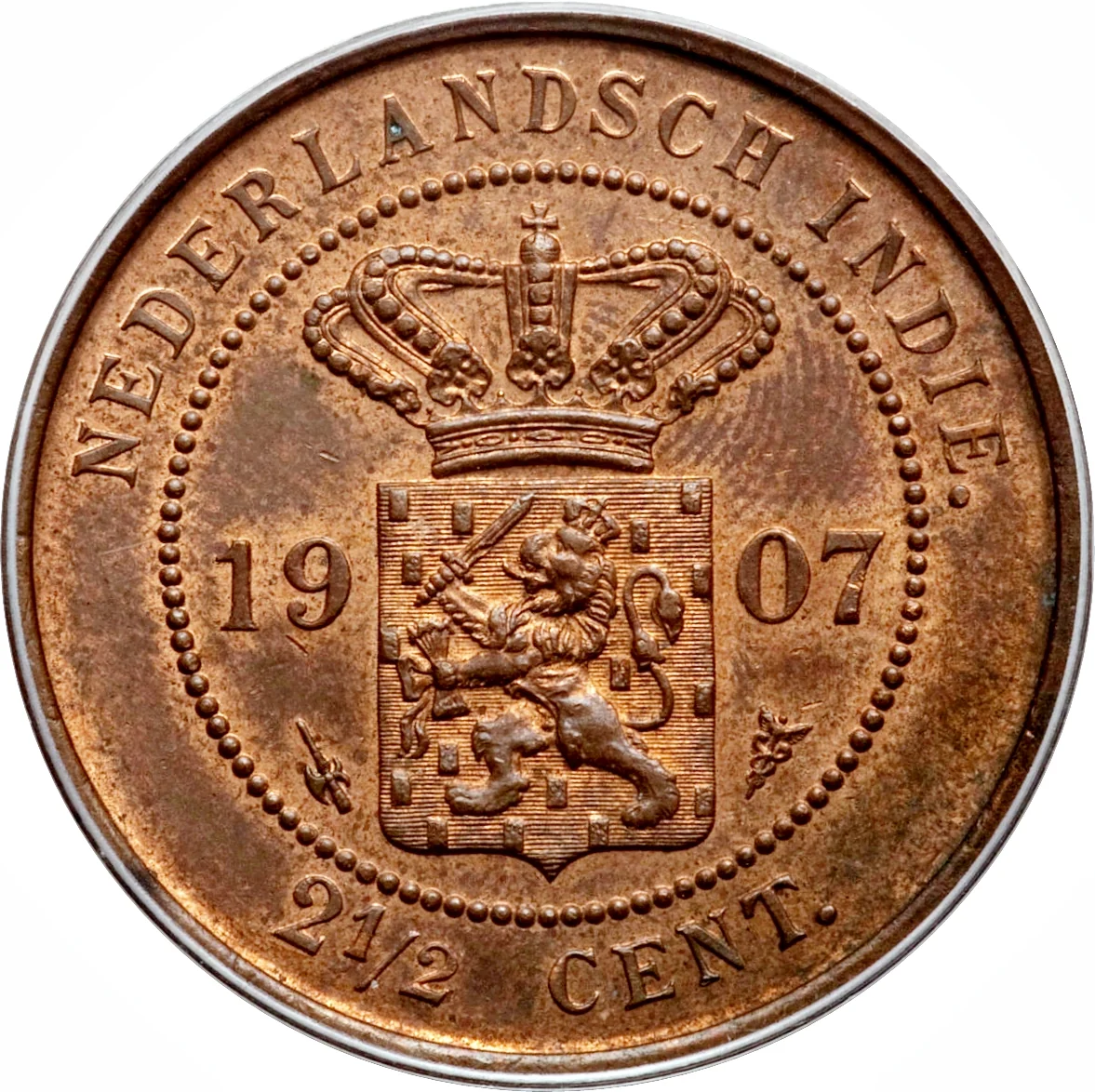
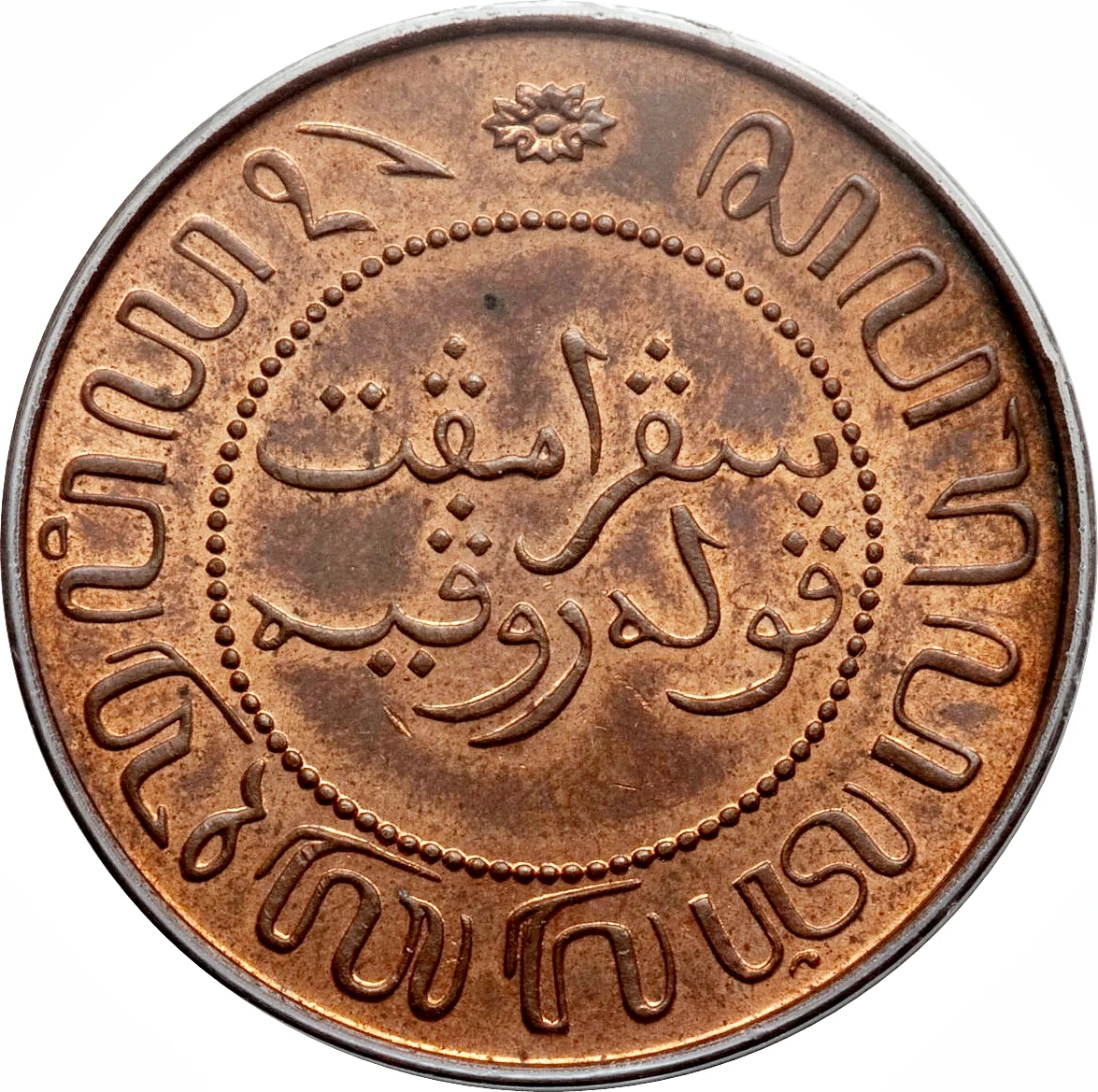
2½ cents – Netherlands East Indies
Add to wishlist
Indonesia
Context
Years: 1856–1913
Country: Indonesia
Issuer: Netherlands East Indies
Ruler: Wilhelmina
Currency:
(1854—1948)
Demonetized: Yes
Total mintage: 139,255,036
Material
References
KM: #
Numista: #12708
Obverse
Reverse
Edge
Plain
Categories
| Symbols> Coat of Arms |
Mints
| Name | Mark |
|---|---|
| Royal Dutch Mint | — |
Mintings
| Year | Mint Mark | Mintage | Quality | Collection |
|---|---|---|---|---|
| 1856 | — | 2,480,000 | ||
| 1856 | — | — | Proof | |
| 1857 | — | — | Proof | |
| 1857 | — | 36,560,000 | ||
| 1858 | — | 40,989,806 | ||
| 1896 | — | 1,120,000 | ||
| 1897 | — | 18,105,230 | ||
| 1898 | — | 7,600,000 | ||
| 1899 | — | 10,400,000 | ||
| 1902 | — | 6,000,000 | ||
| 1907 | — | 3,000,000 | ||
| 1908 | — | 5,940,000 | ||
| 1908 | — | — | Proof | |
| 1909 | — | 3,060,000 | ||
| 1913 | — | 4,000,000 | ||
| 1913 | — | — | Proof |
Historical background
In 1856, the currency system of the Netherlands East Indies (NEI) was a complex and often problematic dual system, officially based on the Dutch silver guilder but dominated in everyday use by the copper duit. The official currency, the gulden, was divisible into 100 cents, but the most common coin was the low-value copper duit, worth 1/120th of a guilder. This created cumbersome calculations, as prices were often quoted in guilders and stuivers (5-cent pieces), but transactions for common goods relied heavily on stacks of copper coins. The system was further complicated by the widespread circulation of various foreign coins, particularly Spanish-American silver reales (known as "matten" or "rijksdaalders"), which were accepted as trade currency but whose value fluctuated.
This monetary duality stemmed from colonial policy. The authorities in Batavia issued the copper coinage to facilitate local, small-scale trade and tax payments, while maintaining the silver standard for larger commercial transactions and ties to the Dutch treasury. However, a chronic shortage of official small-denomination silver coinage (cents and half-cents) forced the reliance on copper. This led to persistent inflation in the copper sector, as the intrinsic value of the copper duit was far below its face value, encouraging over-issuance and causing its market value against silver to erode. For the Javanese population, whose economic lives revolved around the copper currency, this meant a hidden devaluation and economic instability.
Consequently, 1856 fell within a period of growing monetary strain and official scrutiny. The inefficiencies of the system hampered both local commerce and the colonial administration's own finances. These pressures would culminate, just a few years later, in a major monetary reform. In 1854, a new coinage act for the NEI had already been passed in the Netherlands, and its implementation was being prepared. This reform, enacted in the late 1850s, would finally introduce a unified, decimalized silver standard, retire the old copper duit, and establish a new subsidiary copper coinage with a fixed, stable relationship to the silver guilder, aiming to bring order to the chaotic currency landscape of the colony.
This monetary duality stemmed from colonial policy. The authorities in Batavia issued the copper coinage to facilitate local, small-scale trade and tax payments, while maintaining the silver standard for larger commercial transactions and ties to the Dutch treasury. However, a chronic shortage of official small-denomination silver coinage (cents and half-cents) forced the reliance on copper. This led to persistent inflation in the copper sector, as the intrinsic value of the copper duit was far below its face value, encouraging over-issuance and causing its market value against silver to erode. For the Javanese population, whose economic lives revolved around the copper currency, this meant a hidden devaluation and economic instability.
Consequently, 1856 fell within a period of growing monetary strain and official scrutiny. The inefficiencies of the system hampered both local commerce and the colonial administration's own finances. These pressures would culminate, just a few years later, in a major monetary reform. In 1854, a new coinage act for the NEI had already been passed in the Netherlands, and its implementation was being prepared. This reform, enacted in the late 1850s, would finally introduce a unified, decimalized silver standard, retire the old copper duit, and establish a new subsidiary copper coinage with a fixed, stable relationship to the silver guilder, aiming to bring order to the chaotic currency landscape of the colony.
🌱 Common