

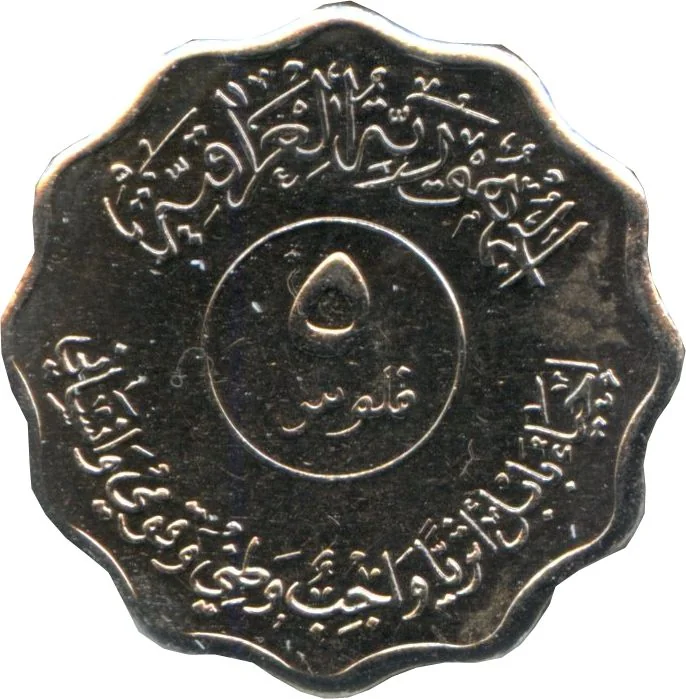
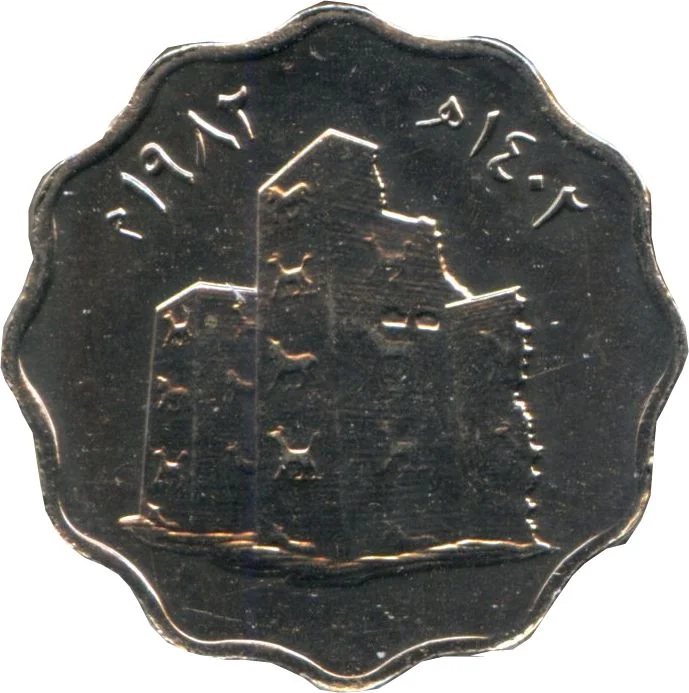
5 fils – Iraq
Add to wishlist
Iraq
Context
Year: 1982
Islamic (Hijri) Year:: 1402
Issuer: Iraq
Period:
(since 1958)
Currency:
(since 1931)
Demonetized: Yes
Material
Diameter: 22 mm
Weight: 4 g
Shape: Scalloped
Composition: Stainless steel
Magnetic: Yes
Technique: Milled
Alignment: Medal alignment
flip
References
KM: #
Numista: #12671
Value
Exchange value: 0.005 IQD
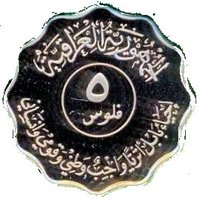
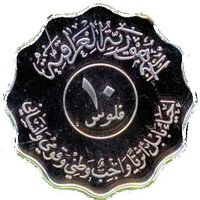
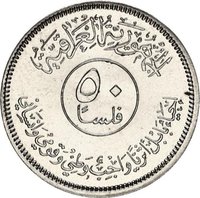
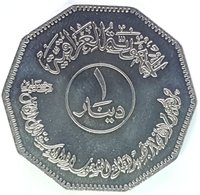
Obverse
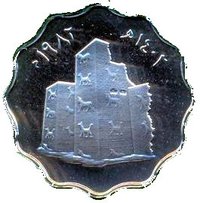
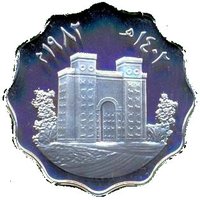
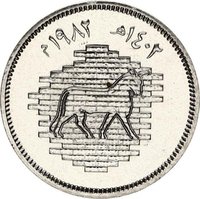
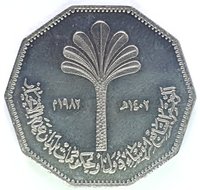
Reverse
Edge
Plain
Mints
| Name | Mark |
|---|---|
| Royal Canadian Mint of Winnipeg | — |
Mintings
| Year | Mint Mark | Mintage | Quality | Collection |
|---|---|---|---|---|
| 1982 | — | — |
Historical background
In 1982, Iraq's currency situation was heavily strained by the ongoing Iran-Iraq War, which had begun in September 1980. The conflict had rapidly shifted from a war of quick maneuver to a devastating war of attrition, consuming vast financial resources. The Iraqi government, led by Saddam Hussein, was financing the war through a combination of its substantial foreign currency reserves (accumulated during the 1970s oil boom), heavy borrowing from Arab Gulf states, and the continued sale of oil, albeit at reduced volumes due to Iranian attacks on export infrastructure. The official exchange rate of the Iraqi Dinar (IQD) was pegged to a strong US Dollar, but this stability was artificial and maintained through strict government controls and the expenditure of reserves.
Despite the peg, significant economic pressures were building beneath the surface. The war effort led to massive military spending, estimated to consume over 50% of GDP, while non-oil economic output plummeted. This resulted in severe inflation for basic goods, widespread shortages, and a growing reliance on imports, which further drained foreign currency. A burgeoning black market for foreign exchange emerged, where the Dinar traded at a significant discount to the official rate, reflecting the true market anxiety over the war's economic toll and the sustainability of state finances.
Consequently, 1982 represented a pivotal year where Iraq's strong pre-war financial position began its irreversible decline. The government was forced to initiate its first major international borrowing, taking loans from neighboring countries and beginning a trajectory toward crippling debt. While the currency's formal value was upheld by decree, the economic foundations supporting it were being rapidly eroded by the war's demands, setting the stage for the profound monetary crises and devaluations that would follow in the subsequent decades.
Despite the peg, significant economic pressures were building beneath the surface. The war effort led to massive military spending, estimated to consume over 50% of GDP, while non-oil economic output plummeted. This resulted in severe inflation for basic goods, widespread shortages, and a growing reliance on imports, which further drained foreign currency. A burgeoning black market for foreign exchange emerged, where the Dinar traded at a significant discount to the official rate, reflecting the true market anxiety over the war's economic toll and the sustainability of state finances.
Consequently, 1982 represented a pivotal year where Iraq's strong pre-war financial position began its irreversible decline. The government was forced to initiate its first major international borrowing, taking loans from neighboring countries and beginning a trajectory toward crippling debt. While the currency's formal value was upheld by decree, the economic foundations supporting it were being rapidly eroded by the war's demands, setting the stage for the profound monetary crises and devaluations that would follow in the subsequent decades.
Series: Restoration of Babel
🌟 Uncommon