

5 gulden (G.J.L. Maduro) – Netherlands Antilles
Add to wishlist
Non-circulating coins
Commemoration: 100th birthday of G.J.L. Maduro
Netherlands
Context
Year: 2016
Country: Netherlands
Issuer: Netherlands Antilles
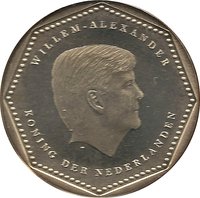
Ruler: Willem-Alexander
Currency:
(since 1828)
Demonetization: 31 March 2025
Total mintage: 750
Material
References
KM: #
Numista: #126572
Value
Exchange value: 5 ANG
Bullion value: $26.92
Inflation-adjusted value: 6.46 ANG
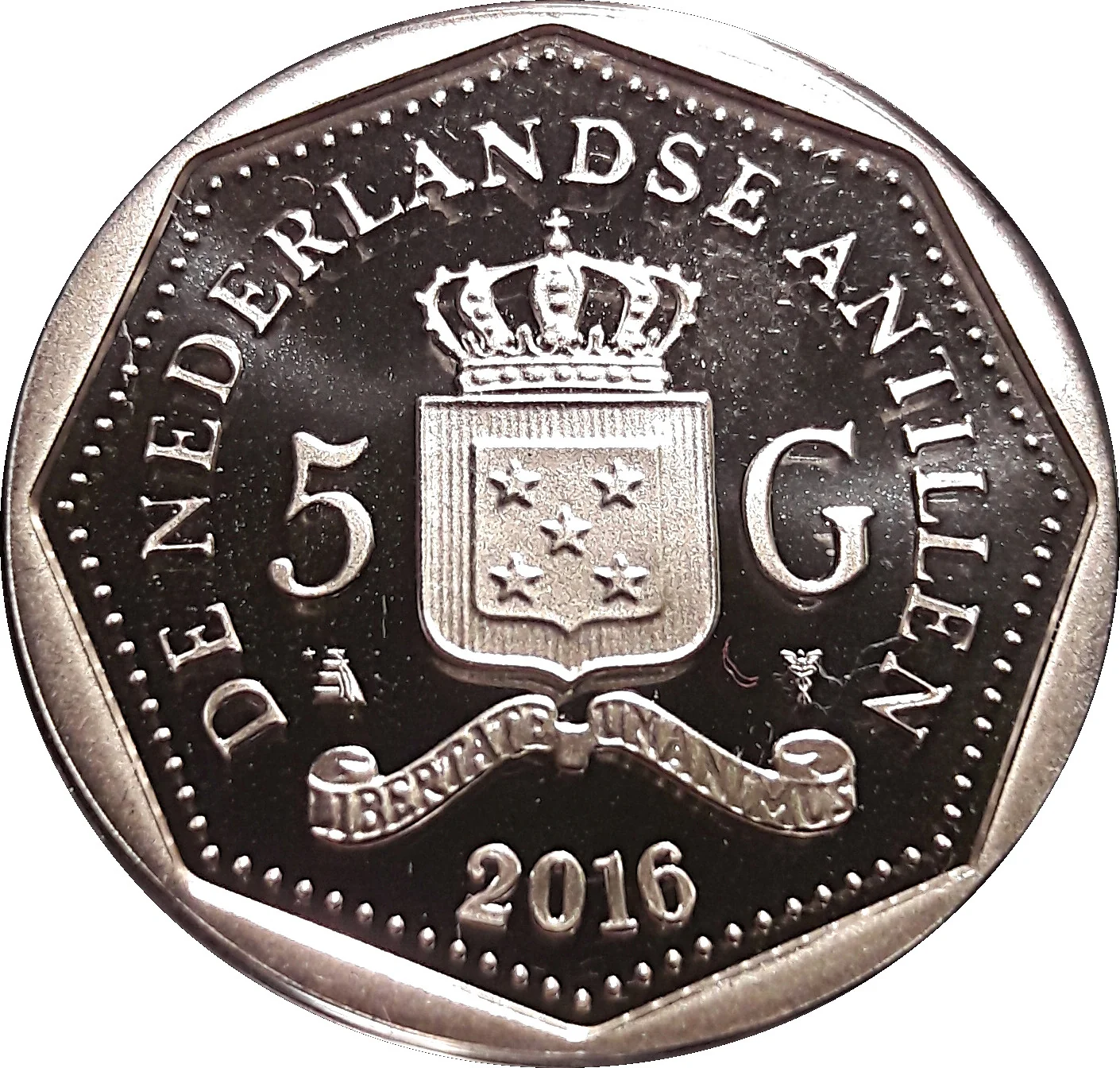
Obverse
Reverse
Description:
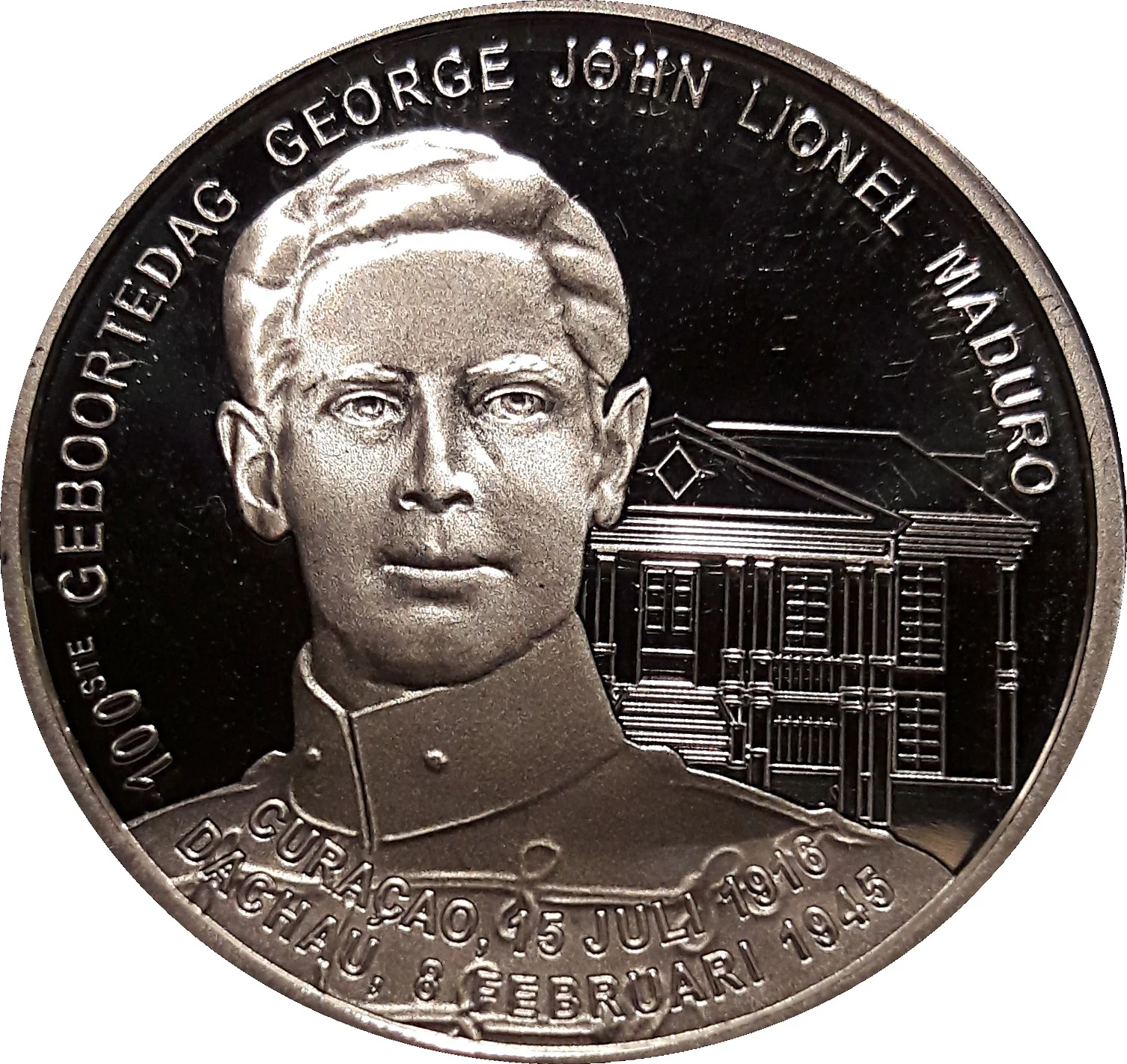
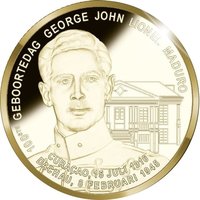
Bust of George Maduro facing forward, with his Willemstad birthplace behind.
Inscription:
100STE GEBOORTEDAG GEORGE JOHN LIONEL MADURO
CURAÇAO, 15 JULI 1916
DACHAU, 8 FEBRUARI 1945
CURAÇAO, 15 JULI 1916
DACHAU, 8 FEBRUARI 1945
Translation:
100th Birthday George John Lionel Maduro
Curaçao, 15 July 1916
Dachau, 8 February 1945
Curaçao, 15 July 1916
Dachau, 8 February 1945
Script: Latin
Languages: Dutch, Papiamento
Edge
Categories
| Symbols> Coat of Arms |
| Building |
| Symbol> Crown |
Mints
| Name | Mark |
|---|---|
| Royal Dutch Mint | — |
Mintings
| Year | Mint Mark | Mintage | Quality | Collection |
|---|---|---|---|---|
| 2016 | — | 750 | Proof |
Historical background
In 2016, the currency situation in the Netherlands Antilles was defined by a period of transition and legacy, as the political dissolution of the former country in 2010 continued to shape monetary policy. The Netherlands Antilles guilder (ANG), pegged at a fixed rate of 1.79 to the US dollar since 1971, remained the official currency. However, it was now issued by the Central Bank of Curaçao and Sint Maarten (CBCS), which served the two autonomous "landen" (countries) within the Kingdom of the Netherlands: Curaçao and Sint Maarten. The special municipalities of Bonaire, Sint Eustatius, and Saba (the BES islands) had adopted the US dollar in 2011, creating a dual-currency reality across the region.
A key focus in 2016 was the ongoing effort to introduce a new, common currency to replace the Antillean guilder for Curaçao and Sint Maarten: the Caribbean guilder. Plans for this change were actively discussed, driven by a desire for a symbolic break from the colonial past and practical considerations regarding the cost of banknote production. However, the launch faced repeated delays due to technical complexities, economic challenges in both nations, and the need for stringent institutional preparations to maintain the crucial dollar peg and ensure financial stability.
Thus, the currency landscape in 2016 was one of stability on the surface, underpinned by the long-standing dollar peg, but marked by anticipation and uncertainty about the future. While the reliable ANG continued to facilitate tourism and trade, authorities were navigating the intricate process of creating a new monetary identity for Curaçao and Sint Maarten, a project that remained in the planning stages with no definitive implementation date in sight.
A key focus in 2016 was the ongoing effort to introduce a new, common currency to replace the Antillean guilder for Curaçao and Sint Maarten: the Caribbean guilder. Plans for this change were actively discussed, driven by a desire for a symbolic break from the colonial past and practical considerations regarding the cost of banknote production. However, the launch faced repeated delays due to technical complexities, economic challenges in both nations, and the need for stringent institutional preparations to maintain the crucial dollar peg and ensure financial stability.
Thus, the currency landscape in 2016 was one of stability on the surface, underpinned by the long-standing dollar peg, but marked by anticipation and uncertainty about the future. While the reliable ANG continued to facilitate tourism and trade, authorities were navigating the intricate process of creating a new monetary identity for Curaçao and Sint Maarten, a project that remained in the planning stages with no definitive implementation date in sight.
✨ Legendary