

2 falus – Morocco
Add to wishlist
Morocco
Context
Years: 1855–1859
Issuer: Morocco
Ruler: Moulay ‘Abd al-Rahman
Currency:
(1659—1882)
Demonetized: Yes
Material
Diameter: 24 mm
Weight: 7.06 g
Thickness: 2.5 mm
Shape: Irregular round
Composition: Bronze
Magnetic: No
References
Numista: #126301
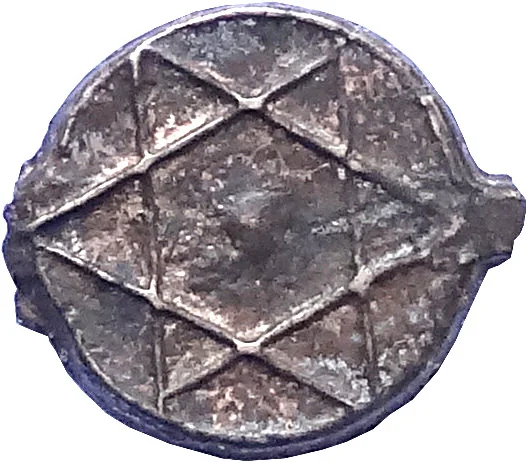
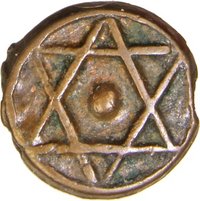
Obverse
Description:
Solomon's signet ring.
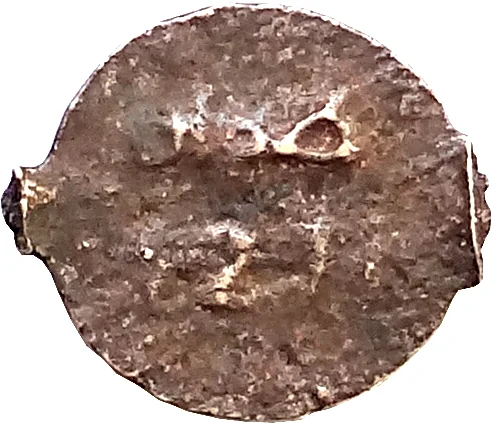
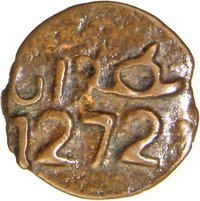
Reverse
Edge
Mintings
| Year | Mint Mark | Mintage | Quality | Collection |
|---|---|---|---|---|
| 1855 | — | — | ||
| 1856 | — | — | ||
| 1857 | — | — | ||
| 1858 | — | — | ||
| 1859 | — | — |
Historical background
In 1855, Morocco's currency situation was characterized by a complex and fragmented monetary system, a direct legacy of its historical trade patterns and political decentralization. The country did not have a unified, modern coinage. Instead, circulation was dominated by a mixture of older, often debased silver coins like the dirham and the riyal, alongside a plethora of foreign currencies. Spanish pesos, French francs, and especially British silver dollars (Maria Theresa thalers and their imitations) were widely used for substantial trade, particularly in coastal ports, creating a de facto dependence on external minting.
This monetary heterogeneity caused significant practical problems and economic weakness. The value and silver content of coins varied greatly, leading to confusion, frequent counterfeiting, and exchange difficulties between regions. Sultan Abd al-Rahman, and later his successor Muhammad IV, recognized that this chaotic system hampered both domestic commerce and international trade, leaving the Makhzen (central government) with little control over the money supply. Furthermore, heavy state expenditures, including costly military campaigns and tributes to European powers, were draining silver from the economy, contributing to periodic shortages and inflationary pressures.
Consequently, the mid-19th century marked a period of growing pressure for monetary reform. The 1856 Anglo-Moroccan Treaty, which granted British subjects the right to have their currency exchanged at fixed rates, underscored the need for a stable and standardized system. While a comprehensive reform would not be fully realized until the 1880s under Sultan Hassan I, the year 1855 sits within a crucial decade of deliberation. The Sultanate was actively exploring options, including the potential establishment of a modern mint (Dar al-Sikka), to centralize coinage, assert monetary sovereignty, and stabilize the economy in the face of increasing European commercial and diplomatic influence.
This monetary heterogeneity caused significant practical problems and economic weakness. The value and silver content of coins varied greatly, leading to confusion, frequent counterfeiting, and exchange difficulties between regions. Sultan Abd al-Rahman, and later his successor Muhammad IV, recognized that this chaotic system hampered both domestic commerce and international trade, leaving the Makhzen (central government) with little control over the money supply. Furthermore, heavy state expenditures, including costly military campaigns and tributes to European powers, were draining silver from the economy, contributing to periodic shortages and inflationary pressures.
Consequently, the mid-19th century marked a period of growing pressure for monetary reform. The 1856 Anglo-Moroccan Treaty, which granted British subjects the right to have their currency exchanged at fixed rates, underscored the need for a stable and standardized system. While a comprehensive reform would not be fully realized until the 1880s under Sultan Hassan I, the year 1855 sits within a crucial decade of deliberation. The Sultanate was actively exploring options, including the potential establishment of a modern mint (Dar al-Sikka), to centralize coinage, assert monetary sovereignty, and stabilize the economy in the face of increasing European commercial and diplomatic influence.

💎 Very Rare