

1 Stotinka – Bulgaria
Bulgaria
Context
Year: 1901
Issuer: Bulgaria 
Ruler: Ferdinand I
Currency:
(1881—1952)
Demonetized: Yes
Total mintage: 20,000,000
Material
References
KM: #Click to copy to clipboard22.1
Numista: #126032
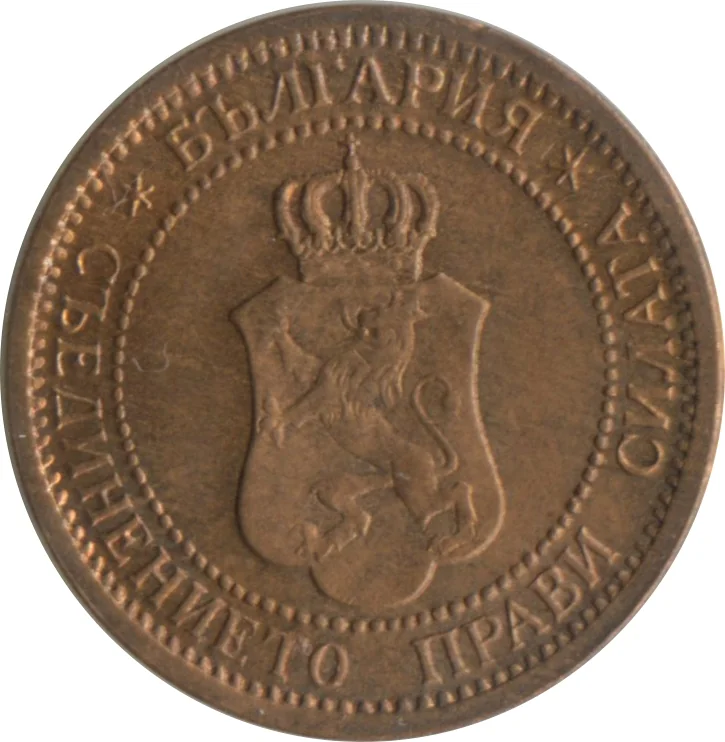
Obverse
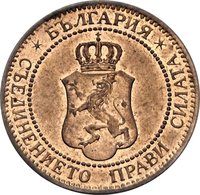
Description:
Bulgarian coat of arms and legend.
Inscription:
БЪЛГАРИЯ
* СЪЕДИНЕНИЕТО ПРАВИ СИЛАТА *
* СЪЕДИНЕНИЕТО ПРАВИ СИЛАТА *
Translation:
BULGARIA
* UNION MAKES THE STRENGTH *
* UNION MAKES THE STRENGTH *
Script: Cyrillic
Language: Bulgarian
Engraver: Alfred Borrel
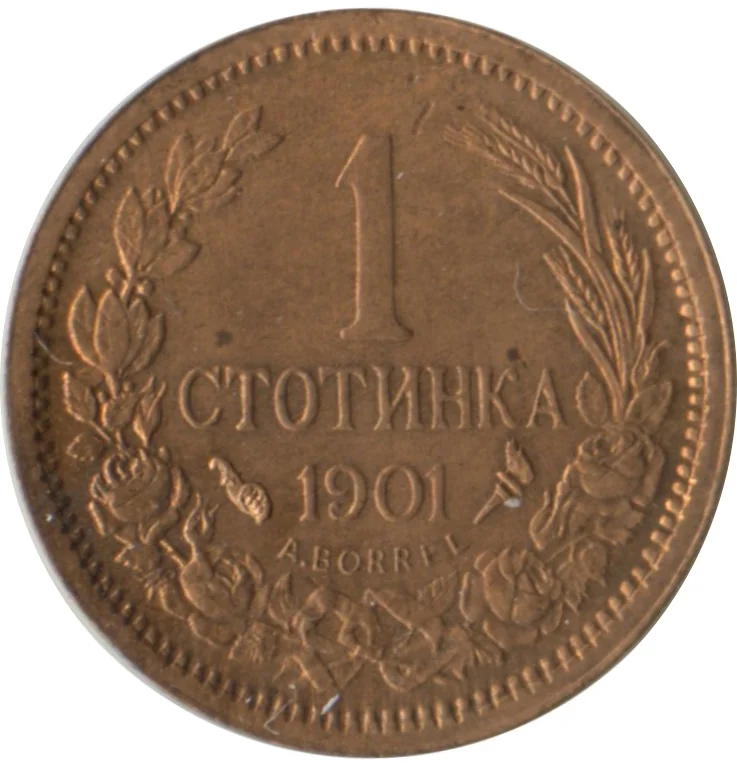
Reverse
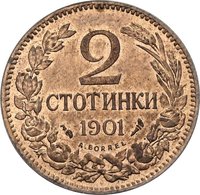
Description:
Denomination, date.
Inscription:
1
СТОТИНКА
1901
A. BORREL
СТОТИНКА
1901
A. BORREL
Translation:
One Stotinka
1901
A. Borrel
1901
A. Borrel
Script: Cyrillic
Engraver: Alfred Borrel
Edge
Plain
Categories
| Symbols> Coat of Arms |
| Symbol> Wreath |
Mints
| Name | Mark |
|---|---|
| Monnaie de Paris | — |
Mintings
| Year | Mint Mark | Mintage | Quality | Collection |
|---|---|---|---|---|
| 1901 | — | 20,000,000 |
Historical background
In 1901, Bulgaria’s currency situation was defined by its complex position within the Ottoman monetary legacy and its aspirations for modern European statehood. Officially, the country was on a bimetallic standard (gold and silver) as per the 1880 currency law, with the Lev (plural: Leva) as the unit. However, the reality was a chaotic circulation of diverse metallic coins. Alongside the limited domestic silver and copper coins, a plethora of foreign gold and silver coins—Ottoman, Russian, French, Italian, and Austrian—were legal tender, creating a cumbersome system of daily exchange calculations.
This monetary fragmentation posed significant problems for trade and state finance. The instability of global silver prices in the late 19th century, which had caused the value of silver-based currencies to fall against gold, particularly affected Bulgaria. To stabilize the economy and attract foreign investment for crucial infrastructure projects, the government, under Finance Minister Ivan Geshov, was actively pursuing a decisive shift to the gold standard. This move was seen as essential for securing Bulgaria’s credibility in international capital markets and simplifying both internal commerce and external debt servicing.
Consequently, 1901 was a pivotal year of preparation within this multi-year transition. The government was accumulating gold reserves and finalizing plans for a major currency reform, which would culminate in the Currency Act of 1906. The key objective was to define the Lev as a fixed quantity of gold and to introduce new, unified national gold coins, thereby replacing the jumble of foreign specie. Thus, the currency situation in 1901 was one of lingering Ottoman-era disorder, actively being managed toward a modern, gold-backed monetary system intended to anchor Bulgaria’s economic sovereignty and European integration.
This monetary fragmentation posed significant problems for trade and state finance. The instability of global silver prices in the late 19th century, which had caused the value of silver-based currencies to fall against gold, particularly affected Bulgaria. To stabilize the economy and attract foreign investment for crucial infrastructure projects, the government, under Finance Minister Ivan Geshov, was actively pursuing a decisive shift to the gold standard. This move was seen as essential for securing Bulgaria’s credibility in international capital markets and simplifying both internal commerce and external debt servicing.
Consequently, 1901 was a pivotal year of preparation within this multi-year transition. The government was accumulating gold reserves and finalizing plans for a major currency reform, which would culminate in the Currency Act of 1906. The key objective was to define the Lev as a fixed quantity of gold and to introduce new, unified national gold coins, thereby replacing the jumble of foreign specie. Thus, the currency situation in 1901 was one of lingering Ottoman-era disorder, actively being managed toward a modern, gold-backed monetary system intended to anchor Bulgaria’s economic sovereignty and European integration.
🌟 Uncommon