

50 euro cents – Ireland
Add to wishlist
Ireland
Context
Material
Diameter: 24.25 mm
Weight: 7.8 g
Thickness: 2.38 mm
Shape: Round
Standard: Silver quarter ounce
Magnetic: No
Technique: Milled
Alignment: Medal alignment
flip
References
KM: #
Numista: #126
Value
Exchange value: 0.50 EUR
Inflation-adjusted value: 0.80 EUR
Obverse
Description:
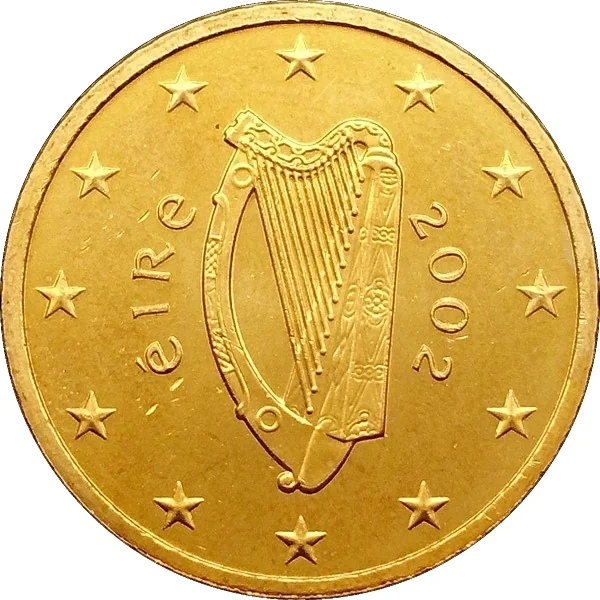
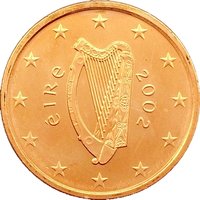
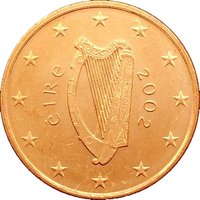
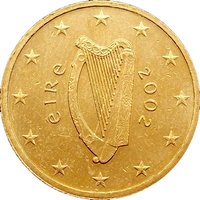
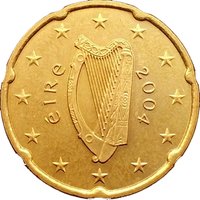
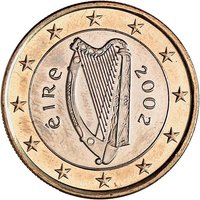
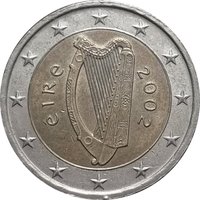
Ireland's Celtic harp, flanked by the country name and date, encircled by the 12 European stars.
Inscription:
éire 2002
Translation:
Ireland 2002
Language: Irish
Engraver: Jarlath Hayes
Reverse
Description:
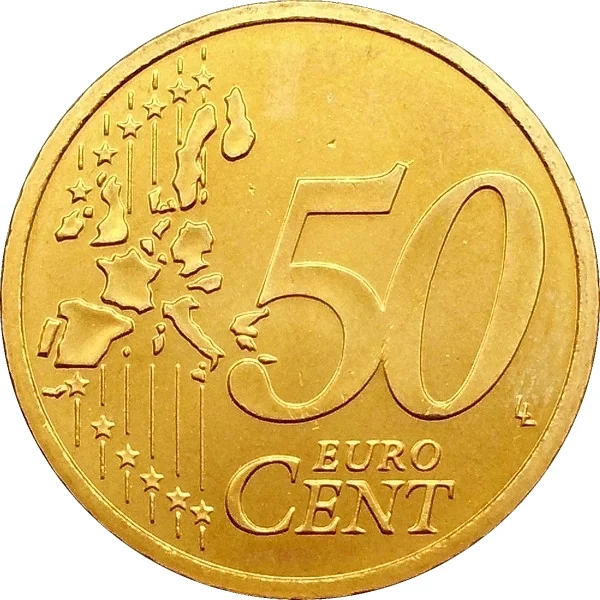
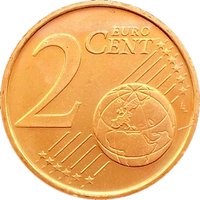
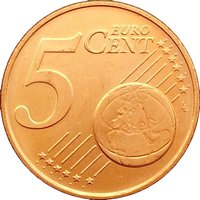
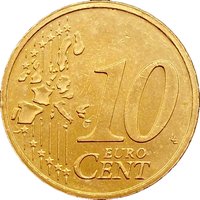
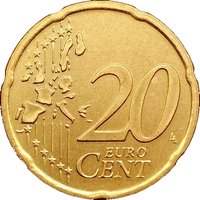
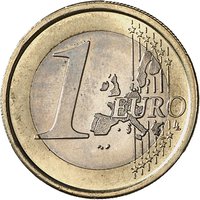
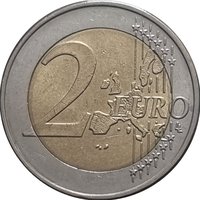
A map symbolizes the union of the EU's fifteen nations.
Inscription:
50 EURO CENT LL
Engraver: Luc Luycx
Edge
Indented
Categories
| Map |
Mints
| Name | Mark |
|---|---|
| Irish Mint | — |
Mintings
| Year | Mint Mark | Mintage | Quality | Collection |
|---|---|---|---|---|
| 2002 | — | 144,140,000 | ||
| 2003 | — | 11,810,000 | ||
| 2004 | — | 6,750,000 | ||
| 2005 | — | 17,310,000 | ||
| 2006 | — | 7,455,000 | ||
| 2006 | — | 5,000 | Proof |
Historical background
In 2002, Ireland underwent a profound economic and symbolic transition as it adopted the euro, bidding farewell to the Irish pound (or punt) after nearly 80 years of use. This change was not sudden but the culmination of a decade-long process following the 1992 Maastricht Treaty, where Ireland committed to joining the European single currency. The physical introduction of euro banknotes and coins on 1 January 2002, after a three-year "soft launch" period where the euro existed only electronically, marked the final step in this integration. For businesses and the public, the first two months of the year were a dual-currency period, requiring a significant logistical effort to manage the changeover while old punt cash was phased out.
The context for the changeover was Ireland's remarkable "Celtic Tiger" economic boom, characterised by rapid growth, low unemployment, and rising incomes. This prosperity made the transition smoother, as the public largely associated the euro with continued economic success and deeper European integration. However, the switch also brought immediate practical challenges, including price rounding and concerns about covert inflation, as some businesses were accused of using the conversion to raise prices. The fixed and irreversible conversion rate was set at €1 = IR£0.787564, a figure ingrained in the national consciousness.
Ultimately, the adoption of the euro in 2002 was seen as a decisive step in anchoring Ireland firmly within the European Union's core, enhancing trade and financial stability by eliminating currency risk with its main trading partners. While there was some sentimental attachment to the punt as a symbol of national sovereignty, the change was broadly accepted as a logical and forward-looking move. In hindsight, embracing the euro provided Ireland with critical insulation during the 2008 financial crisis, though it also meant surrendering independent monetary policy, a trade-off that would later be intensely debated.
The context for the changeover was Ireland's remarkable "Celtic Tiger" economic boom, characterised by rapid growth, low unemployment, and rising incomes. This prosperity made the transition smoother, as the public largely associated the euro with continued economic success and deeper European integration. However, the switch also brought immediate practical challenges, including price rounding and concerns about covert inflation, as some businesses were accused of using the conversion to raise prices. The fixed and irreversible conversion rate was set at €1 = IR£0.787564, a figure ingrained in the national consciousness.
Ultimately, the adoption of the euro in 2002 was seen as a decisive step in anchoring Ireland firmly within the European Union's core, enhancing trade and financial stability by eliminating currency risk with its main trading partners. While there was some sentimental attachment to the punt as a symbol of national sovereignty, the change was broadly accepted as a logical and forward-looking move. In hindsight, embracing the euro provided Ireland with critical insulation during the 2008 financial crisis, though it also meant surrendering independent monetary policy, a trade-off that would later be intensely debated.
Series: 2002 Ireland circulation coins
🌱 Very Common