

20 Decimos de Real – Buenos Aires
Argentina
Context
Year: 1831
Country: Argentina 
Issuer: Buenos Aires
Period:
(1810—1831)
Currency:
(1822—1861)
Demonetized: Yes
Material
References
KM: #Click to copy to clipboard5
Numista: #125889
Obverse
Description:
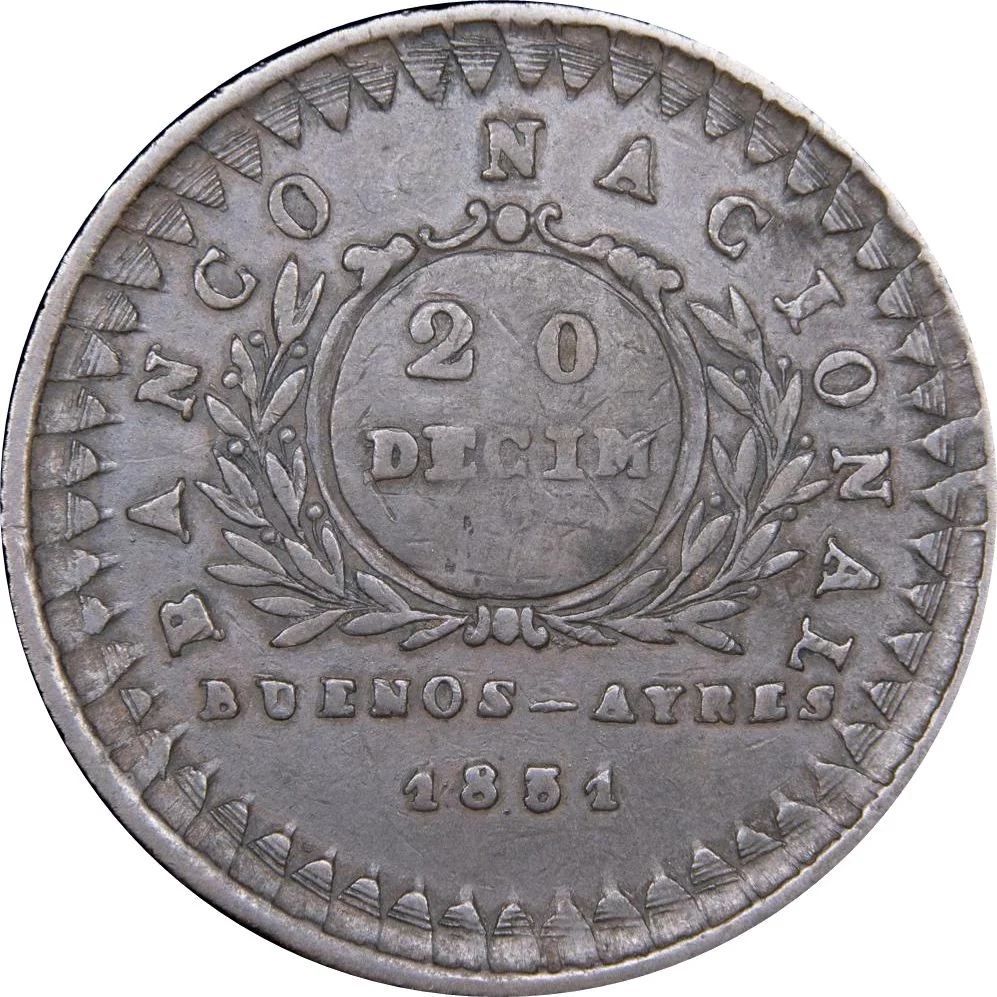
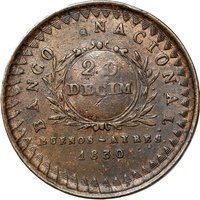
Circular centerpiece with smooth surface and laurel wreaths, inscribed "20 / DECIM." Above, "BANCO NACIONAL" arches; below, "BUENOS-AYRES / 1831" is in two lines. A small striped triangle is present.
Inscription:
BUENOS - AYRES
1831
BANCO NACIONAL
20 DECIM
1831
BANCO NACIONAL
20 DECIM
Translation:
BUENOS AIRES
1831
NATIONAL BANK
20 TENTHS
1831
NATIONAL BANK
20 TENTHS
Reverse
Description:
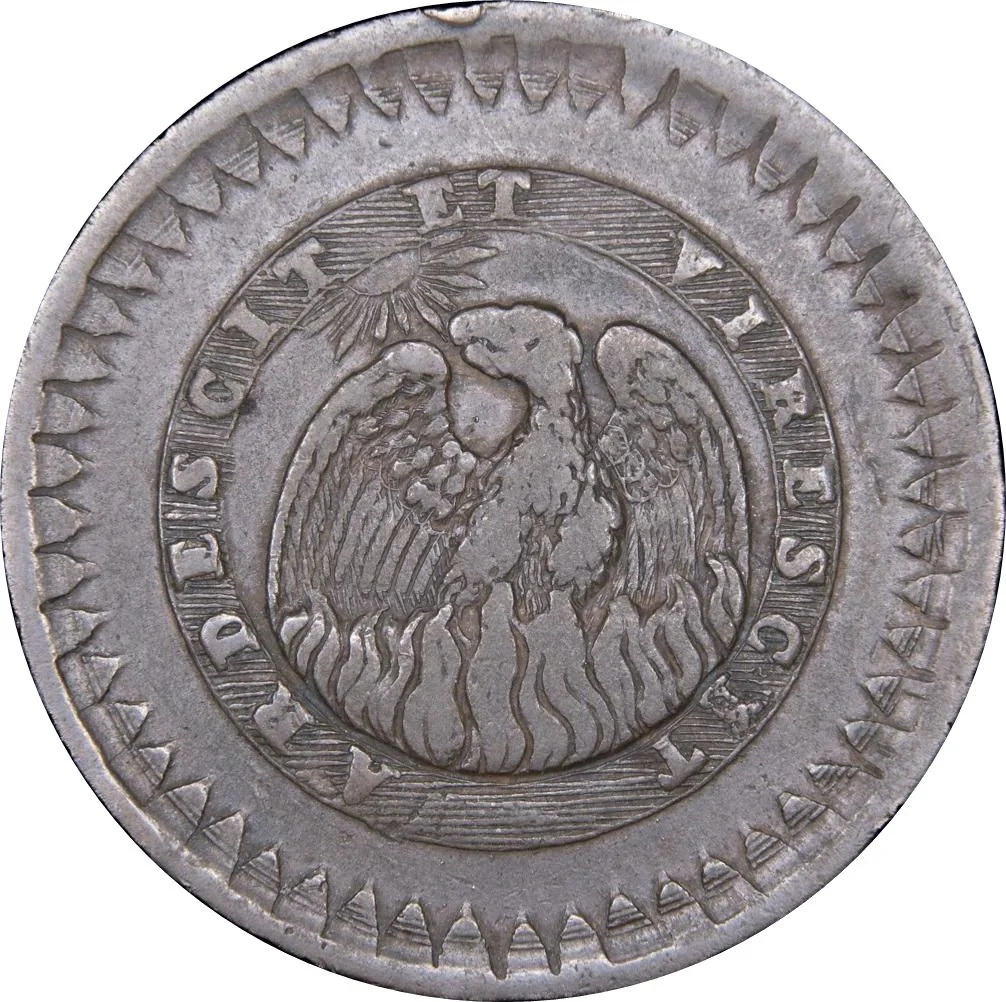
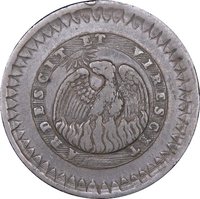
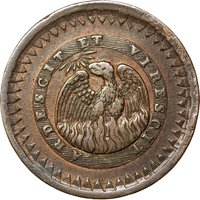
Inside a blue striped circle, a phoenix faces right toward a radiant sun, with the legend "ARDESCIT ET VIRESCIT."
Inscription:
ARDESCIT ET VIRESCIT.
Edge
Plain
Mintings
| Year | Mint Mark | Mintage | Quality | Collection |
|---|---|---|---|---|
| 1831 | — | — |
Historical background
In 1831, Buenos Aires was grappling with a profound and chaotic monetary crisis, a direct legacy of the independence wars and the absence of a central national authority. The province, functioning as the Argentine Confederation in all but name, had inherited a shattered fiscal system. The Spanish colonial silver coin, the peso fuerte (strong peso), remained the ideal unit of account, but it had largely vanished from circulation due to export and hoarding. In its place, a flood of low-quality copper coinage, known as moneda de cobre, and even crude lead tokens issued by provincial governments, circulated at fluctuating and often arbitrary values. This created a dual system where contracts were written in pesos fuertes but often settled in depreciated copper.
The heart of the problem was the uncontrolled issuance of paper money by the Banco de Buenos Aires, established in 1826 under Minister Bernardino Rivadavia. These billetes de banco (bank notes) were initially convertible to precious metal, but the bank quickly suspended redemption to finance the costly Cisplatine War against Brazil. By 1831, the paper peso had dramatically depreciated against the silver peso fuerte, leading to a widespread loss of public confidence. The market operated with multiple, unofficial exchange rates, and prices for goods were often quoted separately in metal and paper, causing confusion and commercial friction.
Governor Juan Manuel de Rosas, who consolidated power in late 1829, confronted this monetary anarchy as a primary challenge to economic order and his own authority. His initial approach in 1831 was one of forceful stabilization. He did not immediately eliminate the paper money, recognizing its role in public finance, but he moved to strictly enforce its acceptance at par with metal—a deeply unpopular measure that sparked protests. More importantly, he began to assert stringent control over the copper coinage, aiming to curb provincial emissions and reduce the sheer volume of debased currency. Thus, the currency situation in 1831 was one of turbulent transition, marked by the coexistence of scarce silver, discredited paper, and chaotic copper, all under the new and tightening grip of Rosas's autocratic regime.
The heart of the problem was the uncontrolled issuance of paper money by the Banco de Buenos Aires, established in 1826 under Minister Bernardino Rivadavia. These billetes de banco (bank notes) were initially convertible to precious metal, but the bank quickly suspended redemption to finance the costly Cisplatine War against Brazil. By 1831, the paper peso had dramatically depreciated against the silver peso fuerte, leading to a widespread loss of public confidence. The market operated with multiple, unofficial exchange rates, and prices for goods were often quoted separately in metal and paper, causing confusion and commercial friction.
Governor Juan Manuel de Rosas, who consolidated power in late 1829, confronted this monetary anarchy as a primary challenge to economic order and his own authority. His initial approach in 1831 was one of forceful stabilization. He did not immediately eliminate the paper money, recognizing its role in public finance, but he moved to strictly enforce its acceptance at par with metal—a deeply unpopular measure that sparked protests. More importantly, he began to assert stringent control over the copper coinage, aiming to curb provincial emissions and reduce the sheer volume of debased currency. Thus, the currency situation in 1831 was one of turbulent transition, marked by the coexistence of scarce silver, discredited paper, and chaotic copper, all under the new and tightening grip of Rosas's autocratic regime.
💎 Extremely Rare