

1 shilling – Fiji
Add to wishlist
Fiji
Context
Years: 1957–1965
Issuer: Fiji
Ruler: Elizabeth II
Currency:
(1873—1969)
Demonetization: 30 June 1969
Total mintage: 2,200,000
Material
Diameter: 23.5 mm
Weight: 5.66 g
Thickness: 1.7 mm
Shape: Round
Composition: Copper-nickel
Technique: Milled
Alignment: Medal alignment
flip
References
KM: #
Numista: #12571
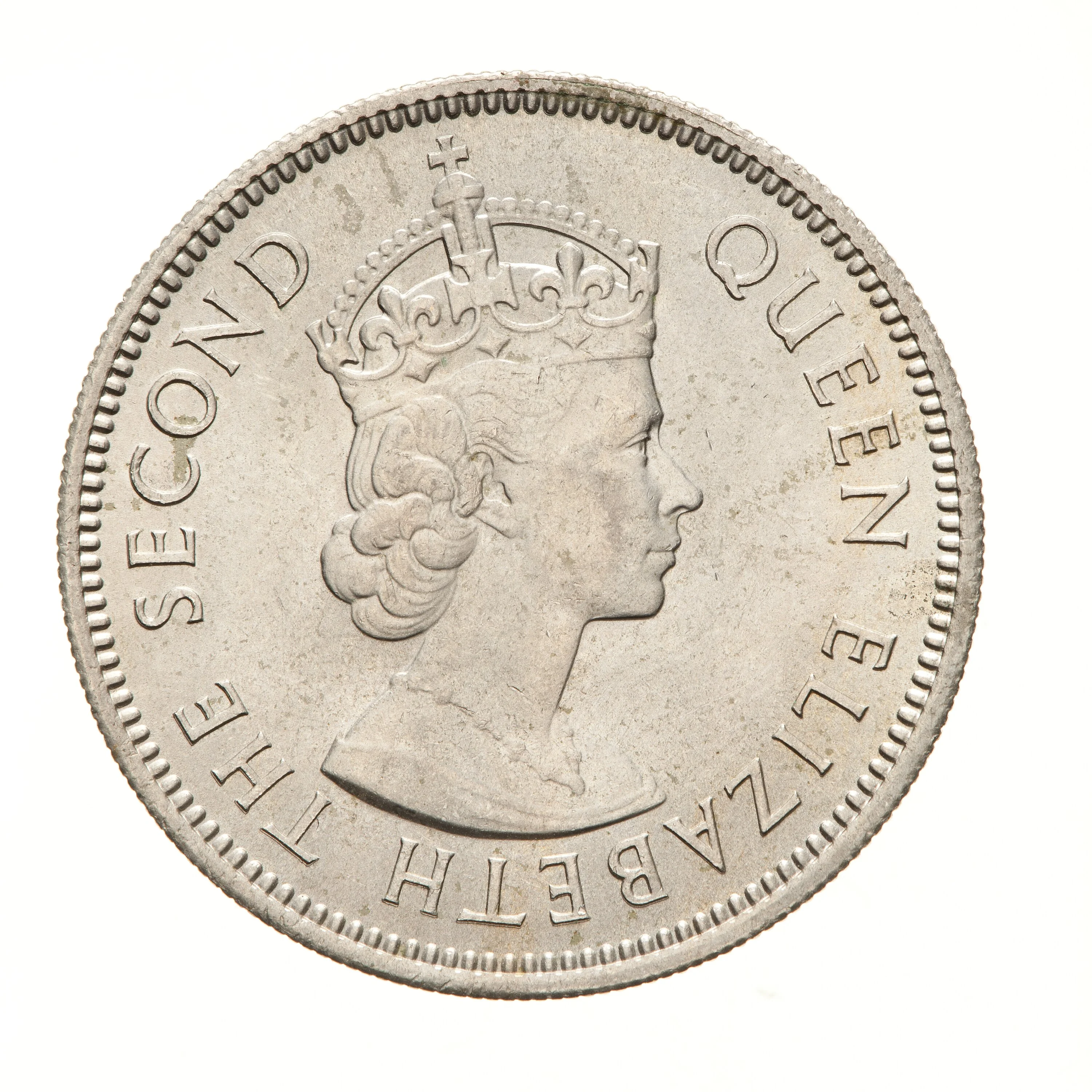
Obverse
Description:
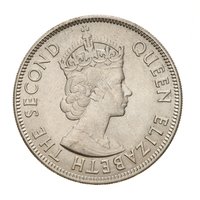
Queen Elizabeth II facing right, encircled by legend.
Inscription:
QUEEN ELIZABETH THE SECOND
CT
CT
Script: Latin
Engraver: Cecil Thomas
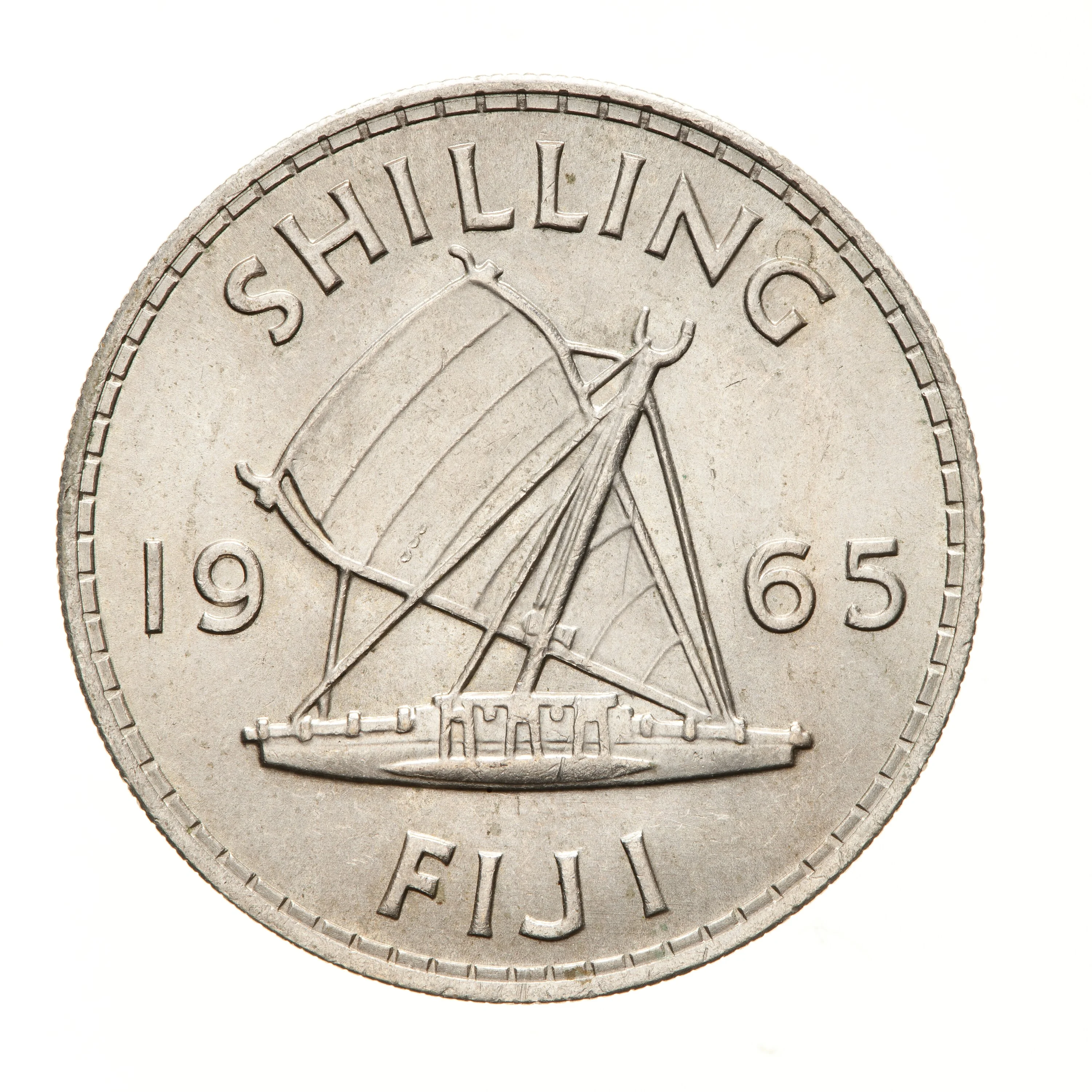
Reverse
Description:
Legendary Fijian sailboat.
Inscription:
SHILLING
19 62
FIJI
19 62
FIJI
Script: Latin
Engraver: Percy Metcalfe
Edge
Reeded
Categories
| Transportation> Watercraft |
Mints
| Name | Mark |
|---|---|
| Royal Mint (Tower Hill) | — |
Mintings
| Year | Mint Mark | Mintage | Quality | Collection |
|---|---|---|---|---|
| 1957 | — | 400,000 | ||
| 1957 | — | — | Proof | |
| 1958 | — | 400,000 | ||
| 1958 | — | — | Proof | |
| 1961 | — | 200,000 | ||
| 1961 | — | — | Proof | |
| 1962 | — | 400,000 | ||
| 1962 | — | — | Proof | |
| 1965 | — | 800,000 |
Historical background
In 1957, Fiji's currency situation was firmly under the control of the colonial government, operating within the broader framework of the sterling area. The official currency was the Fijian pound (FJ£), which was pegged at par with the British pound sterling (GB£). This fixed exchange rate meant that Fiji's monetary policy was effectively an extension of Britain's, with the value and supply of money in the islands directly tied to the reserves held in London. The currency itself was issued by the Board of Currency Commissioners, established in 1934, which ensured full sterling backing for all local notes and coins in circulation.
The economy was heavily dependent on sugar exports, with the industry dominated by the Australian-owned Colonial Sugar Refining Company. This export income, along with a growing tourist sector, generated the sterling reserves needed to back the local currency. Internally, cash transactions coexisted with a significant subsistence economy, and the banking sector was dominated by Australian and British commercial banks. There was little scope for independent monetary management; interest rates and credit conditions were largely determined by external factors and the policies of these foreign banks.
This period represented a stable but externally dependent monetary system. The arrangement provided confidence and avoided inflation, as the currency was fully convertible with sterling. However, it also meant Fiji had no autonomous mechanism to address local economic fluctuations or devalue its currency to boost exports. The system would remain largely unchanged until the decade preceding independence, when decimalization in 1969 introduced the Fijian dollar, marking a symbolic step toward financial sovereignty while initially maintaining a sterling peg.
The economy was heavily dependent on sugar exports, with the industry dominated by the Australian-owned Colonial Sugar Refining Company. This export income, along with a growing tourist sector, generated the sterling reserves needed to back the local currency. Internally, cash transactions coexisted with a significant subsistence economy, and the banking sector was dominated by Australian and British commercial banks. There was little scope for independent monetary management; interest rates and credit conditions were largely determined by external factors and the policies of these foreign banks.
This period represented a stable but externally dependent monetary system. The arrangement provided confidence and avoided inflation, as the currency was fully convertible with sterling. However, it also meant Fiji had no autonomous mechanism to address local economic fluctuations or devalue its currency to boost exports. The system would remain largely unchanged until the decade preceding independence, when decimalization in 1969 introduced the Fijian dollar, marking a symbolic step toward financial sovereignty while initially maintaining a sterling peg.
🌱 Common