

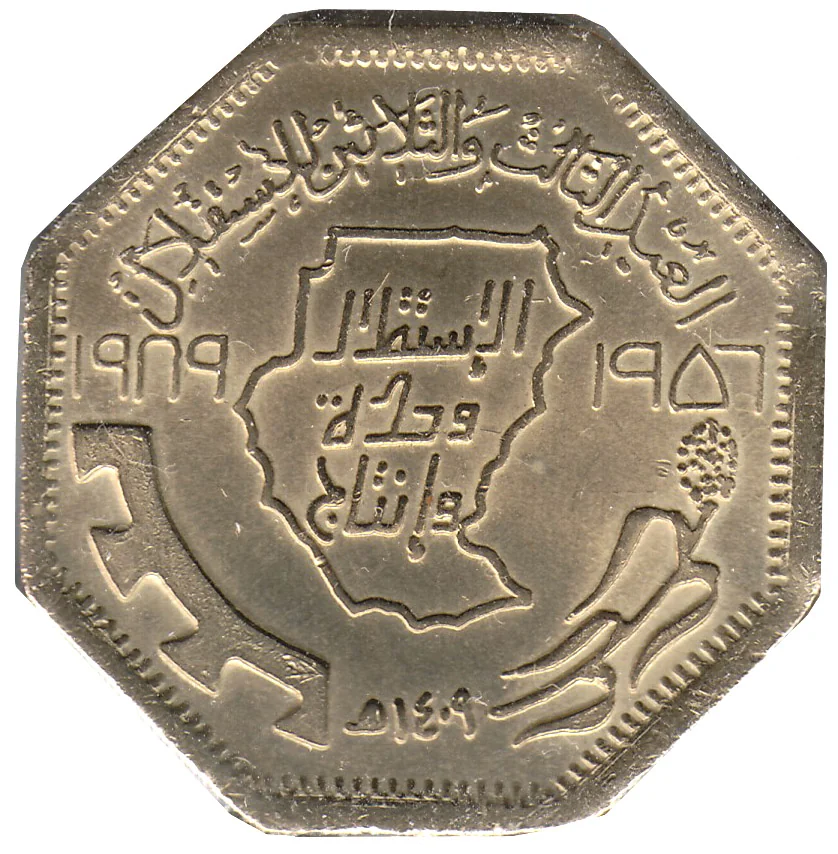
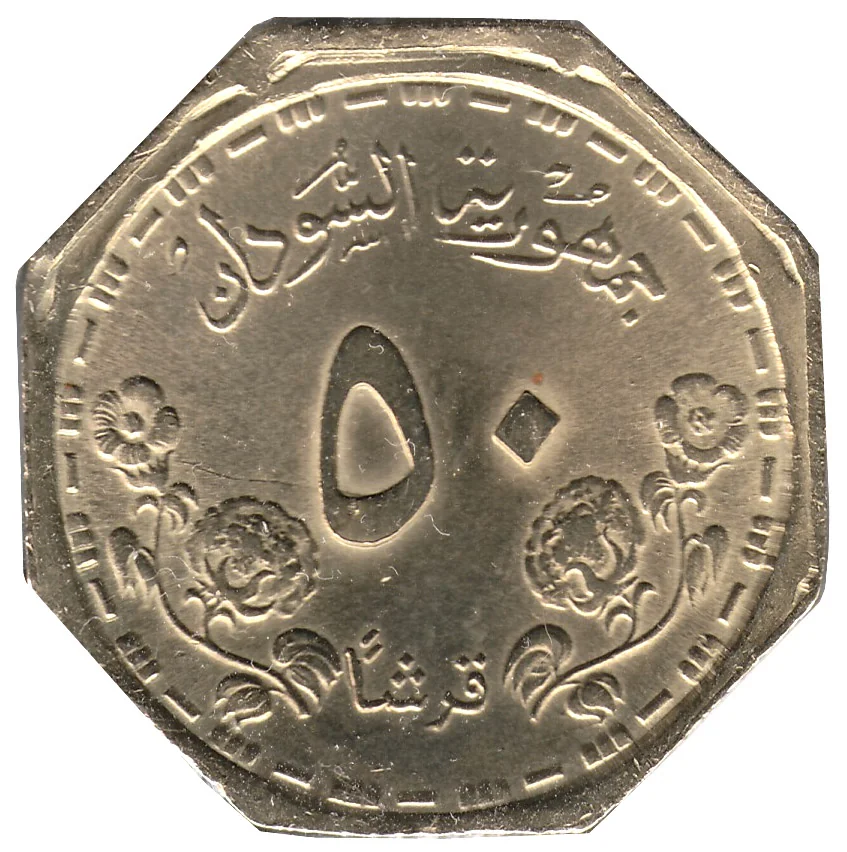
50 piastres (Independence) – Sudan
Add to wishlist
Circulating commemorative coins
Commemoration: 33rd Anniversary of Independence
Sudan
Context
Year: 1989
Islamic (Hijri) Year:: 1409
Issuer: Sudan
Period:
(1956—1969)
Currency:
(1956—1992)
Demonetization: 8 June 1992
Total mintage: 1,786,500
Material
Diameter: 30.4 mm
Weight: 12.06 g
Thickness: 2.7 mm
Shape: Octagonal
Composition: Aluminium bronze
Magnetic: No
Technique: Milled
Alignment: Medal alignment
flip
References
KM: #
Numista: #12559
Value
Exchange value: 0.50 SDP
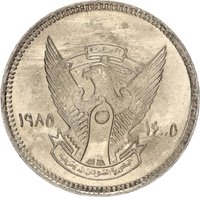
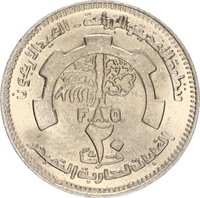
Obverse
Reverse
Edge
Plain
Categories
| Map |
| Event> Independence |
Mintings
| Year | Mint Mark | Mintage | Quality | Collection |
|---|---|---|---|---|
| 1989 | — | 1,786,500 |
Historical background
In 1989, Sudan's currency situation was a symptom of profound economic crisis and political instability. The Sudanese pound (SDG) was under severe pressure due to a combination of factors: a massive external debt burden, rampant government deficit spending, and the crippling cost of the ongoing civil war in the south. These pressures led to chronic inflation, a severe shortage of foreign exchange, and a thriving black market where the pound traded at a fraction of its official, overvalued rate. This disconnect between official and parallel market rates created major distortions, crippling formal trade and investment while enriching those with access to preferential official rates.
The political context was pivotal. The government of Prime Minister Sadiq al-Mahdi, a fragile coalition, was struggling to implement austerity measures demanded by the International Monetary Fund (IMF) as a condition for debt relief and new credit. These measures, including cutting subsidies and devaluing the currency, were deeply unpopular and sparked widespread public protests. The government's inability to stabilize the economy or end the civil war created a vacuum, setting the stage for a military coup.
On June 30, 1989, Colonel Omar al-Bashir seized power, partly justified by the need to restore economic order and national unity. The new regime initially froze the IMF negotiations and rejected its austerity prescriptions, seeking alternative solutions. However, the fundamental currency problems—depletion of reserves, inflationary financing of deficits, and the black market—remained unresolved and would continue to define Sudan's economic landscape for decades, now under a new, authoritarian military government.
The political context was pivotal. The government of Prime Minister Sadiq al-Mahdi, a fragile coalition, was struggling to implement austerity measures demanded by the International Monetary Fund (IMF) as a condition for debt relief and new credit. These measures, including cutting subsidies and devaluing the currency, were deeply unpopular and sparked widespread public protests. The government's inability to stabilize the economy or end the civil war created a vacuum, setting the stage for a military coup.
On June 30, 1989, Colonel Omar al-Bashir seized power, partly justified by the need to restore economic order and national unity. The new regime initially froze the IMF negotiations and rejected its austerity prescriptions, seeking alternative solutions. However, the fundamental currency problems—depletion of reserves, inflationary financing of deficits, and the black market—remained unresolved and would continue to define Sudan's economic landscape for decades, now under a new, authoritarian military government.
🌱 Fairly Common