

25 dollars – Zimbabwe
Add to wishlist
Zimbabwe
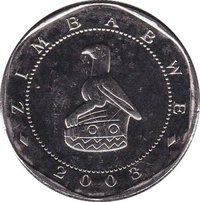
Obverse
Description:
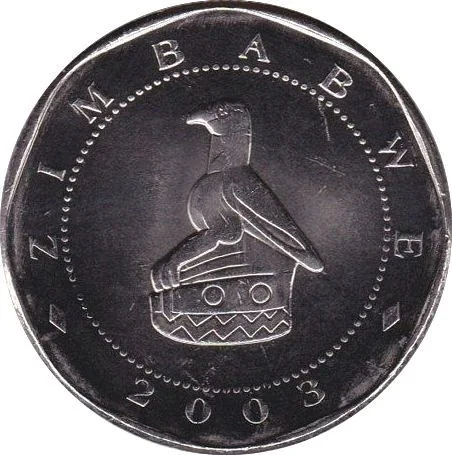
The famous Zimbabwe Bird, a protective sculpture from the 12th-14th century capital of the Monomotapa Empire, carved by the Shona people's ancestors.
Inscription:
ZIMBABWE
2003
2003
Script: Latin
Reverse
Description:
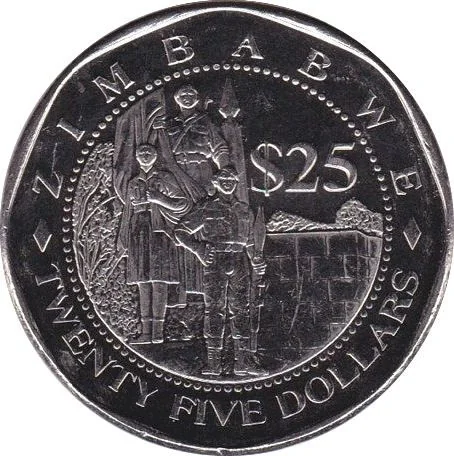
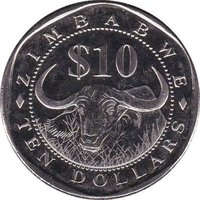
Minted in 2003, this coin's value was immediately obsolete due to hyperinflation. It only entered brief circulation in 2008 after a currency revaluation removed 10 zeros, making the 250-billion-dollar coin spendable. Within weeks, renewed inflation rendered it worthless again.
Inscription:
ZIMBABWE
$25
TWENTY FIVE DOLLARS
$25
TWENTY FIVE DOLLARS
Script: Latin
Edge
Interrupted reeding (5 sections)
Mints
| Name | Mark |
|---|---|
| Zimbabwe Mint | — |
Mintings
| Year | Mint Mark | Mintage | Quality | Collection |
|---|---|---|---|---|
| 2003 | — | — |
Historical background
By 2003, Zimbabwe was five years into a profound economic crisis, with its currency situation at the epicenter. The Zimbabwean dollar, once stronger than the US dollar at independence, was in a state of rapid devaluation following the controversial land reform program, economic mismanagement, and mounting international isolation. Hyperinflation had taken hold, officially exceeding 600% annually, though independent estimates suggested the real figure was far higher. This erosion of value destroyed savings, crippled formal business, and caused severe cash shortages, as the physical money supply could not keep pace with soaring prices.
The government's response, led by the Reserve Bank of Zimbabwe under Governor Gideon Gono, was a series of aggressive and ultimately ineffective interventions. Rather than addressing core fiscal policies, authorities imposed strict price and foreign exchange controls. An official fixed exchange rate was maintained at levels wildly disconnected from the thriving black market, where the Zimbabwean dollar traded for a fraction of its official value. This created a two-tier economy, incentivizing corruption and rent-seeking as access to scarce US dollars at the official rate became a prized privilege for the politically connected.
The currency collapse had devastating human consequences. Salaries paid in Zimbabwean dollars became worthless within days, pushing formal sector workers into poverty. Widespread shortages of basic commodities—fuel, food, medicine—became commonplace as production collapsed and importers could not access foreign currency. By the end of 2003, the stage was set for the eventual abandonment of the local currency, a process that would culminate in the adoption of a multi-currency system, led by the US dollar, in 2009 after a period of hyperinflation so severe it required the issuance of a 100 trillion dollar note.
The government's response, led by the Reserve Bank of Zimbabwe under Governor Gideon Gono, was a series of aggressive and ultimately ineffective interventions. Rather than addressing core fiscal policies, authorities imposed strict price and foreign exchange controls. An official fixed exchange rate was maintained at levels wildly disconnected from the thriving black market, where the Zimbabwean dollar traded for a fraction of its official value. This created a two-tier economy, incentivizing corruption and rent-seeking as access to scarce US dollars at the official rate became a prized privilege for the politically connected.
The currency collapse had devastating human consequences. Salaries paid in Zimbabwean dollars became worthless within days, pushing formal sector workers into poverty. Widespread shortages of basic commodities—fuel, food, medicine—became commonplace as production collapsed and importers could not access foreign currency. By the end of 2003, the stage was set for the eventual abandonment of the local currency, a process that would culminate in the adoption of a multi-currency system, led by the US dollar, in 2009 after a period of hyperinflation so severe it required the issuance of a 100 trillion dollar note.
🌱 Common