

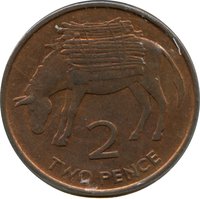
2 Pence – Saint Helena and Ascension
United Kingdom
Context
Year: 1984
Country: United Kingdom 
Issuer: Saint Helena and Ascension
Ruler: Elizabeth II
Currency:
(since 1976)
Material
References
KM: #Click to copy to clipboard2
Numista: #12527
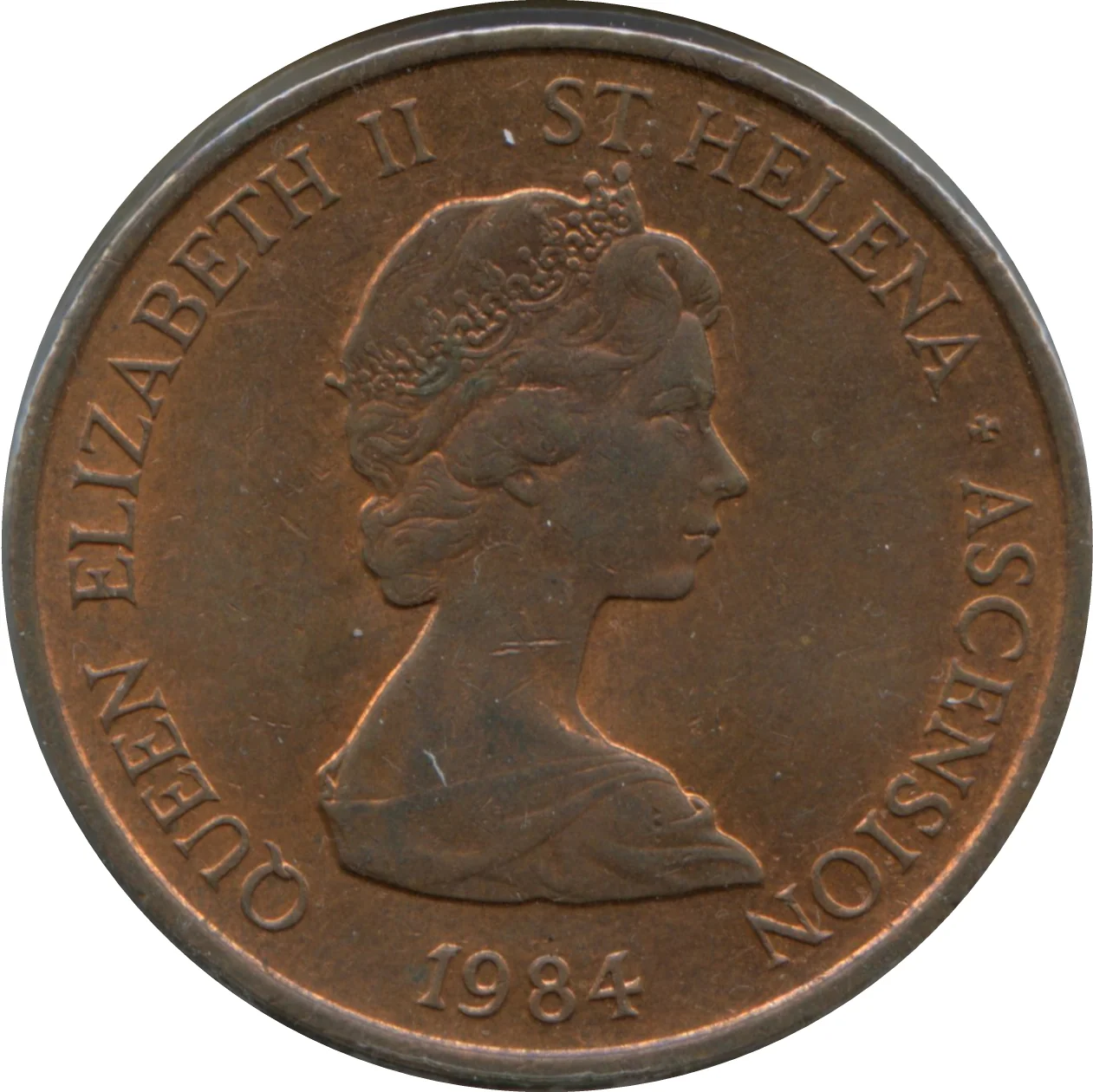
Obverse
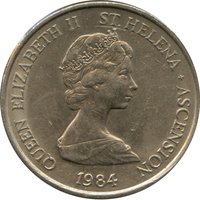
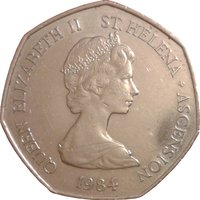
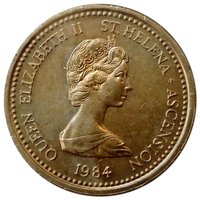
Description:
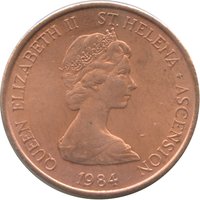
Young facing right, date beneath.
Inscription:
QUEEN ELIZABETH II ST. HELENA · ASCENSION
1984
1984
Script: Latin
Engraver: Arnold Machin
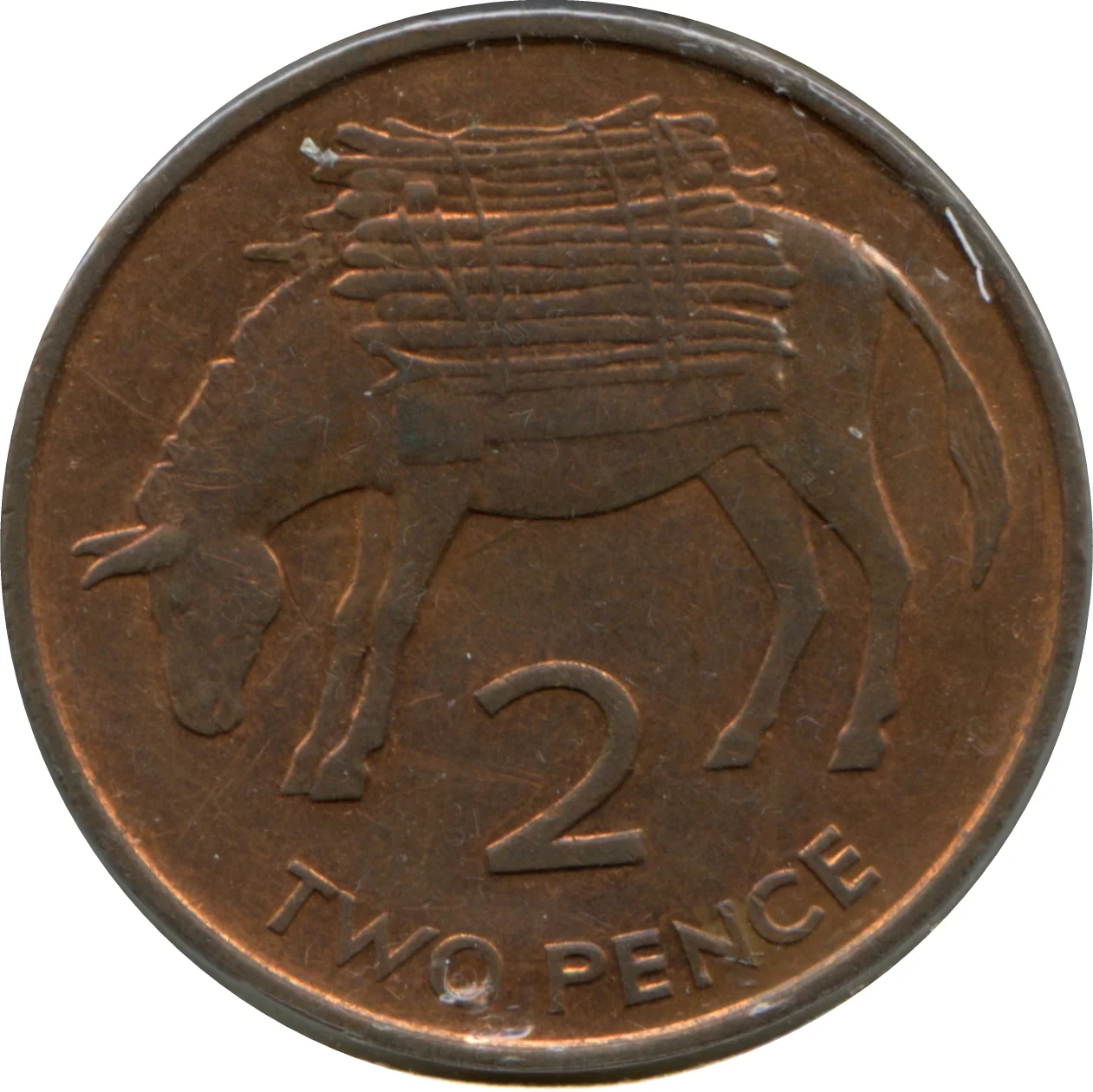
Reverse
Edge
Plain
Mints
| Name | Mark |
|---|---|
| Royal Mint | — |
Mintings
| Year | Mint Mark | Mintage | Quality | Collection |
|---|---|---|---|---|
| 1984 | — | — | Proof | |
| 1984 | — | — | BU | |
| 1984 | — | — |
Historical background
In 1984, the currency situation on the islands of Saint Helena and Ascension was unified under the Saint Helena pound (SHP), which was pegged at par with the British pound sterling (GBP). This arrangement meant that British coins and banknotes circulated freely alongside locally issued currency. For Saint Helena, this included government-issued paper notes, while Ascension, as a dependency of Saint Helena, operated under the same monetary system. The parity with sterling was crucial, ensuring stability for government accounts, trade, and remittances, as the islands were almost entirely dependent on financial support and administrative direction from the United Kingdom.
Economically, the currency peg reflected the islands' extreme isolation and limited economic activity. Saint Helena's economy in 1984 was fragile, reliant on British budgetary aid, philatelic sales, and a small amount of fishing and agriculture. There was no significant independent monetary policy; the currency's value and supply were effectively determined by the Bank of England and the island's link to the UK Treasury. Ascension's economy was dominated by its role as a strategic communications and military hub, with the British and American bases providing the primary employment and injecting sterling into the local system.
Despite the formal parity, practical challenges existed. The physical supply of cash was sometimes problematic due to the infrequent shipping schedules to the remote South Atlantic. Furthermore, while the SHP was legally separate, its total dependence on sterling reserves meant its existence was largely symbolic of local administration rather than economic sovereignty. This system, unchanged for decades, underscored the islands' status as a British Overseas Territory, with their monetary affairs entirely anchored to and sustained by the United Kingdom.
Economically, the currency peg reflected the islands' extreme isolation and limited economic activity. Saint Helena's economy in 1984 was fragile, reliant on British budgetary aid, philatelic sales, and a small amount of fishing and agriculture. There was no significant independent monetary policy; the currency's value and supply were effectively determined by the Bank of England and the island's link to the UK Treasury. Ascension's economy was dominated by its role as a strategic communications and military hub, with the British and American bases providing the primary employment and injecting sterling into the local system.
Despite the formal parity, practical challenges existed. The physical supply of cash was sometimes problematic due to the infrequent shipping schedules to the remote South Atlantic. Furthermore, while the SHP was legally separate, its total dependence on sterling reserves meant its existence was largely symbolic of local administration rather than economic sovereignty. This system, unchanged for decades, underscored the islands' status as a British Overseas Territory, with their monetary affairs entirely anchored to and sustained by the United Kingdom.
🌱 Common