

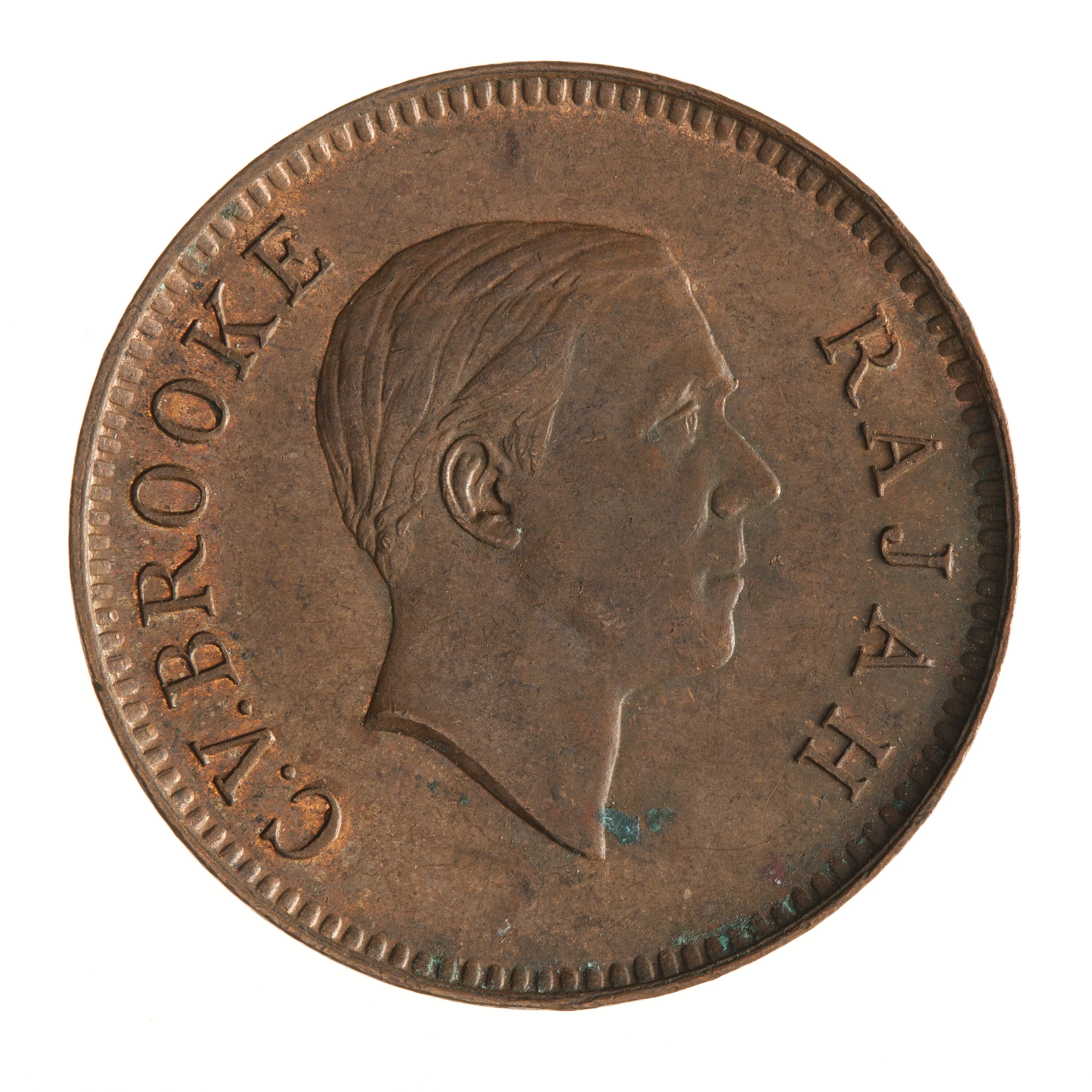
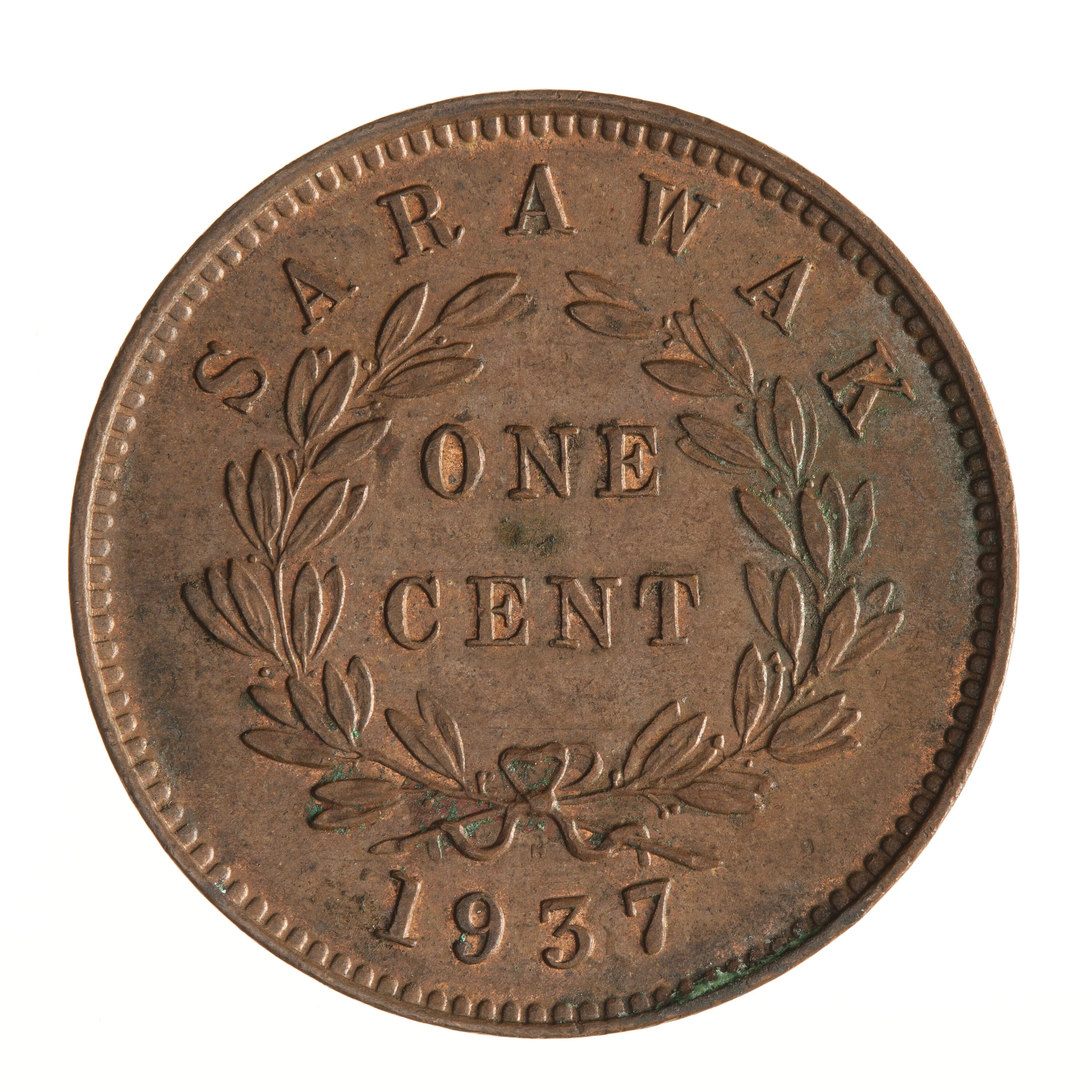
1 Cent – Sarawak
Malaysia
Context
Years: 1927–1941
Country: Malaysia 
Issuer: Sarawak
Ruler: Charles Vyner Brooke
Currency:
(1868—1946)
Demonetized: Yes
Total mintage: 16,000,000
Material
References
KM: #Click to copy to clipboard18
Numista: #12520
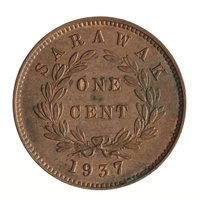
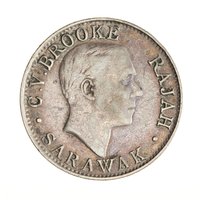
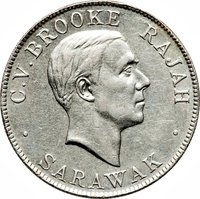
Obverse
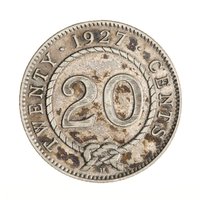
Reverse
Edge
Plain
Mints
| Name | Mark |
|---|---|
| Heaton and Sons / The Mint Birmingham | H |
Mintings
Historical background
In 1927, Sarawak was an independent kingdom under the rule of the White Rajahs of the Brooke family. Its currency situation was a complex legacy of its unique political status and regional trade. The state was not part of the British Malayan currency union, nor did it use the Straits Settlements dollar as its sole legal tender. Instead, Sarawak operated under a system where multiple currencies circulated concurrently. The official currency was the Sarawak dollar, introduced by Rajah Charles Brooke in 1863 and issued by the Sarawak Government Treasury, bearing the Brooke family crest.
However, in practice, the Straits Settlements dollar and even the British sovereign and trade dollars were widely accepted and used, especially in commerce with Singapore and other parts of Southeast Asia. This multi-currency environment was a pragmatic reflection of Sarawak’s economic reality: its trade was deeply integrated with the broader region. The value of the Sarawak dollar was pegged at par with the Straits Settlements dollar, and both were on a silver standard, which provided stability but also tied the local economy to fluctuating global silver prices.
By the late 1920s, this system, while functional, was beginning to show its administrative limitations. The need for a more formalized and modern banking and currency authority was becoming apparent. This period set the stage for the major reform that would follow in 1930, when Rajah Charles Vyner Brooke established the Sarawak Currency Board, centralizing note issuance and further solidifying the Sarawak dollar's stability, just before the global economic pressures of the Great Depression and the eventual shift away from the silver standard.
However, in practice, the Straits Settlements dollar and even the British sovereign and trade dollars were widely accepted and used, especially in commerce with Singapore and other parts of Southeast Asia. This multi-currency environment was a pragmatic reflection of Sarawak’s economic reality: its trade was deeply integrated with the broader region. The value of the Sarawak dollar was pegged at par with the Straits Settlements dollar, and both were on a silver standard, which provided stability but also tied the local economy to fluctuating global silver prices.
By the late 1920s, this system, while functional, was beginning to show its administrative limitations. The need for a more formalized and modern banking and currency authority was becoming apparent. This period set the stage for the major reform that would follow in 1930, when Rajah Charles Vyner Brooke established the Sarawak Currency Board, centralizing note issuance and further solidifying the Sarawak dollar's stability, just before the global economic pressures of the Great Depression and the eventual shift away from the silver standard.
🌱 Common