

1 florin – Australia
Add to wishlist
Circulating commemorative coins
Commemoration: Opening of old Parliament House
Australia
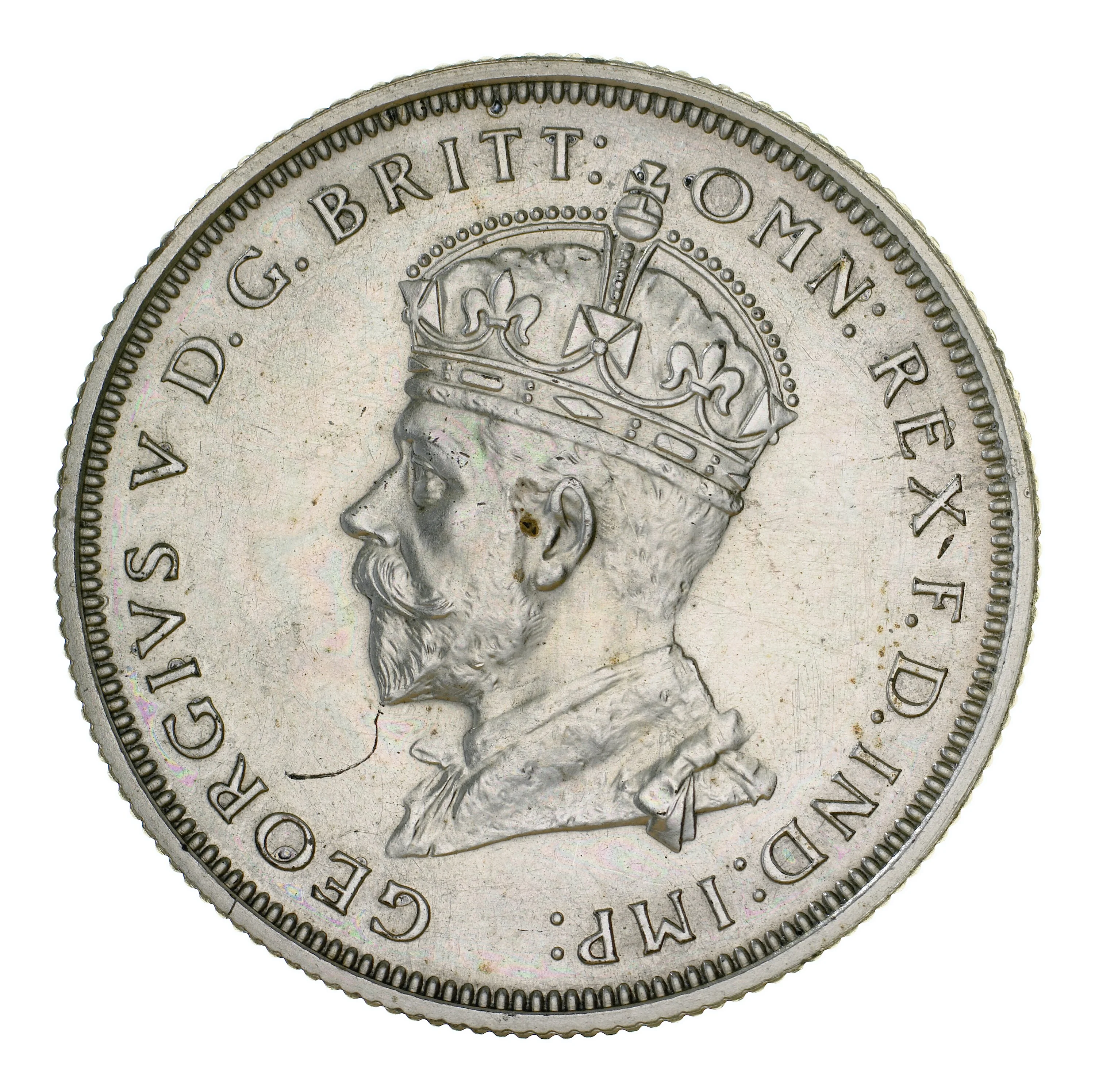
Obverse
Description:
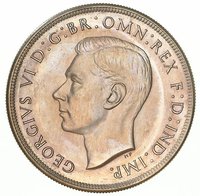
Crowned and robed bust of George V, left-facing.
Inscription:
GEORGIVS V D:G: BRITT: OMN: REX F.D.IND:IMP:
Translation:
George V by the Grace of God King of all the Britains Defender of the Faith Emperor of India
Script: Latin
Language: Latin
Designer: Edgar Bertram MacKennal
Reverse
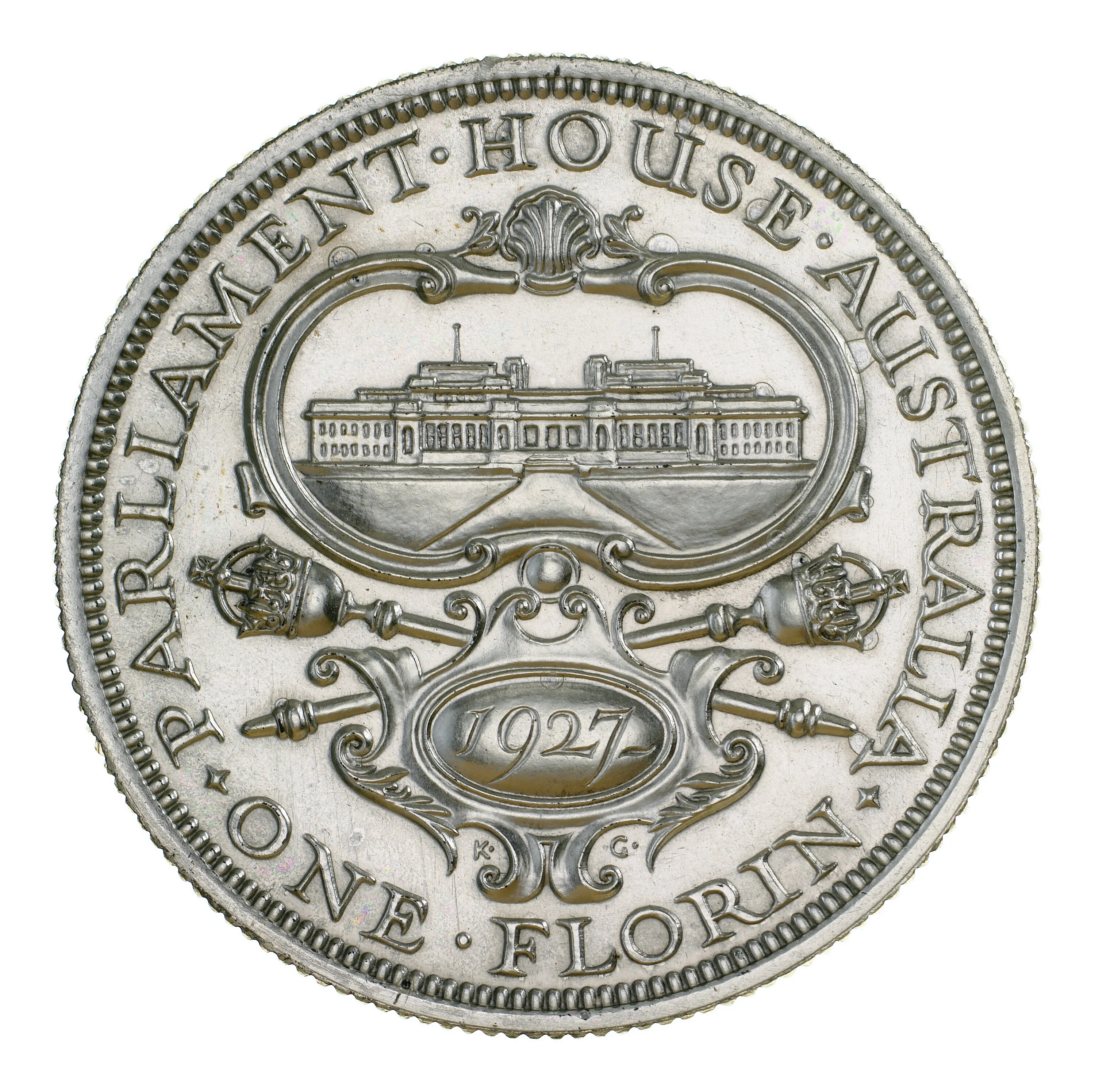
Description:
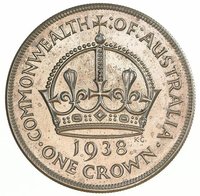
Parliament House in an oval, above crossed scepters overlaid with an oval bearing the date 1927.
Inscription:
PARLIAMENT · HOUSE · AUSTRALIA
1927
· ONE · FLORIN ·
K· G·
1927
· ONE · FLORIN ·
K· G·
Script: Latin
Designer: George Kruger Gray
Edge
Reeded
Mints
| Name | Mark |
|---|---|
| Royal Mint | — |
Mintings
| Year | Mint Mark | Mintage | Quality | Collection |
|---|---|---|---|---|
| 1927 | — | 400 | Proof | |
| 1927 | — | 2,000,000 |
Historical background
In 1927, Australia's currency situation was defined by a pivotal transition: the gradual replacement of sterling with a distinct national currency. Since Federation in 1901, the nation's money had remained tied to the British pound sterling, with Australian banks issuing their own notes but with values pegged directly to the UK standard. This system lacked a central Australian issuing authority and was seen as inefficient for a growing, independent economy. The landmark Commonwealth Bank Act 1920 and the Australian Notes Act 1910 had laid the groundwork for change, but 1927 marked a key year of implementation towards a unified national system.
The most significant event of the period was the opening of the Commonwealth Bank's Note Printing Branch in Melbourne in 1927. This facility centralised the production of Australia's first official series of distinct banknotes, moving away from the earlier practice of private trading banks issuing their own sterling-denominated notes. While the Australian pound (£A) remained pegged at par with sterling, these new notes were a powerful symbol of financial sovereignty. They featured distinctly Australian designs, including portraits of King George V and imagery of local industry, physically distancing the currency from its British counterpart in the public's hands.
Economically, the 1920s were a period of recovery and growth, but underlying vulnerabilities persisted. The currency peg to sterling provided stability for international trade, which was heavily oriented towards Britain. However, it also meant Australia imported Britain's monetary policy, including the decision to return to the gold standard in 1925, which some economists argue contributed to deflationary pressures. By 1927, the framework for a sovereign Australian currency was firmly in place, setting the stage for future monetary independence, though full decimalisation and the introduction of the dollar lay decades ahead in 1966.
The most significant event of the period was the opening of the Commonwealth Bank's Note Printing Branch in Melbourne in 1927. This facility centralised the production of Australia's first official series of distinct banknotes, moving away from the earlier practice of private trading banks issuing their own sterling-denominated notes. While the Australian pound (£A) remained pegged at par with sterling, these new notes were a powerful symbol of financial sovereignty. They featured distinctly Australian designs, including portraits of King George V and imagery of local industry, physically distancing the currency from its British counterpart in the public's hands.
Economically, the 1920s were a period of recovery and growth, but underlying vulnerabilities persisted. The currency peg to sterling provided stability for international trade, which was heavily oriented towards Britain. However, it also meant Australia imported Britain's monetary policy, including the decision to return to the gold standard in 1925, which some economists argue contributed to deflationary pressures. By 1927, the framework for a sovereign Australian currency was firmly in place, setting the stage for future monetary independence, though full decimalisation and the introduction of the dollar lay decades ahead in 1966.
🌱 Common