

4½ Piastres – Cyprus
Cyprus
Context

Material
References
KM: #Click to copy to clipboard5
Numista: #12472
Value
Bullion value: $7.42
Obverse
Description:
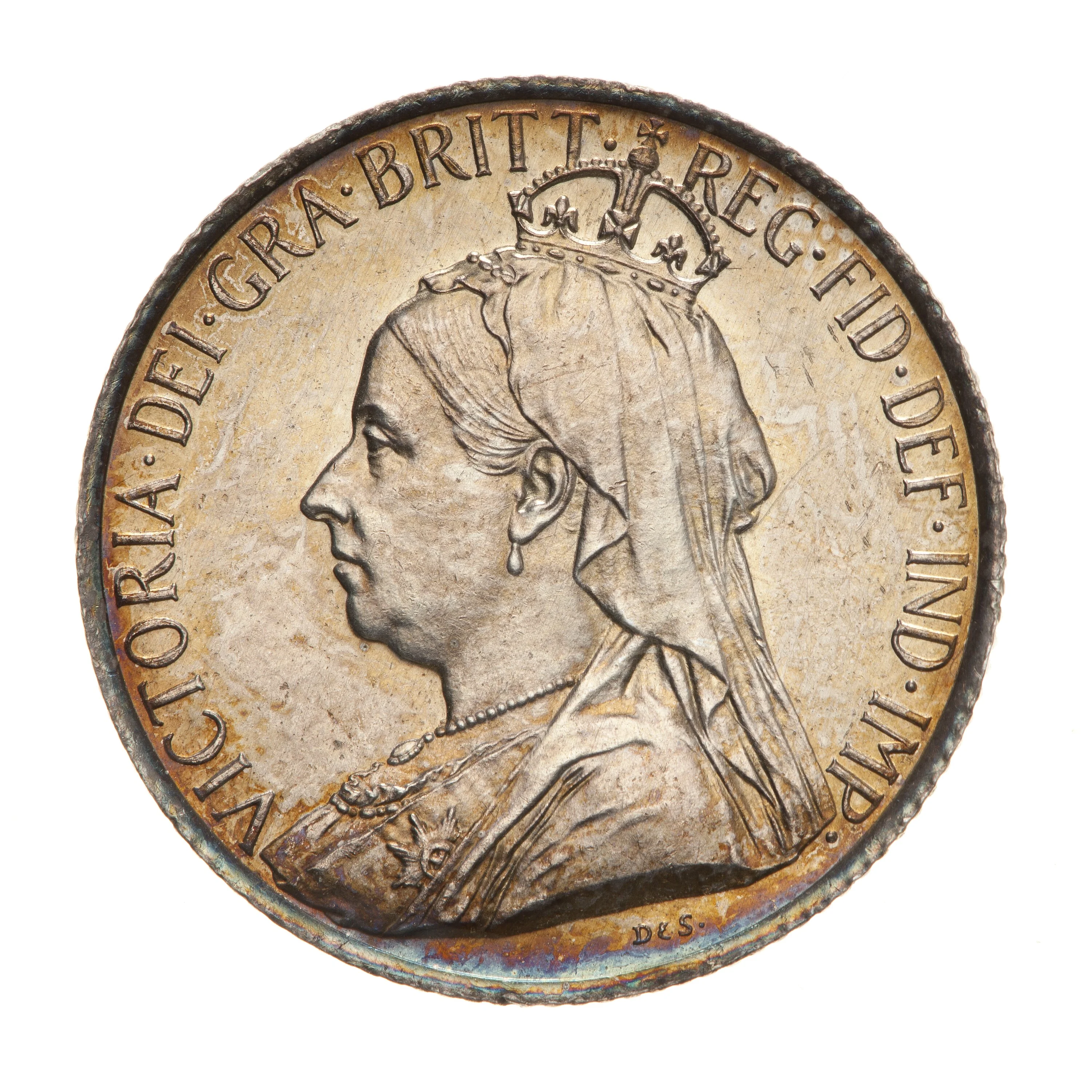
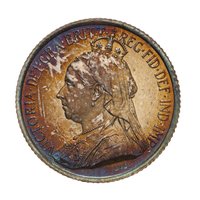
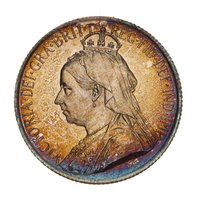
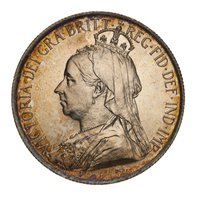
Veiled left-facing bust of Queen Victoria, crowned. "DeS" below, encircled by "VICTORIA.DEI.GRA.BRITT.REG.FID.DEF.IND.IMP."
Inscription:
VICTORIA.DEI.GRA.BRITT.REG.FID.DEF.IND.IMP.
Script: Latin
Engraver: George William de Saulles
Reverse
Description:
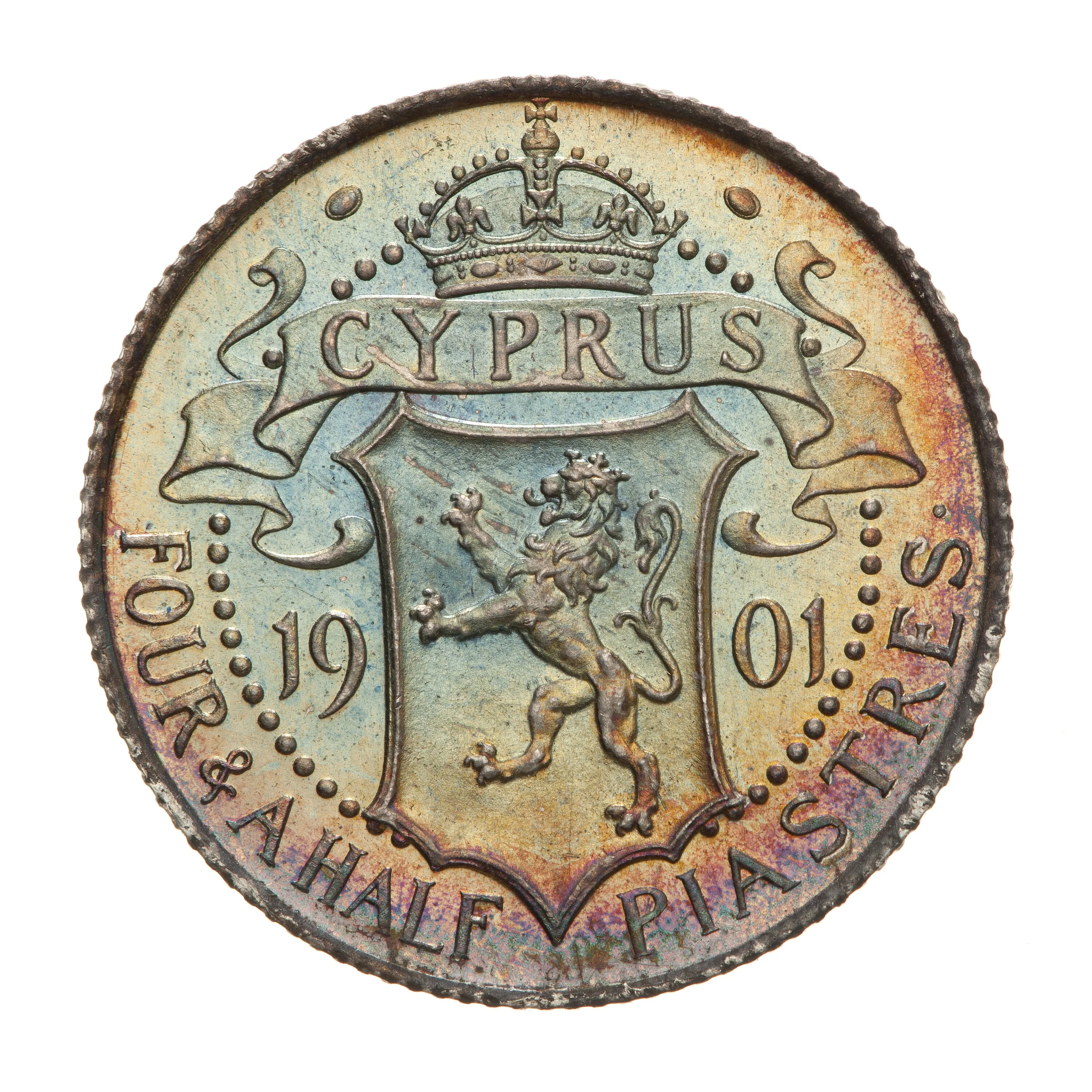
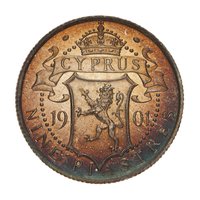
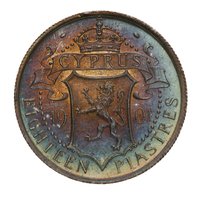
A crowned shield bearing the Lusignan lion splits the date 1901. The crown rests on a scroll reading CYPRUS, with the value FOUR AND HALF PIASTRES around the lower edge.
Inscription:
CYPRUS
19 01
FOUR & A HALF PIASTRES
19 01
FOUR & A HALF PIASTRES
Script: Latin
Edge
Reeded
Mints
| Name | Mark |
|---|---|
| Royal Mint (Tower Hill) | — |
Mintings
| Year | Mint Mark | Mintage | Quality | Collection |
|---|---|---|---|---|
| 1901 | — | 400,000 | ||
| 1901 | — | — | Proof |
Historical background
In 1901, Cyprus operated under a complex and transitional currency system, a direct legacy of its recent political change. The island had been under British administration since 1878, but it remained a de jure part of the Ottoman Empire until the outbreak of the First World War. Consequently, the official currency was the Ottoman lira (or "Turkish pound"), divided into 100 piastres (kuruş). However, British sterling coins and banknotes from the UK and Egypt also circulated widely, especially in government and trade circles, creating a dual-currency environment.
The coexistence of these currencies was problematic. Exchange rates between the Ottoman lira and sterling fluctuated, causing confusion and instability in commercial transactions. The British administration collected taxes in sterling but made many payments in Ottoman currency, exposing both the government and the public to exchange rate risks. This monetary confusion hindered economic development and was a point of contention for local merchants and the colonial administration alike, who sought a more uniform and stable system.
Recognising these issues, the British authorities had already begun laying the groundwork for reform. A major step came in 1901 with the "Cyprus (Currency) Order in Council," which formally demonetised the Ottoman currency and established the Cypriot pound as the sole legal tender, pegged at parity with British sterling. While full implementation took several years (with new coins introduced in 1901 and notes later), this pivotal legislation marked the definitive end of the Ottoman monetary era and formally integrated Cyprus into the British sterling zone, providing the stable financial foundation it lacked throughout the late 19th century.
The coexistence of these currencies was problematic. Exchange rates between the Ottoman lira and sterling fluctuated, causing confusion and instability in commercial transactions. The British administration collected taxes in sterling but made many payments in Ottoman currency, exposing both the government and the public to exchange rate risks. This monetary confusion hindered economic development and was a point of contention for local merchants and the colonial administration alike, who sought a more uniform and stable system.
Recognising these issues, the British authorities had already begun laying the groundwork for reform. A major step came in 1901 with the "Cyprus (Currency) Order in Council," which formally demonetised the Ottoman currency and established the Cypriot pound as the sole legal tender, pegged at parity with British sterling. While full implementation took several years (with new coins introduced in 1901 and notes later), this pivotal legislation marked the definitive end of the Ottoman monetary era and formally integrated Cyprus into the British sterling zone, providing the stable financial foundation it lacked throughout the late 19th century.
Series: 1901 Cyprus circulation coins
🌟 Uncommon