

1 maravedi – Spain
Add to wishlist
Spain
Context
Material
Diameter: 13 mm
Weight: 0.82 g
Shape: Irregular round
Composition: Copper
Magnetic: No
Technique: Hammered
References
KM: #
Numista: #554194
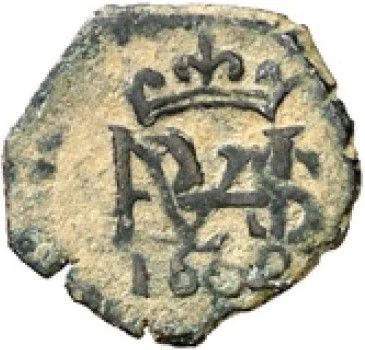
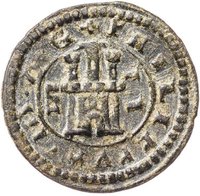
Obverse
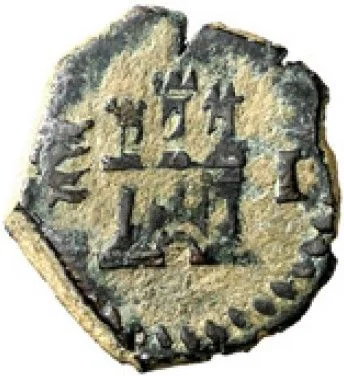
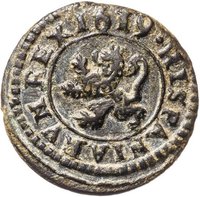
Reverse
Edge
Categories
| Building> Castle or fortification |
| Symbols> Monogram |
Mints
| Name | Mark |
|---|---|
| Casa vieja de Segovia | — |
| Royal Mint of La Coruña | — |
| Valladolid | — |
| Royal Mint of Burgos | B |
| Cuenca | C |
| Royal Mint of Seville | S |
| Toledo | (T) |
Mintings
Historical background
In 1601, the Spanish monarchy under Philip III was grappling with a severe and protracted currency crisis, a direct consequence of the Crown's relentless spending on its vast European military commitments. To finance endless wars, the Habsburgs had resorted to massive borrowing and, most damagingly, the repeated debasement of the silver vellón coinage. By alloying silver with cheaper copper and authorising excessive minting, the Crown flooded the economy with unstable currency, leading to rampant inflation and a collapse in public trust. The classic economic principle of Gresham's Law took hold, where "bad money drives out good," as people hoarded the older, purer silver coins and used the debased vellón for daily transactions, further distorting the economy.
The situation reached a critical point in 1599-1600, prompting a drastic but ill-conceived response. In an attempt to restore confidence, the Crown issued a decree in 1600 to call in and cease minting all vellón currency, aiming to reintroduce a pure copper coin. This sudden withdrawal of the primary circulating medium, however, created an acute money shortage, crippling commerce and daily life. By 1601, the economic paralysis was so severe that markets froze, creditors refused loans, and widespread protest loomed. The government was forced into a humiliating reversal, reinstating the debased vellón in July 1601 to restore liquidity, but this only reaffirmed the cycle of instability and mistrust.
This monetary chaos occurred against the backdrop of Spain's broader "General Crisis" of the 17th century. While wealth from American silver continued to arrive, it flowed directly out to foreign bankers to service debts, failing to stimulate domestic production. The currency instability of 1601 thus symbolised a deeper structural decline: a stagnant economy, a bankrupt treasury, and a fatal reliance on precious metals over productive enterprise. It was a stark symptom of the overextended Habsburg empire's inability to reconcile its imperial ambitions with sound fiscal management, setting the stage for further economic difficulties in the decades to follow.
The situation reached a critical point in 1599-1600, prompting a drastic but ill-conceived response. In an attempt to restore confidence, the Crown issued a decree in 1600 to call in and cease minting all vellón currency, aiming to reintroduce a pure copper coin. This sudden withdrawal of the primary circulating medium, however, created an acute money shortage, crippling commerce and daily life. By 1601, the economic paralysis was so severe that markets froze, creditors refused loans, and widespread protest loomed. The government was forced into a humiliating reversal, reinstating the debased vellón in July 1601 to restore liquidity, but this only reaffirmed the cycle of instability and mistrust.
This monetary chaos occurred against the backdrop of Spain's broader "General Crisis" of the 17th century. While wealth from American silver continued to arrive, it flowed directly out to foreign bankers to service debts, failing to stimulate domestic production. The currency instability of 1601 thus symbolised a deeper structural decline: a stagnant economy, a bankrupt treasury, and a fatal reliance on precious metals over productive enterprise. It was a stark symptom of the overextended Habsburg empire's inability to reconcile its imperial ambitions with sound fiscal management, setting the stage for further economic difficulties in the decades to follow.
✨ Legendary