

2 euro – Slovakia
Add to wishlist
Circulating commemorative coins
Commemoration: Trenčín – European Capital of Culture 2026
Slovakia
Obverse
Description:
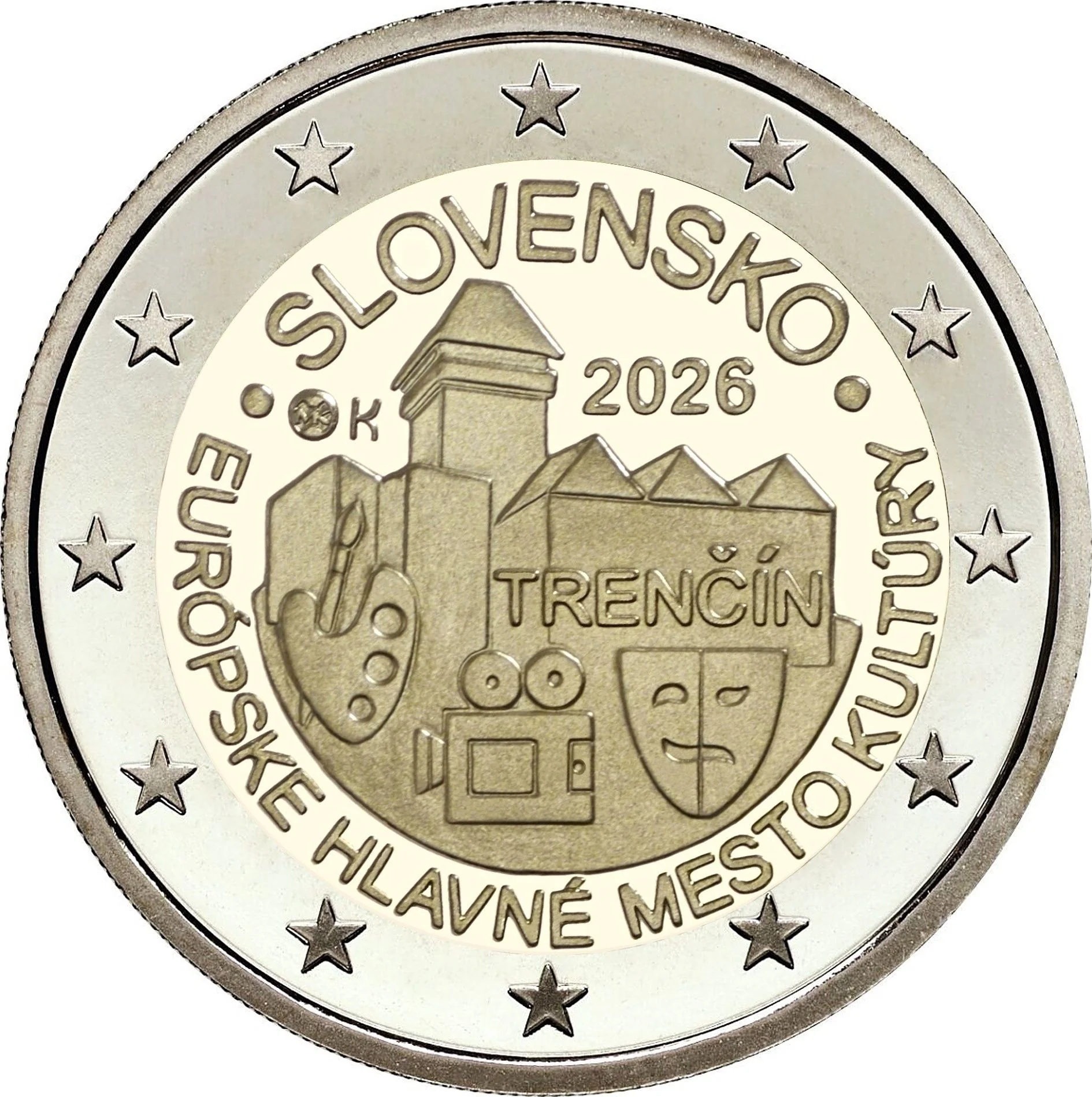
The design depicts Trenčín Castle with a painter's palette, film camera, and theatre masks. 'TRENČÍN' is across the castle, with the year '2026' above. The mint mark 'MK' and designer's initial 'K' are at upper left. 'SLOVENSKO' and 'EURÓPSKE HLAVNÉ MESTO KULTÚRY' are along the top and bottom edges, separated by dots. The outer ring features the 12 European stars.
Inscription:
• SLOVENSKO •
MK K
2026
TRENČÍN
EURÓPSKE HLAVNÉ MESTO KULTÚRY
MK K
2026
TRENČÍN
EURÓPSKE HLAVNÉ MESTO KULTÚRY
Script: Latin
Designer: Klára Markl Fojtů
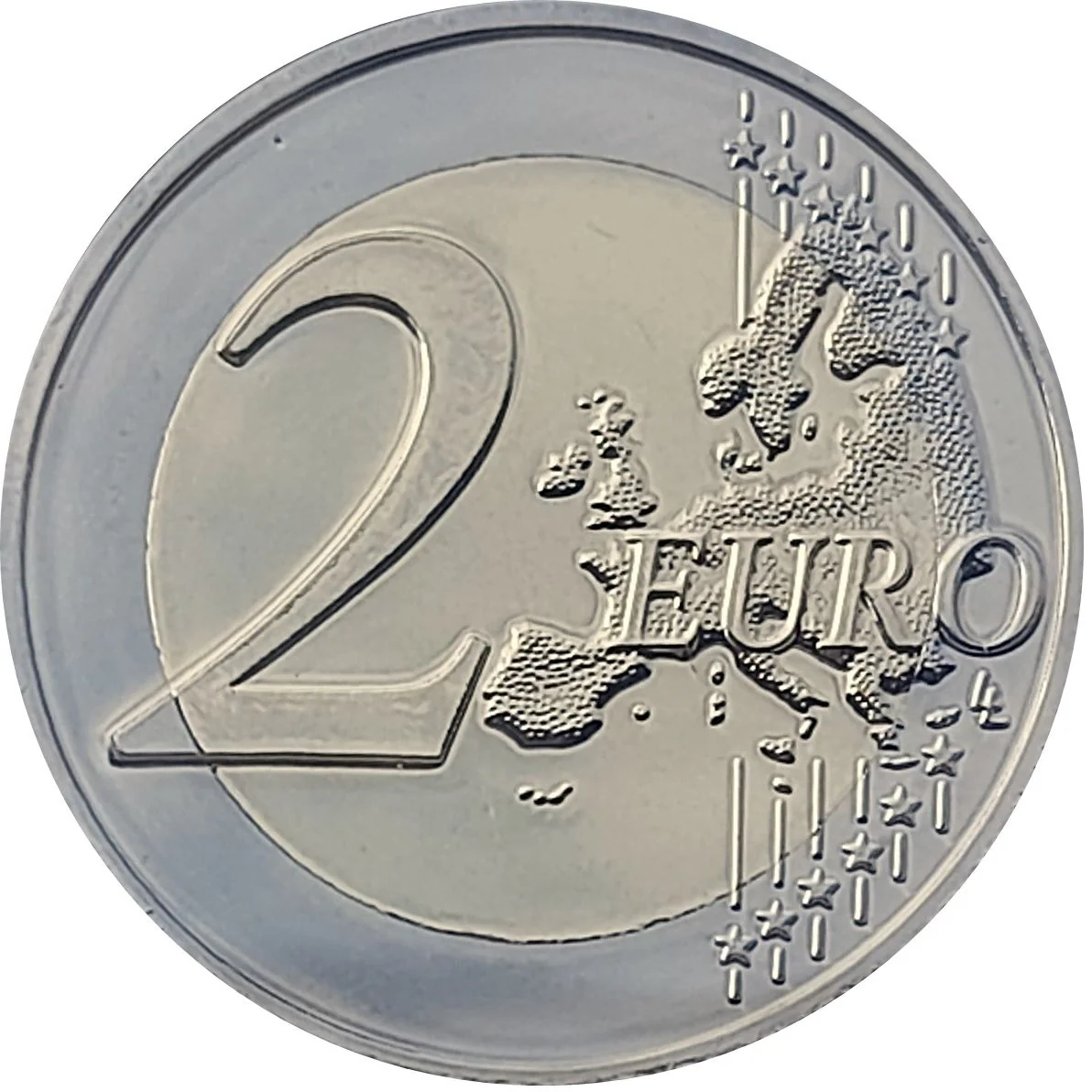
Reverse
Edge
Slovak Republic in Slovak with two stars and linden leaf between
Legend:
★ SLOVENSKÁ REPUBLIKA ★
Categories
| Building> Castle or fortification |
| Map |
| Geography> Town |
Mints
| Name | Mark |
|---|---|
| Kremnica | (MK) |
Mintings
| Year | Mint Mark | Mintage | Quality | Collection |
|---|---|---|---|---|
| 2026 | MK | 995,000 | ||
| 2026 | MK | 5,000 | Proof |
Historical background
As of 2026, Slovakia remains a committed and integrated member of the Eurozone, with the euro (EUR) continuing as its sole legal tender since its adoption in 2009. The country's monetary policy is set by the European Central Bank (ECB), with the National Bank of Slovakia (NBS) participating in the Eurosystem and focusing on financial stability, banking supervision, and economic analysis within the national context. The primary monetary challenges for Slovakia mirror broader Eurozone concerns: managing persistent, though gradually easing, inflationary pressures stemming from the post-pandemic and energy crisis era, and navigating the ECB's interest rate trajectory aimed at stabilizing prices without stifling economic growth.
Domestically, the currency situation is stable but underscored by ongoing economic debates. Slovakia's economy, heavily reliant on automotive manufacturing and exports, benefits from the euro's elimination of exchange rate risk within its key European trading partners. However, the lack of an independent monetary policy means the nation cannot devalue its currency to boost competitiveness, placing greater emphasis on fiscal policy, structural reforms, and enhancing productivity to address regional disparities and a higher-than-Eurozone-average inflation rate. Public and political discourse occasionally features nostalgic or populist rhetoric about the former Slovak koruna, but there is no serious political movement or government policy advocating for an exit from the euro, which is widely seen as a cornerstone of the country's economic and geopolitical identity.
Looking forward, the key currency-related focus for Slovakia in 2026 is on deepening its integration within the EU's financial architecture. This includes active participation in the ongoing development of the Banking Union and the Capital Markets Union, aimed at strengthening the resilience of the Eurozone as a whole. Domestically, the NBS continues to promote financial literacy and the adoption of digital payment innovations, including the digital euro pilot project, which is in advanced testing phases. The stability of the euro provides a crucial framework as the government addresses long-term challenges of demographic aging, energy transition, and maintaining fiscal discipline in line with the EU's revised economic governance rules.
Domestically, the currency situation is stable but underscored by ongoing economic debates. Slovakia's economy, heavily reliant on automotive manufacturing and exports, benefits from the euro's elimination of exchange rate risk within its key European trading partners. However, the lack of an independent monetary policy means the nation cannot devalue its currency to boost competitiveness, placing greater emphasis on fiscal policy, structural reforms, and enhancing productivity to address regional disparities and a higher-than-Eurozone-average inflation rate. Public and political discourse occasionally features nostalgic or populist rhetoric about the former Slovak koruna, but there is no serious political movement or government policy advocating for an exit from the euro, which is widely seen as a cornerstone of the country's economic and geopolitical identity.
Looking forward, the key currency-related focus for Slovakia in 2026 is on deepening its integration within the EU's financial architecture. This includes active participation in the ongoing development of the Banking Union and the Capital Markets Union, aimed at strengthening the resilience of the Eurozone as a whole. Domestically, the NBS continues to promote financial literacy and the adoption of digital payment innovations, including the digital euro pilot project, which is in advanced testing phases. The stability of the euro provides a crucial framework as the government addresses long-term challenges of demographic aging, energy transition, and maintaining fiscal discipline in line with the EU's revised economic governance rules.
⭐ Rare