

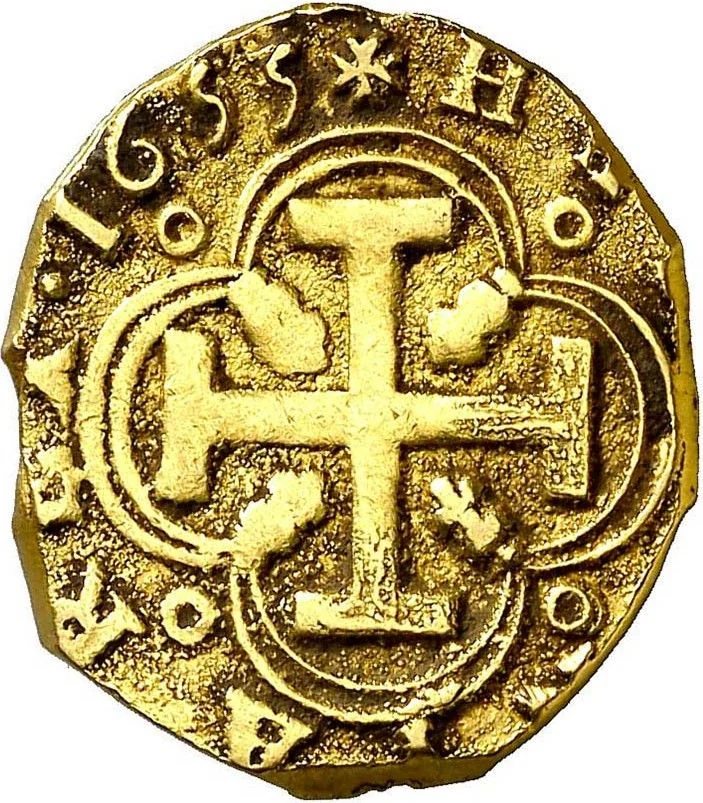
2 escudos – Spain
Add to wishlist
Spain
Material
Diameter: 22 mm
Weight: 6.75 g
Gold Weight:: 6.19 g
Shape: Irregular round
Composition: 91.7% Gold
Magnetic: No
Technique: Hammered
References
KM: #
Numista: #551724
Value
Bullion value: $963.66
Obverse
Description:
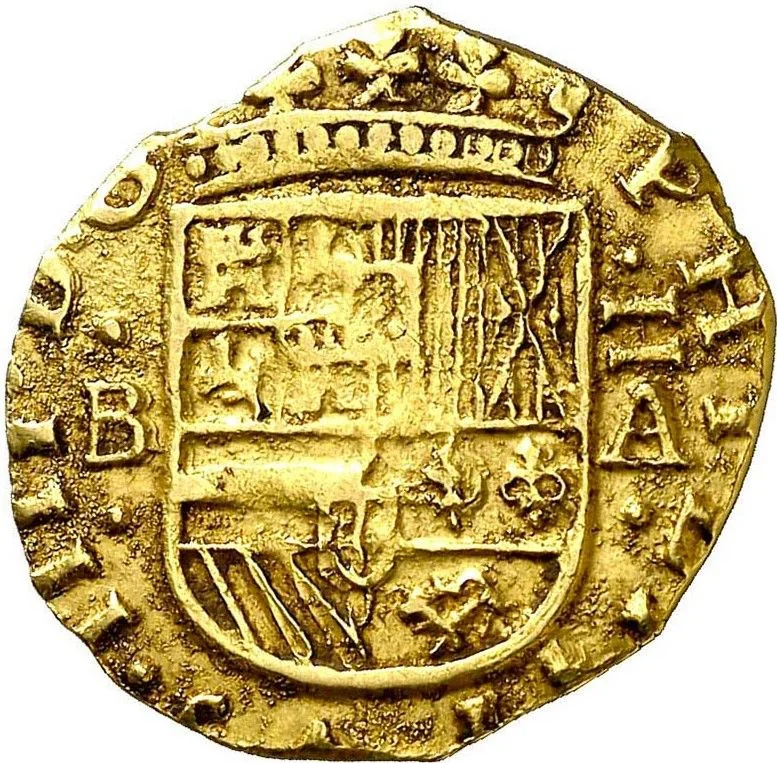
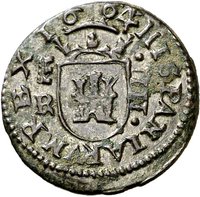
Spanish coat of arms with Portuguese arms.
Inscription:
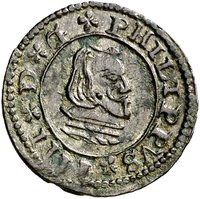
PHILIPPVS · IIII · D · G ·
II
B A
II
B A
Script: Latin
Reverse
Edge
Categories
| Symbols> Coat of Arms |
| Symbol> Cross |
Mints
| Name | Mark |
|---|---|
| Barcelona Mint / La Seca | BA |
Historical background
In 1653, Spain was in the throes of a profound monetary crisis, a direct consequence of decades of exhausting warfare and fiscal mismanagement. The crown, fighting the draining Thirty Years' War and ongoing conflicts with France, was effectively bankrupt, having declared sovereign defaults (bankruptcies) in 1627, 1647, and 1652. To finance its immense debts, the government resorted to the relentless debasement of its primary silver coin, the real and its higher-value unit, the piece of eight. By repeatedly reducing the silver content while maintaining the same face value, the monarchy created short-term liquidity but triggered severe inflation and a collapse in public trust. This period saw a chaotic circulation of heavily clipped, worn, and counterfeit coins alongside newer, purer issues, creating a dysfunctional monetary environment.
The situation was exacerbated by the operation of Gresham's Law, where "bad money drives out good." The older, higher-silver coins from the prosperous 16th century were hoarded, melted down, or exported, while the new, debased coins flooded the market. This led to a critical shortage of reliable specie for everyday commerce. Furthermore, the various Spanish kingdoms (like Castile, Aragon, and Catalonia) had different monetary systems and authorities, complicating any unified response. The result was a fragmented economy where the intrinsic metal value of a coin often mattered more than its official stamp, and prices in markets fluctuated wildly based on the perceived quality of the currency being offered.
Attempts at reform were sporadic and largely ineffective. The government's primary focus remained on extracting immediate funds for war, not long-term stability. While officials understood the need for a currency vellón (a copper-based coinage) that could facilitate small transactions, the temptation to over-issue this cheaper metal without proper backing repeatedly led to inflation. Thus, in 1653, Spain's currency was not a tool of economic unity but a symptom of imperial decline—a destabilizing force that eroded domestic industry, complicated tax collection, and placed a heavy burden on the populace, all while the crown's financial foundations grew ever more precarious.
The situation was exacerbated by the operation of Gresham's Law, where "bad money drives out good." The older, higher-silver coins from the prosperous 16th century were hoarded, melted down, or exported, while the new, debased coins flooded the market. This led to a critical shortage of reliable specie for everyday commerce. Furthermore, the various Spanish kingdoms (like Castile, Aragon, and Catalonia) had different monetary systems and authorities, complicating any unified response. The result was a fragmented economy where the intrinsic metal value of a coin often mattered more than its official stamp, and prices in markets fluctuated wildly based on the perceived quality of the currency being offered.
Attempts at reform were sporadic and largely ineffective. The government's primary focus remained on extracting immediate funds for war, not long-term stability. While officials understood the need for a currency vellón (a copper-based coinage) that could facilitate small transactions, the temptation to over-issue this cheaper metal without proper backing repeatedly led to inflation. Thus, in 1653, Spain's currency was not a tool of economic unity but a symptom of imperial decline—a destabilizing force that eroded domestic industry, complicated tax collection, and placed a heavy burden on the populace, all while the crown's financial foundations grew ever more precarious.
✨ Legendary