

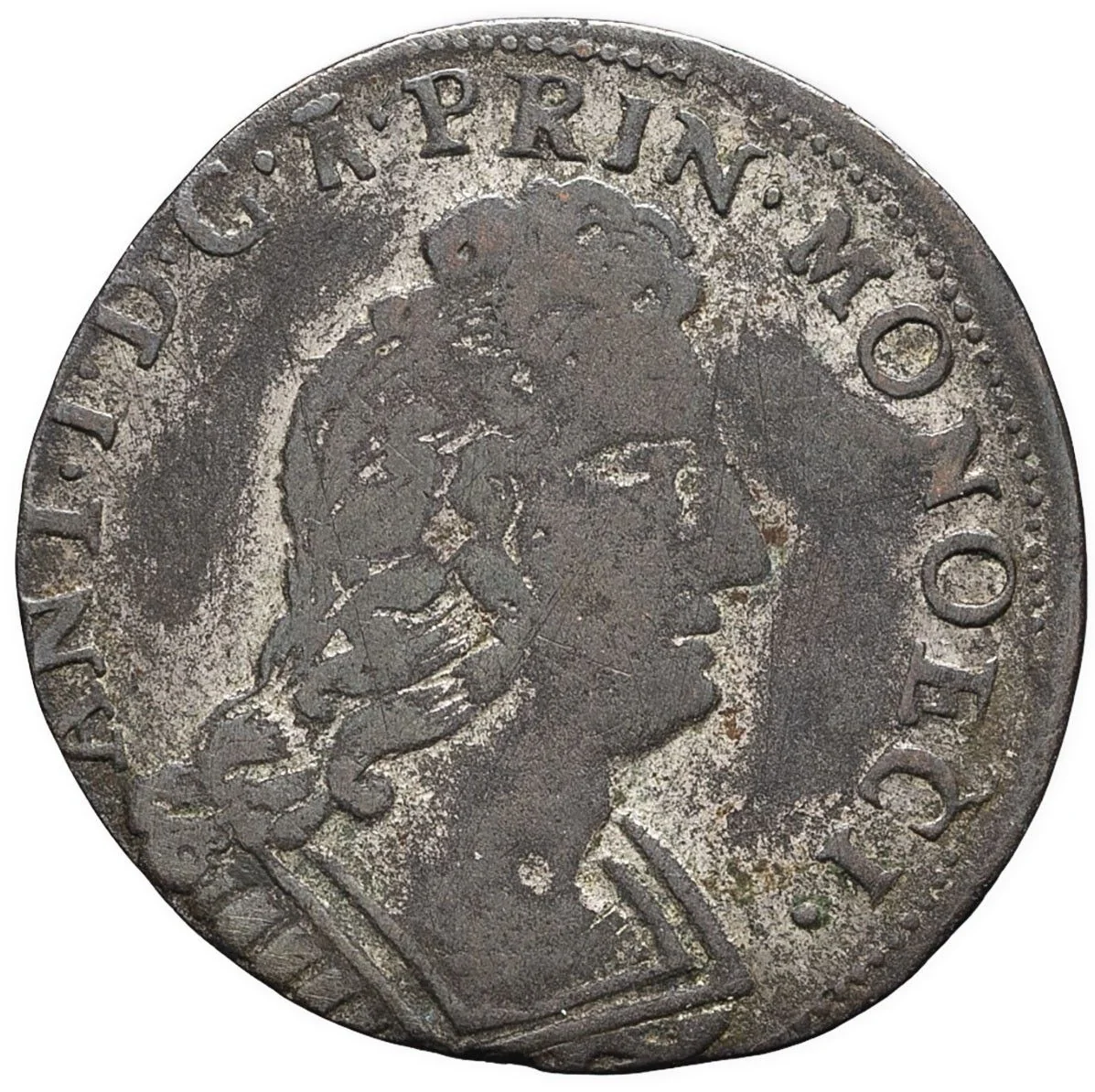
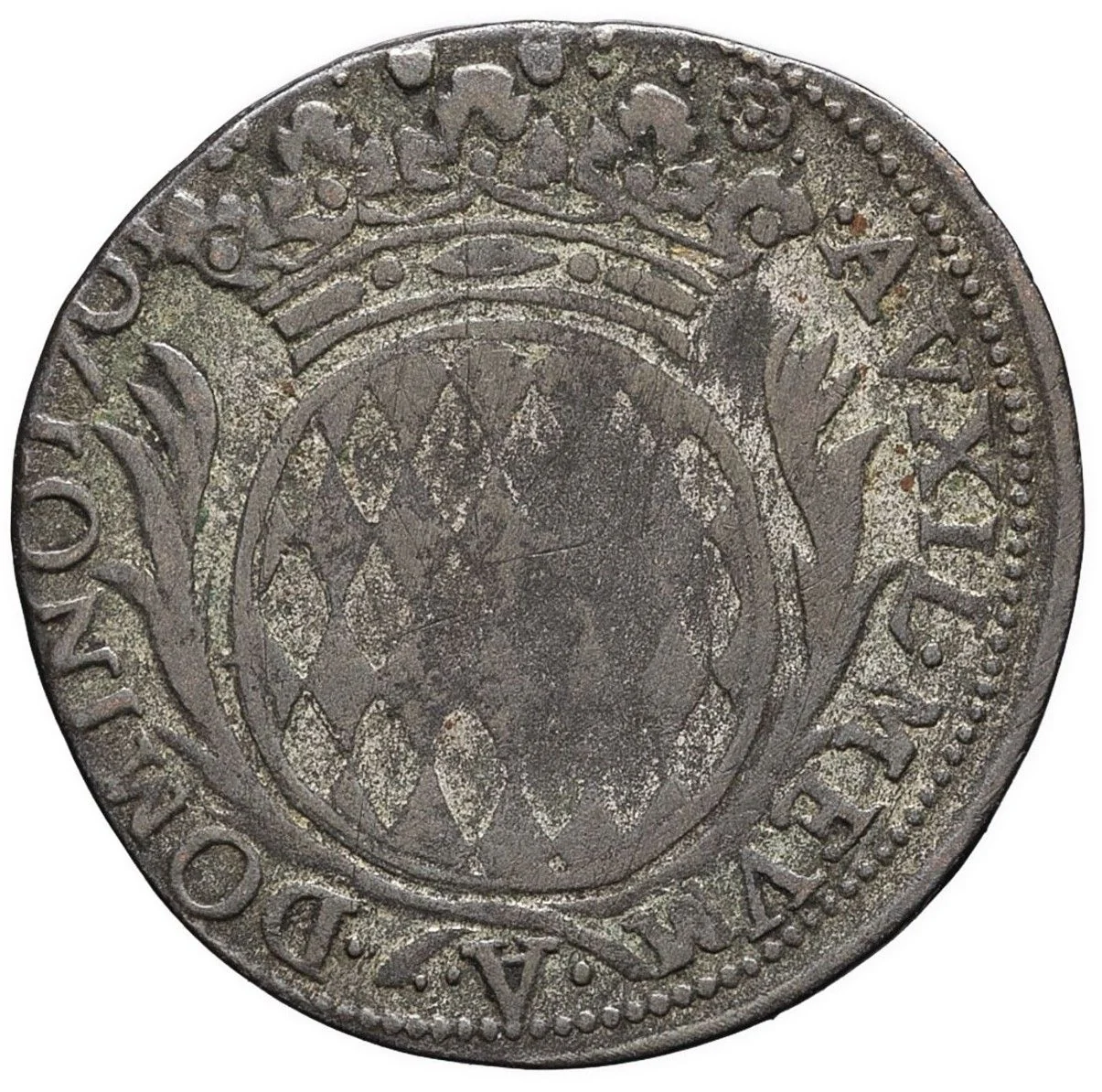
1 Pezzetta – Monaco
Monaco

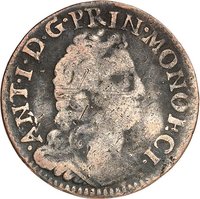
Obverse
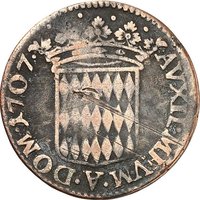
Reverse
Edge
Mints
| Name | Mark |
|---|---|
| Monaco | — |
Mintings
| Year | Mint Mark | Mintage | Quality | Collection |
|---|---|---|---|---|
| 1701 | — | — | ||
| 1703 | — | — |
Historical background
In 1701, Monaco’s currency situation was complex and defined by its lack of monetary sovereignty. The Principality, under the rule of Prince Antoine I, did not mint its own coins. Instead, its economy relied almost entirely on the circulation of foreign currency, primarily French livres, Spanish pistoles, and various Italian coins, reflecting its geographic and political position at the crossroads of French and Italian spheres of influence. This reliance made Monaco’s monetary system inherently unstable and subject to the fluctuating values and supplies of its neighbors' currencies.
This dependency was a direct result of Monaco’s status as a protectorate. Since 1641, the Grimaldi dynasty had been under the protection of the French crown through the Treaty of Péronne, which placed Monaco firmly within the French economic orbit. While the Prince retained domestic authority, monetary policy was effectively dictated by France. The French livre was the de facto standard for larger transactions and state finances, but the daily commerce in the port and markets saw a jumble of coins from Genoa, Spain, and other Mediterranean states, requiring constant exchange and valuation.
Consequently, the primary monetary challenges for Monaco in this period were practical ones of exchange and confidence. Merchants and officials had to navigate a混乱 of coins with varying weights and metallic purity, leading to disputes and inefficiency. There was no central monetary authority to regulate this, leaving the market to determine exchange rates. This fragmented system underscored Monaco’s limited economic autonomy in 1701, a small state navigating its survival by adapting to the monetary currents of its powerful patrons and trading partners.
This dependency was a direct result of Monaco’s status as a protectorate. Since 1641, the Grimaldi dynasty had been under the protection of the French crown through the Treaty of Péronne, which placed Monaco firmly within the French economic orbit. While the Prince retained domestic authority, monetary policy was effectively dictated by France. The French livre was the de facto standard for larger transactions and state finances, but the daily commerce in the port and markets saw a jumble of coins from Genoa, Spain, and other Mediterranean states, requiring constant exchange and valuation.
Consequently, the primary monetary challenges for Monaco in this period were practical ones of exchange and confidence. Merchants and officials had to navigate a混乱 of coins with varying weights and metallic purity, leading to disputes and inefficiency. There was no central monetary authority to regulate this, leaving the market to determine exchange rates. This fragmented system underscored Monaco’s limited economic autonomy in 1701, a small state navigating its survival by adapting to the monetary currents of its powerful patrons and trading partners.
✨ Legendary