

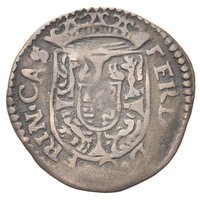
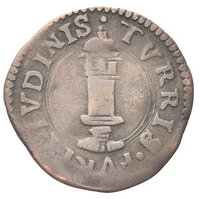
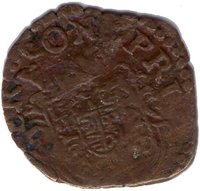
1 fiorino – Castiglione Delle Stiviere
Add to wishlist
Italy
Context
Years: 1616–1678
Country: Italy
Issuer: Castiglione Delle Stiviere
Ruler: Ferdinando I
Currency:
Demonetized: Yes
Material
Diameter: 24 mm
Weight: 3.5 g
Gold Weight:: 3.45 g
Shape: Irregular round
Composition: 98.6% Gold
Magnetic: No
Technique: Hammered
Alignment: Medal alignment
flip
References
KM: #
Numista: #537060
Value
Bullion value: $537.27
Obverse
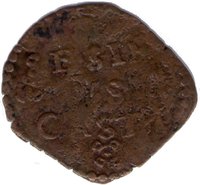
Reverse
Description:
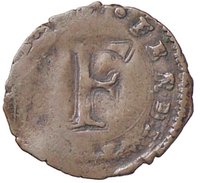
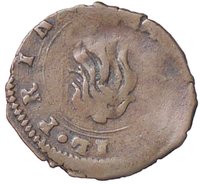
Ornamented square with a five-line inscription.
Inscription:
DVCAT
VS NOV
VS NC
CASTN
VS NOV
VS NC
CASTN
Script: Latin
Edge
Mints
| Name | Mark |
|---|---|
| Castiglione delle Stiviere | — |
Mintings
| Year | Mint Mark | Mintage | Quality | Collection |
|---|---|---|---|---|
| — | — | — |
Historical background
In 1616, Castiglione delle Stiviere, a small but significant town in the Duchy of Mantua, operated within a complex and fragmented monetary landscape typical of early modern Italy. The official currency was the Mantuan scudo, issued under the authority of Duke Ferdinando Gonzaga. However, the town's practical economic life was dominated by a plethora of foreign coins, most notably the large silver Spanish 8-reales piece (the famous "piece of eight") and various Venetian ducats and lire. This was due to Mantua's strategic position within the Spanish Habsburg sphere of influence in Lombardy and its trade connections with the powerful Republic of Venice.
The circulation of so many foreign and domestic coins created chronic problems of valuation and trust. The intrinsic value of a coin (its precious metal content) was paramount, leading to frequent clipping, counterfeiting, and the hoarding of higher-quality coins—a manifestation of Gresham's Law, where "bad money drives out good." Local merchants and officials had to constantly refer to "battitore" lists, which were official bulletins publishing the ever-fluctuating exchange rates between dozens of coin types. This made everyday transactions cumbersome and risky, as the declared face value of a coin often differed from its market value based on weight and fineness.
For Castiglione delle Stiviere, this monetary instability was more than an economic nuisance; it was a direct challenge to local governance and commerce. The town's authorities, like those across the duchy, issued periodic proclamations to fix exchange rates and outlaw the circulation of specific debased coins, but with limited effect. This chaotic system reflected the broader political reality: while the Gonzaga dukes held sovereign title, their actual control over the monetary sphere was weak, constrained by the overwhelming economic influence of foreign powers and the realities of regional trade. Thus, the currency situation in 1616 was one of persistent uncertainty, a daily negotiation between official decree and market force.
The circulation of so many foreign and domestic coins created chronic problems of valuation and trust. The intrinsic value of a coin (its precious metal content) was paramount, leading to frequent clipping, counterfeiting, and the hoarding of higher-quality coins—a manifestation of Gresham's Law, where "bad money drives out good." Local merchants and officials had to constantly refer to "battitore" lists, which were official bulletins publishing the ever-fluctuating exchange rates between dozens of coin types. This made everyday transactions cumbersome and risky, as the declared face value of a coin often differed from its market value based on weight and fineness.
For Castiglione delle Stiviere, this monetary instability was more than an economic nuisance; it was a direct challenge to local governance and commerce. The town's authorities, like those across the duchy, issued periodic proclamations to fix exchange rates and outlaw the circulation of specific debased coins, but with limited effect. This chaotic system reflected the broader political reality: while the Gonzaga dukes held sovereign title, their actual control over the monetary sphere was weak, constrained by the overwhelming economic influence of foreign powers and the realities of regional trade. Thus, the currency situation in 1616 was one of persistent uncertainty, a daily negotiation between official decree and market force.

✨ Legendary