

¼ Ecu – Monaco
Monaco

Obverse
Description:
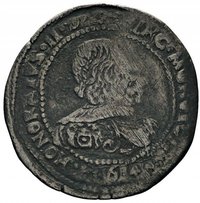
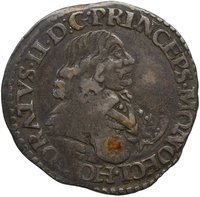
Honoré II, bust facing right.
Inscription:
HONORATVS II D G PRINCEPS MONOECI
Script: Latin
Reverse
Edge
Mints
| Name | Mark |
|---|---|
| Monaco | — |
Mintings
| Year | Mint Mark | Mintage | Quality | Collection |
|---|---|---|---|---|
| 1643 | — | — |
Historical background
In 1643, Monaco's currency situation was intrinsically tied to its precarious position as a small, sovereign protectorate under the dual influence of Spain and France. The Grimaldi family, ruling as Princes of Monaco, held formal sovereignty but were bound by the Treaty of Péronne (1641), which had shifted their primary protector from Spain to France. This political realignment meant that while the Monégasque economy operated with a degree of autonomy, its monetary system was effectively absorbed into the sphere of its powerful French patron. The French livre tournois was the dominant and official currency for larger transactions and state affairs, circulating alongside various regional coins.
Despite this French dominance, the practical day-to-day currency landscape was complex and heterogeneous. Due to Monaco's active port and its role in regional trade, a multitude of foreign coins remained in circulation, particularly Spanish silver reales and Italian coins from Genoa, Tuscany, and the Papal States. This created a variable and often confusing exchange environment where merchants and officials needed a firm grasp of metallic content and fluctuating exchange rates. The Prince's right to mint coinage was a cherished sovereign privilege, but in practice, it was exercised sporadically, often limited to small-denomination copper deniers for local use rather than substantial silver or gold issues meant to compete with major currencies.
Therefore, the monetary situation in 1643 was one of de facto dependency layered with historical diversity. The Principality lacked a strong, independent currency of its own, relying instead on the imposed stability of the French system while its commercial life necessitated the acceptance of a medley of foreign specie. This arrangement reflected Monaco's broader political reality: a sovereign entity navigating its survival by balancing formal French protection with the practical economic realities of Mediterranean commerce.
Despite this French dominance, the practical day-to-day currency landscape was complex and heterogeneous. Due to Monaco's active port and its role in regional trade, a multitude of foreign coins remained in circulation, particularly Spanish silver reales and Italian coins from Genoa, Tuscany, and the Papal States. This created a variable and often confusing exchange environment where merchants and officials needed a firm grasp of metallic content and fluctuating exchange rates. The Prince's right to mint coinage was a cherished sovereign privilege, but in practice, it was exercised sporadically, often limited to small-denomination copper deniers for local use rather than substantial silver or gold issues meant to compete with major currencies.
Therefore, the monetary situation in 1643 was one of de facto dependency layered with historical diversity. The Principality lacked a strong, independent currency of its own, relying instead on the imposed stability of the French system while its commercial life necessitated the acceptance of a medley of foreign specie. This arrangement reflected Monaco's broader political reality: a sovereign entity navigating its survival by balancing formal French protection with the practical economic realities of Mediterranean commerce.
✨ Legendary