

35 ECUs – Gibraltar
United Kingdom
Context
Years: 1992–1993
Country: United Kingdom 
Issuer: Gibraltar 
Ruler: Elizabeth II
Currency:
(1990—1996)
Subdivision: 35 ECUs = 25 Pounds
Total mintage: 15,000
Material
References
KM: #Click to copy to clipboard110
Numista: #104170
Value
Bullion value: $74.36
Obverse
Description:
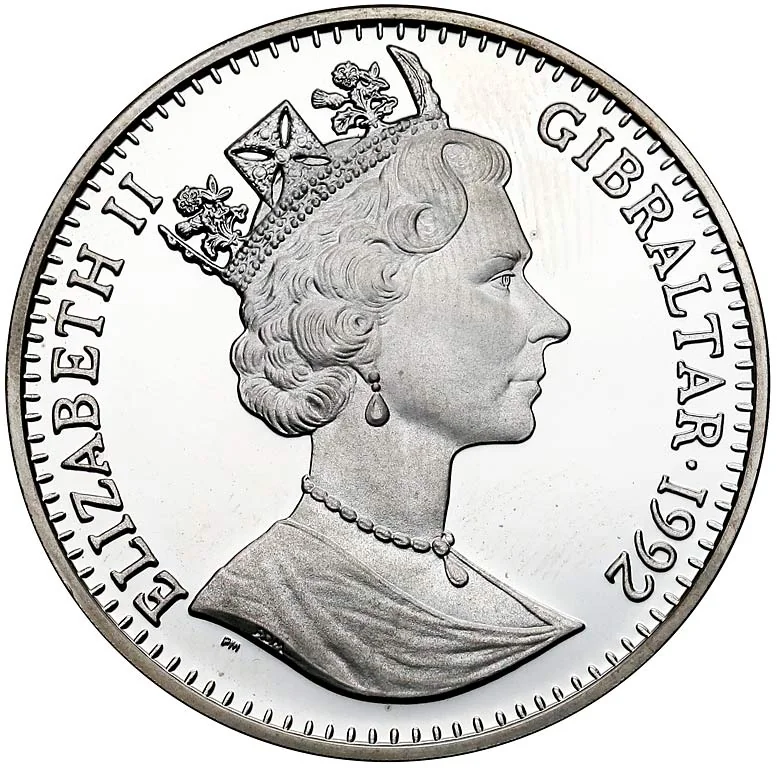
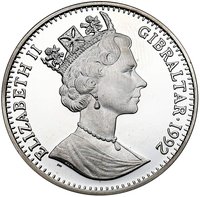
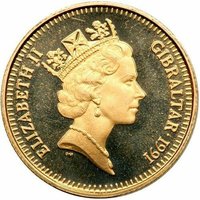
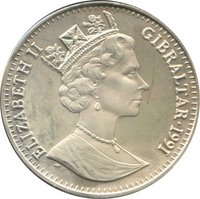
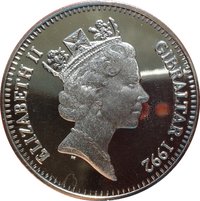
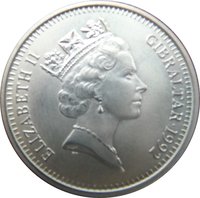
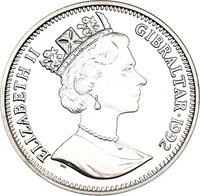
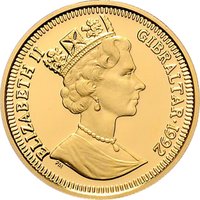
Queen Elizabeth II facing right, wearing the George IV State Diadem, surrounded by legend and date.
Inscription:
ELIZABETH II GIBRALTAR·1991
RDM
PM
RDM
PM
Script: Latin
Designer: Raphael David Maklouf
Reverse
Description:
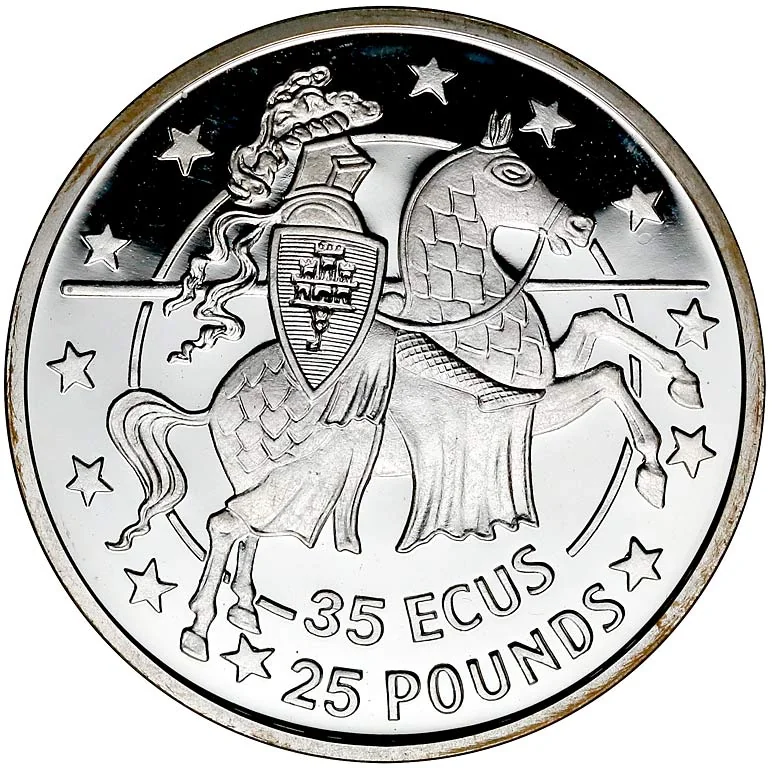
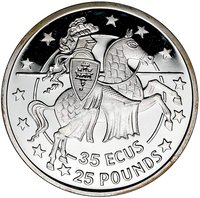
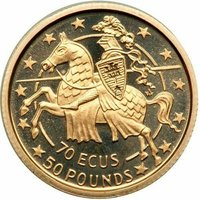
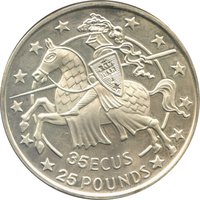
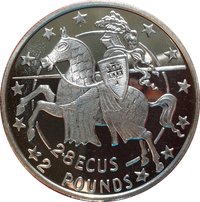
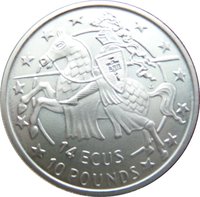
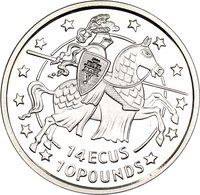
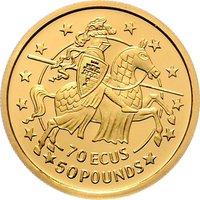
Armored knight on horse facing right, encircled by twelve stars.
Inscription:
35 ECUS
25 POUNDS
25 POUNDS
Script: Latin
Edge
Reeded
Mints
| Name | Mark |
|---|---|
| Pobjoy Mint | (PM) |
Mintings
| Year | Mint Mark | Mintage | Quality | Collection |
|---|---|---|---|---|
| 1992 | PM | 15,000 | Proof | |
| 1993 | PM | — | Proof |
Historical background
In 1992, Gibraltar's currency situation was defined by its unique political status as a British Overseas Territory and its deep economic integration with neighbouring Spain. The legal tender was, and remains, the Gibraltar pound (GIP), issued by the Government of Gibraltar and pegged at par with the British pound sterling (GBP). Sterling notes and coins also circulated freely alongside local issues, creating a de facto dual-currency system where both were accepted for all transactions. This arrangement underscored Gibraltar's constitutional link to the United Kingdom.
Economically, however, the reality on the ground was more complex due to the territory's heavy reliance on cross-border trade, tourism, and labour from Spain. While the Gibraltar pound was not a freely convertible international currency, the Spanish peseta functioned as a widely accepted second currency, especially in retail sectors catering to visitors and workers. This practical bilingualism in currency facilitated daily commerce but also tied Gibraltar's local economy to exchange rate fluctuations between sterling and the peseta.
The year 1992 fell within a period of significant monetary change in Europe, with the Maastricht Treaty signed that February setting the path for the Euro. Gibraltar itself, while not part of the European Community's economic and monetary union, was directly impacted by these developments. The peseta's instability within the European Exchange Rate Mechanism (ERM) crises of 1992-93 would have introduced exchange rate volatility, highlighting the challenges of Gibraltar's hybrid monetary environment, caught between its sterling-based sovereignty and its geographical and economic realities in Southern Europe.
Economically, however, the reality on the ground was more complex due to the territory's heavy reliance on cross-border trade, tourism, and labour from Spain. While the Gibraltar pound was not a freely convertible international currency, the Spanish peseta functioned as a widely accepted second currency, especially in retail sectors catering to visitors and workers. This practical bilingualism in currency facilitated daily commerce but also tied Gibraltar's local economy to exchange rate fluctuations between sterling and the peseta.
The year 1992 fell within a period of significant monetary change in Europe, with the Maastricht Treaty signed that February setting the path for the Euro. Gibraltar itself, while not part of the European Community's economic and monetary union, was directly impacted by these developments. The peseta's instability within the European Exchange Rate Mechanism (ERM) crises of 1992-93 would have introduced exchange rate volatility, highlighting the challenges of Gibraltar's hybrid monetary environment, caught between its sterling-based sovereignty and its geographical and economic realities in Southern Europe.
Series: Charlemagme - Mounted Knight
💎 Extremely Rare