

1 pound – Egypt
Add to wishlist
Circulating commemorative coins
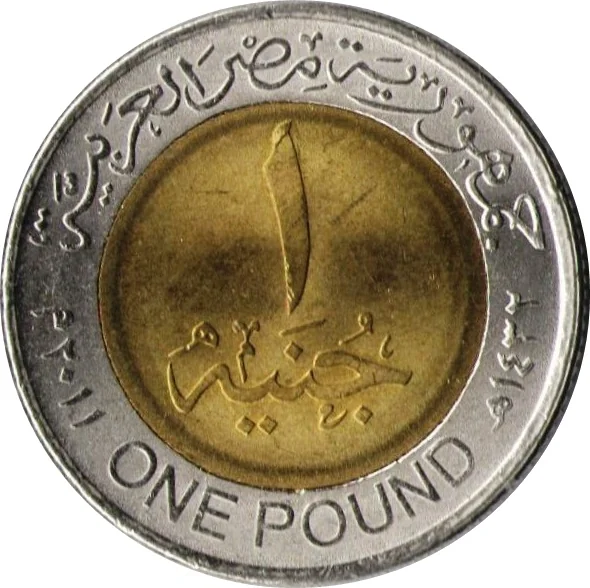
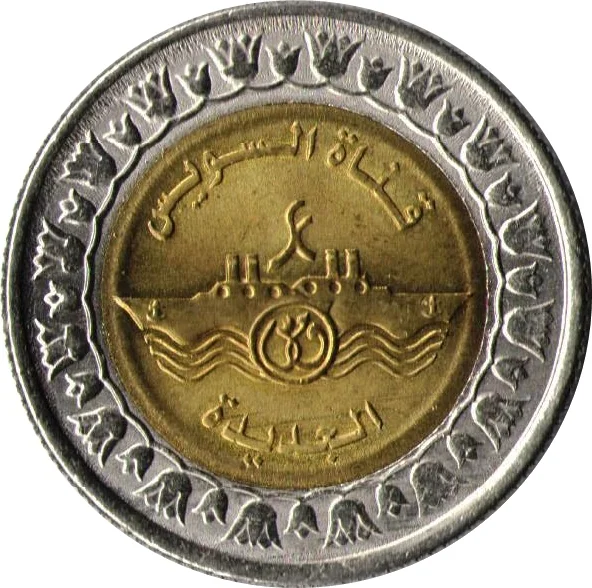
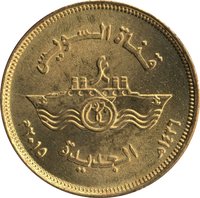
Commemoration: New branch of Suez Canal
Egypt
Context
Material
References
Numista: #124228
Value
Exchange value: 1 EGP
Obverse
Reverse
Edge
Reeded
Categories
| Transportation> Watercraft |
Mints
| Name | Mark |
|---|---|
| Egyptian Mint Authority | — |
Mintings
| Year | Mint Mark | Mintage | Quality | Collection |
|---|---|---|---|---|
| 2011 | — | — |
Historical background
In 2011, Egypt's currency situation was characterized by mounting pressure and vulnerability, directly stemming from the political and economic turmoil of the January 25th Revolution. The uprising that toppled President Hosni Mubarak caused a severe economic shock: tourism collapsed, foreign investment fled, and industrial production stalled. This dramatically reduced the nation's foreign currency inflows at a time when costly subsidies for fuel and food, alongside a large public sector wage bill, drove high government spending. Consequently, Egypt's foreign reserves began a sharp and steady decline, falling from a pre-revolution high of around $36 billion to a critical level of approximately $10 billion by early 2012, severely undermining confidence in the Egyptian pound.
The Central Bank of Egypt (CBE), under Governor Farouk El-Okda, responded by employing a tightly managed peg to the US dollar, maintaining an official rate around EGP 5.8 to the dollar. However, this official rate was artificial and unsustainable. A vast parallel black market for dollars emerged and flourished, where the pound traded at a significant premium, sometimes exceeding EGP 8 to the dollar. This dual-system created major distortions, causing shortages of essential imported goods like wheat and medicine, fueling inflation, and creating a lucrative arbitrage opportunity that further drained official reserves.
Authorities faced a difficult trilemma: devaluing the pound would curb imports and stabilize reserves but trigger rampant inflation and public discontent; maintaining the peg would burn through remaining reserves; and imposing strict capital controls would deter any future investment. Throughout 2011, the government and CBE chose to defend the peg through gradual devaluation and using reserves, prioritizing short-term political stability over economic correction. This strategy merely postponed an inevitable deeper crisis, setting the stage for the more severe currency devaluations and economic reforms that would follow in the coming years under international loan agreements.
The Central Bank of Egypt (CBE), under Governor Farouk El-Okda, responded by employing a tightly managed peg to the US dollar, maintaining an official rate around EGP 5.8 to the dollar. However, this official rate was artificial and unsustainable. A vast parallel black market for dollars emerged and flourished, where the pound traded at a significant premium, sometimes exceeding EGP 8 to the dollar. This dual-system created major distortions, causing shortages of essential imported goods like wheat and medicine, fueling inflation, and creating a lucrative arbitrage opportunity that further drained official reserves.
Authorities faced a difficult trilemma: devaluing the pound would curb imports and stabilize reserves but trigger rampant inflation and public discontent; maintaining the peg would burn through remaining reserves; and imposing strict capital controls would deter any future investment. Throughout 2011, the government and CBE chose to defend the peg through gradual devaluation and using reserves, prioritizing short-term political stability over economic correction. This strategy merely postponed an inevitable deeper crisis, setting the stage for the more severe currency devaluations and economic reforms that would follow in the coming years under international loan agreements.
🌟 Limited