

1 thaler – Brunswick-Lüneburg-Calenberg-Hannover
Add to wishlist
Germany
Context
Material
References
KM: #
Numista: #266566
Value
Bullion value: $73.37
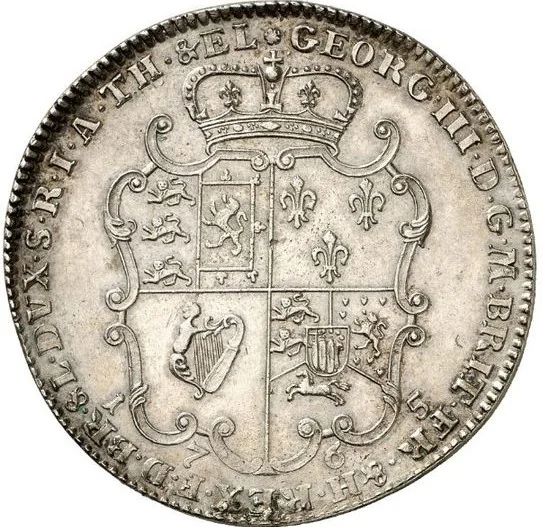
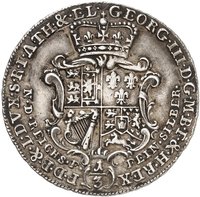
Obverse
Description:
Quartered arms on an ornate shield.
Inscription:
GEORG • III • D • G • M • BRIT • FR • & H • REX • F • D • BR • & L • DVX • S • R • I • A • TH • & EL *
1765
1765
Script: Latin
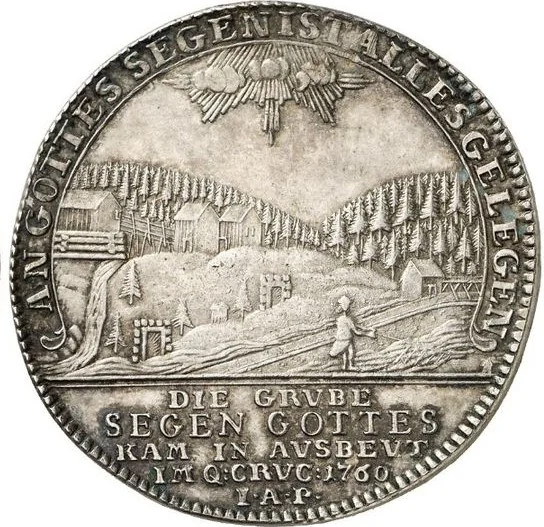
Reverse
Description:
Mine interior
Inscription:
AN GOTTES SEGEN IST ALLES GELEGEN
DIE GRVBE
SEGEN GOTTES
KAM IN AVSBEVT
IM Q: CRVC: 1760
I.A.P.
DIE GRVBE
SEGEN GOTTES
KAM IN AVSBEVT
IM Q: CRVC: 1760
I.A.P.
Script: Latin
Edge
Mints
| Name | Mark |
|---|---|
| Zellerfeld | — |
Mintings
| Year | Mint Mark | Mintage | Quality | Collection |
|---|---|---|---|---|
| 1765 | — | — |
Historical background
In 1765, the currency situation in the Duchy of Brunswick-Lüneburg, specifically the Principality of Calenberg (with its capital in Hanover), was characterized by significant complexity and instability. The region operated within the fragmented monetary system of the Holy Roman Empire, where numerous states issued their own coinage. Hanover itself minted several denominations, most notably the Thaler, but its value and silver content were in constant negotiation with the realities of neighboring states like Prussia, Brunswick-Wolfenbüttel, and the city-states of the Hanseatic League. This patchwork led to a circulation of diverse and often debased coins, creating confusion for trade and daily transactions.
The core problem was chronic debasement, a practice where rulers reduced the precious metal content in coins to generate short-term revenue, often to finance state debts or military engagements. This had led to a loss of public trust in the currency's intrinsic value. Furthermore, the monetary landscape was divided between Kurantgeld (specie or full-value coin) and Scheidemünzen (small change or token coinage with a face value higher than its metal content). An oversupply of depreciated Scheidemünzen exacerbated inflation, particularly affecting the lower classes who used them for everyday purchases, while larger mercantile transactions struggled with unreliable exchange rates.
Recognizing the economic damage, the ruling authority—under the regency of the British-Hanoverian crown (George III)—was actively seeking reform. The year 1765 fell within a period of administrative modernization led by officials aiming to stabilize the economy. Efforts were underway to standardize the coinage, control the minting of small change, and align Hanover's monetary system more closely with the Reichsthaler standard of the Empire. These steps were precursors to more comprehensive reforms later in the century, aimed at establishing a uniform and credible currency to support Hanover's growing commercial interests.
The core problem was chronic debasement, a practice where rulers reduced the precious metal content in coins to generate short-term revenue, often to finance state debts or military engagements. This had led to a loss of public trust in the currency's intrinsic value. Furthermore, the monetary landscape was divided between Kurantgeld (specie or full-value coin) and Scheidemünzen (small change or token coinage with a face value higher than its metal content). An oversupply of depreciated Scheidemünzen exacerbated inflation, particularly affecting the lower classes who used them for everyday purchases, while larger mercantile transactions struggled with unreliable exchange rates.
Recognizing the economic damage, the ruling authority—under the regency of the British-Hanoverian crown (George III)—was actively seeking reform. The year 1765 fell within a period of administrative modernization led by officials aiming to stabilize the economy. Efforts were underway to standardize the coinage, control the minting of small change, and align Hanover's monetary system more closely with the Reichsthaler standard of the Empire. These steps were precursors to more comprehensive reforms later in the century, aimed at establishing a uniform and credible currency to support Hanover's growing commercial interests.
✨ Legendary