

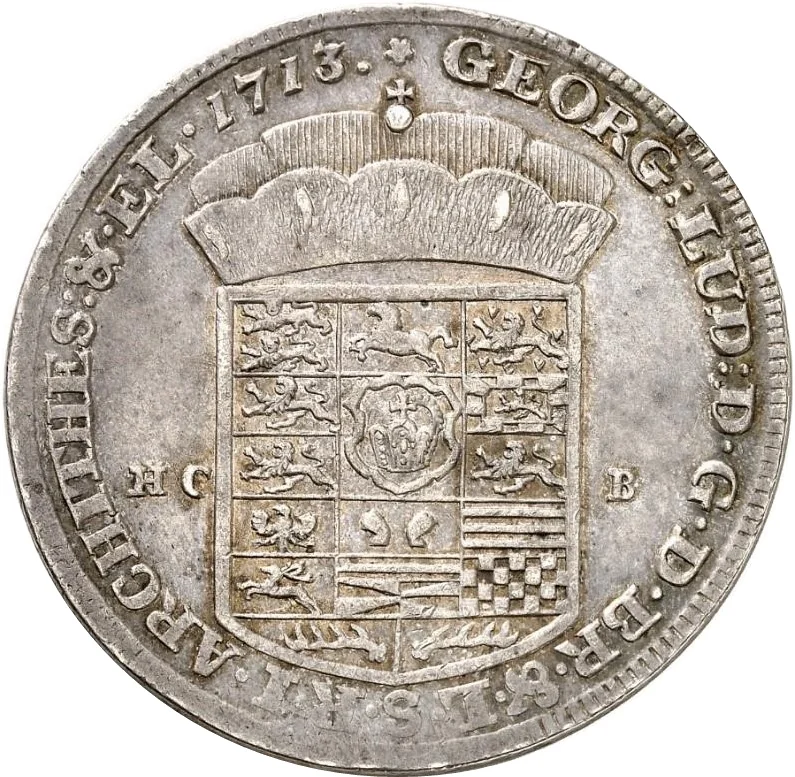

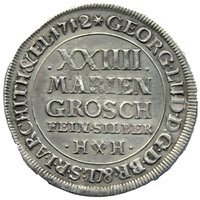
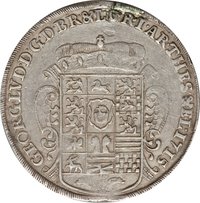
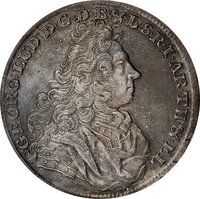
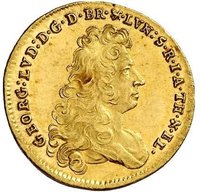
Obverse
Description:
Heraldic emblem
Inscription:
GEORG LUD D G D BR & L S R I ARCHITHES & EL 1713
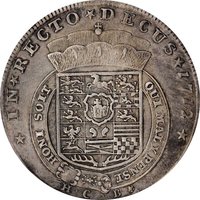
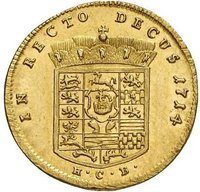
HCB
HCB
Script: Latin
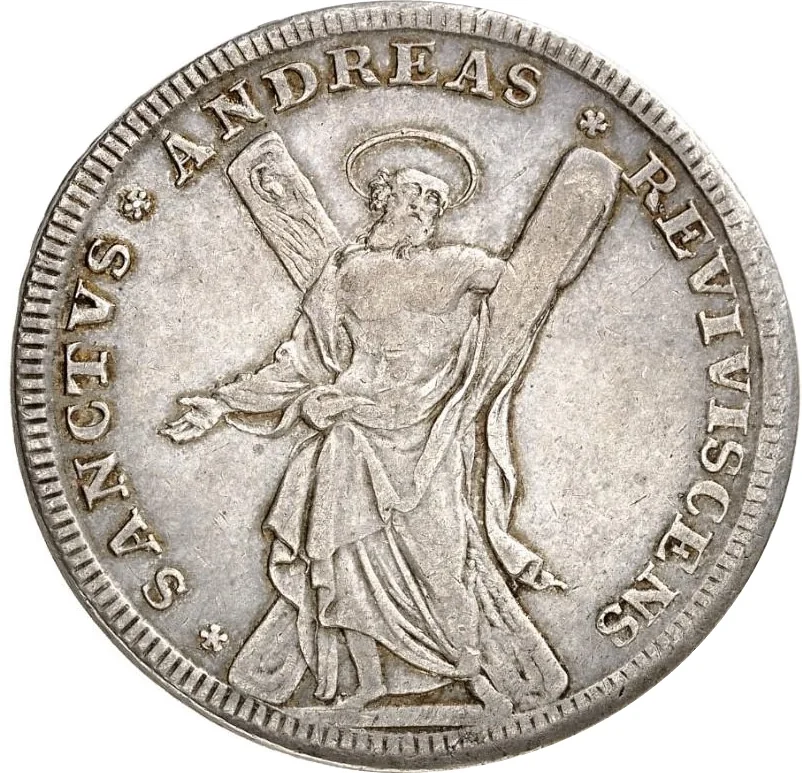
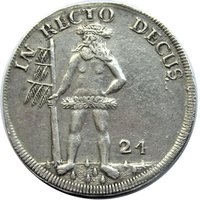
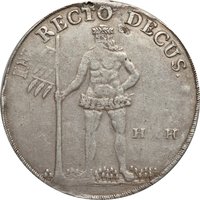
Reverse
Edge
Mints
| Name | Mark |
|---|---|
| Clausthal | — |
| Zellerfeld | — |
Mintings
| Year | Mint Mark | Mintage | Quality | Collection |
|---|---|---|---|---|
| 1712 | — | — | ||
| 1713 | — | — |
Historical background
In 1712, the currency situation in the Duchy of Brunswick-Lüneburg, specifically the Principality of Calenberg (with its capital in Hanover), was characterized by significant complexity and instability. The Holy Roman Empire was a mosaic of over 300 states, each with the right to mint coinage, leading to a chaotic system where numerous foreign and debased coins circulated alongside local issues. The primary accounting unit was the Reichsthaler, a silver standard, but the actual circulating coins included lower-value Gute Groschen, Mariengroschen, and Pfennige. The real problem was the widespread circulation of clipped, worn, and counterfeit coins, as well as the intentional issuance of inferior Landmünzen (regional coins) by various authorities, which eroded public trust and hampered commerce.
This monetary fragmentation was exacerbated by the financial demands of the Great Northern War (1700-1721). While not a primary belligerent, the Elector of Hanover (George Louis, who would become King George I of Great Britain in 1714) maintained a large army and engaged in diplomatic maneuvering, requiring substantial revenue. This often led to pressures on the coinage system, including the potential for currency manipulation—such as reducing the silver content in minted coins to create seigniorage profit—to fund state expenses. Furthermore, the imminent personal union with Great Britain added a layer of financial anticipation and uncertainty, as Hanover's economy was being drawn into broader international trade and obligations.
Consequently, merchants and the public in cities like Hanover faced daily difficulties. Trade required constant recourse to money changers (Wechsler) who assessed the actual metal value of a mixed bag of coins, a process fraught with risk and loss. There were calls for standardization and Münzprobationen (official assays and regulations) to cleanse the monetary system. However, effective reform would only begin to materialize later in the 18th century. Thus, in 1712, the currency landscape remained a tangled and unreliable medium, reflecting the political fragmentation of the Empire and the fiscal strains of the era.
This monetary fragmentation was exacerbated by the financial demands of the Great Northern War (1700-1721). While not a primary belligerent, the Elector of Hanover (George Louis, who would become King George I of Great Britain in 1714) maintained a large army and engaged in diplomatic maneuvering, requiring substantial revenue. This often led to pressures on the coinage system, including the potential for currency manipulation—such as reducing the silver content in minted coins to create seigniorage profit—to fund state expenses. Furthermore, the imminent personal union with Great Britain added a layer of financial anticipation and uncertainty, as Hanover's economy was being drawn into broader international trade and obligations.
Consequently, merchants and the public in cities like Hanover faced daily difficulties. Trade required constant recourse to money changers (Wechsler) who assessed the actual metal value of a mixed bag of coins, a process fraught with risk and loss. There were calls for standardization and Münzprobationen (official assays and regulations) to cleanse the monetary system. However, effective reform would only begin to materialize later in the 18th century. Thus, in 1712, the currency landscape remained a tangled and unreliable medium, reflecting the political fragmentation of the Empire and the fiscal strains of the era.
✨ Legendary