

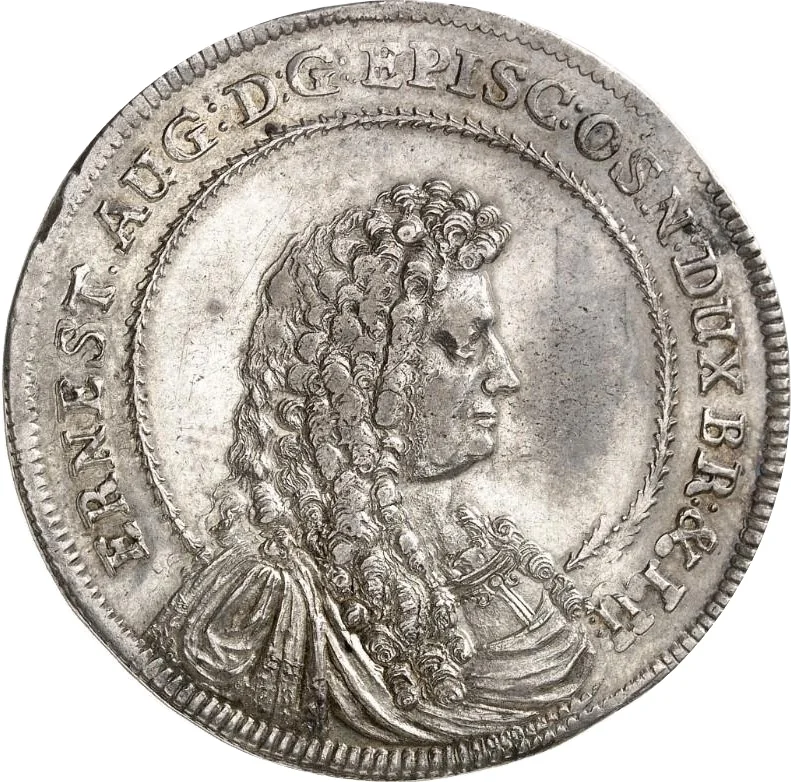
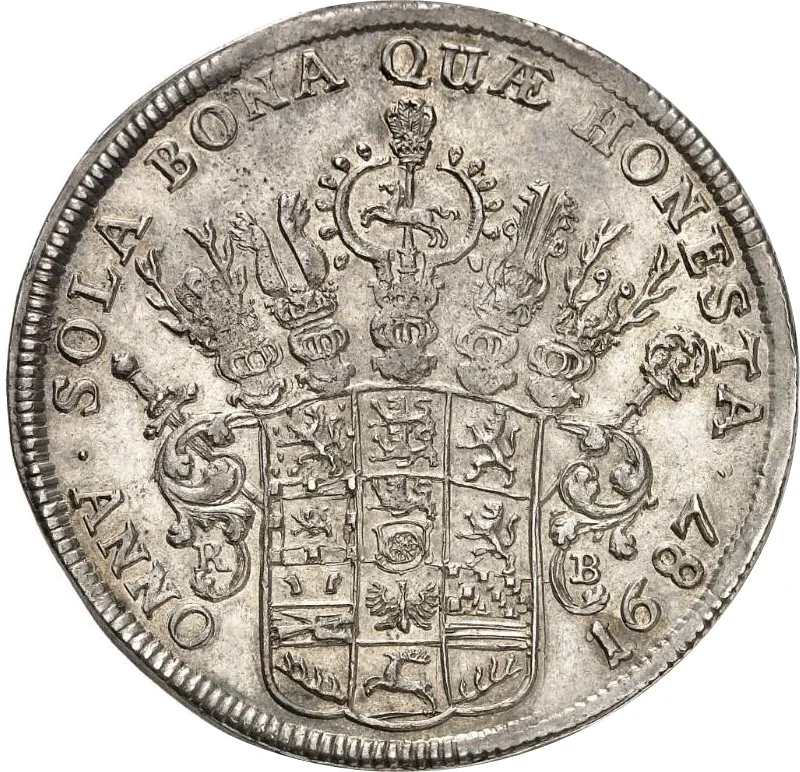
1 Thaler – Brunswick-Lüneburg-Calenberg
Germany
Context
Years: 1682–1687
Country: Germany 
Issuer: Brunswick-Lüneburg-Calenberg
Ruler: Ernest Augustus
Currency:
Demonetized: Yes
Material
References
KM: #Click to copy to clipboard293
Numista: #266508
Value
Bullion value: $80.16
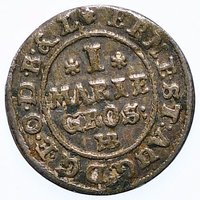
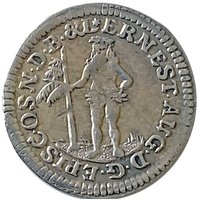
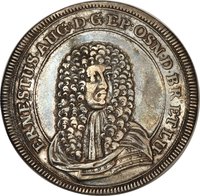
Obverse
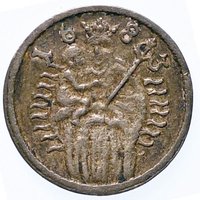
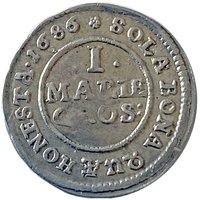
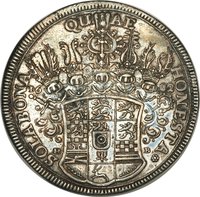
Reverse
Edge
Mintings
| Year | Mint Mark | Mintage | Quality | Collection |
|---|---|---|---|---|
| 1682 | RB | — | ||
| 1685 | RB | — | ||
| 1687 | RB | — |
Historical background
In 1682, the Duchy of Brunswick-Lüneburg, specifically the Principality of Calenberg under Duke Ernst August, was grappling with the severe and chronic problems of monetary fragmentation and debasement that plagued the Holy Roman Empire. The region was part of a complex web of competing coinage systems, where numerous neighboring states and cities issued coins of varying weight and silver content. This led to a circulation of over 100 different types of coins within Calenberg's territory, causing confusion, facilitating fraud, and crippling orderly trade and taxation. The constant inflow of inferior coins from neighboring mints created a classic "bad money drives out good" scenario, draining the principality of its full-value currency.
Duke Ernst August's primary response in this period was defensive and regulatory. While a major monetary reform for the entire Brunswick-Lüneburg dynastic lands was still a decade away (the 1690 Münzprobationstag), the focus in 1682 was on controlling the damage. The government likely issued repeated mandates (Münzedikte) attempting to fix exchange rates for the myriad of circulating coins and to prohibit the use of the most debased foreign issues. These efforts were largely futile, as they could not stem the tide of imported coin and were difficult to enforce. The situation strained the ducal finances, as revenue collected in debased coinage lost value, while obligations often had to be met in higher-quality specie.
Thus, the currency situation in Calenberg in 1682 was one of destabilizing transition and mounting pressure for a systemic solution. The ineffective patchwork of regulations highlighted the need for a more radical approach. This mounting crisis set the stage for Ernst August's later, more ambitious efforts to establish a stable, uniform Reichsthaler currency within his domains, a policy ultimately driven by both economic necessity and the political ambition to secure the Electorate of Hanover, which he would achieve in 1692.
Duke Ernst August's primary response in this period was defensive and regulatory. While a major monetary reform for the entire Brunswick-Lüneburg dynastic lands was still a decade away (the 1690 Münzprobationstag), the focus in 1682 was on controlling the damage. The government likely issued repeated mandates (Münzedikte) attempting to fix exchange rates for the myriad of circulating coins and to prohibit the use of the most debased foreign issues. These efforts were largely futile, as they could not stem the tide of imported coin and were difficult to enforce. The situation strained the ducal finances, as revenue collected in debased coinage lost value, while obligations often had to be met in higher-quality specie.
Thus, the currency situation in Calenberg in 1682 was one of destabilizing transition and mounting pressure for a systemic solution. The ineffective patchwork of regulations highlighted the need for a more radical approach. This mounting crisis set the stage for Ernst August's later, more ambitious efforts to establish a stable, uniform Reichsthaler currency within his domains, a policy ultimately driven by both economic necessity and the political ambition to secure the Electorate of Hanover, which he would achieve in 1692.
✨ Legendary