

1 Thaler – Duchy of Mecklenburg-Strelitz
Germany
Context
Years: 1746–1749
Country: Germany 
Issuer: Duchy of Mecklenburg-Strelitz
Ruler: Adolphus Frederick III
Currency:
(1701—1872)
Demonetized: Yes
Total mintage: 283
Material
References
KM: #Click to copy to clipboard22
Numista: #266353
Value
Bullion value: $200.07
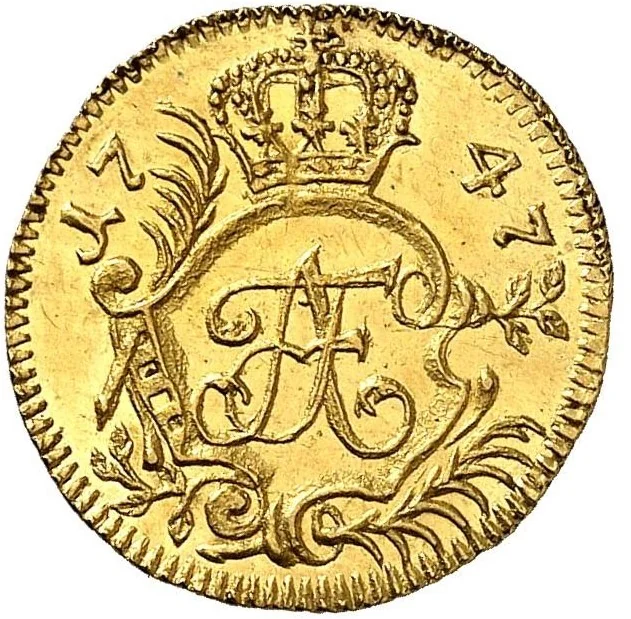
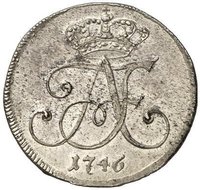
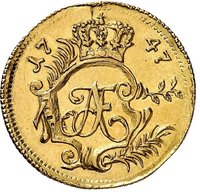
Obverse
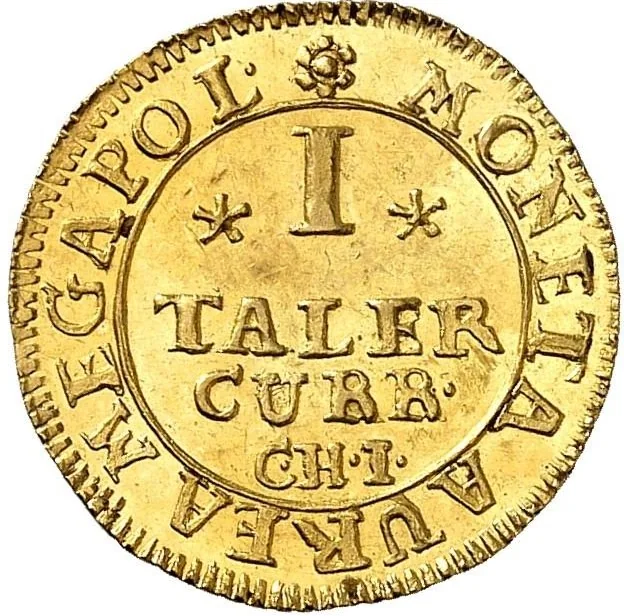
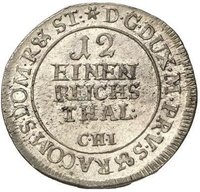
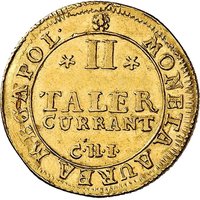
Reverse
Edge
Mints
| Name | Mark |
|---|---|
| Stargard-Szczeciński | — |
Mintings
| Year | Mint Mark | Mintage | Quality | Collection |
|---|---|---|---|---|
| 1746 | — | — | ||
| 1747 | — | 223 | ||
| 1749 | — | 60 |
Historical background
In 1746, the currency situation in the Duchy of Mecklenburg-Strelitz was characterized by significant complexity and instability, common across the fragmented German states of the Holy Roman Empire. The duchy did not possess a strong, independent minting tradition and its monetary system was deeply influenced by the regional dominance of the Mecklenburg Thaler and the Reichsthaler as units of account. However, a multitude of physical coins circulated in daily trade, including not only those from the neighbouring and larger Duchy of Mecklenburg-Schwerin but also various German regional coins, foreign currencies like Dutch ducats and French Louis d'or, and even debased small change. This created a chaotic environment where exchange rates fluctuated and the value of money was uncertain.
This monetary fragmentation was exacerbated by the duchy's limited economic power and the aftermath of the War of Austrian Succession (1740-1748). The war had strained finances across Europe, leading to practices such as the debasement of coinage (reducing precious metal content) to fund state expenses. While Strelitz itself had minimal minting activity, it was vulnerable to inflows of inferior coinage from neighbouring territories engaging in such practices. Consequently, the purchasing power of money in circulation was unreliable, hindering commerce and creating hardship for the populace, who were often paid in and used unstable small denomination coins for everyday transactions.
Ultimately, the currency situation reflected the duchy's political reality: it was a small, relatively poor territory with limited sovereignty in monetary matters. There was no centralized or effective monetary policy to standardize coinage or control its quality. The monetary landscape was therefore a patchwork, dependent on the broader, unstable German imperial monetary system and the economic policies of more powerful neighbours. This lack of monetary control underscored the duchy's administrative challenges and its economic dependence within the complex web of the Empire's constituent states.
This monetary fragmentation was exacerbated by the duchy's limited economic power and the aftermath of the War of Austrian Succession (1740-1748). The war had strained finances across Europe, leading to practices such as the debasement of coinage (reducing precious metal content) to fund state expenses. While Strelitz itself had minimal minting activity, it was vulnerable to inflows of inferior coinage from neighbouring territories engaging in such practices. Consequently, the purchasing power of money in circulation was unreliable, hindering commerce and creating hardship for the populace, who were often paid in and used unstable small denomination coins for everyday transactions.
Ultimately, the currency situation reflected the duchy's political reality: it was a small, relatively poor territory with limited sovereignty in monetary matters. There was no centralized or effective monetary policy to standardize coinage or control its quality. The monetary landscape was therefore a patchwork, dependent on the broader, unstable German imperial monetary system and the economic policies of more powerful neighbours. This lack of monetary control underscored the duchy's administrative challenges and its economic dependence within the complex web of the Empire's constituent states.
✨ Legendary