

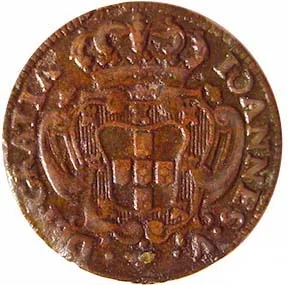
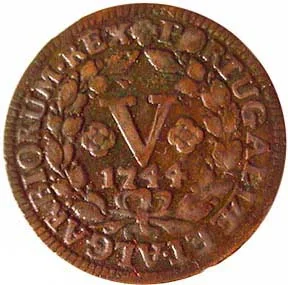

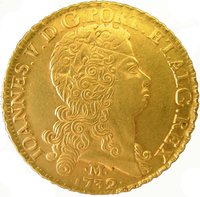
Obverse
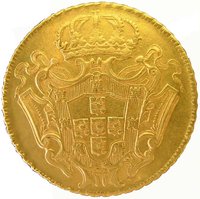
Reverse
Edge
Plain
Mints
| Name | Mark |
|---|---|
| Imprensa Nacional - Casa da Moeda | — |
Mintings
| Year | Mint Mark | Mintage | Quality | Collection |
|---|---|---|---|---|
| 1728 | — | — | ||
| 1736 | — | — | ||
| 1737 | — | — | ||
| 1738 | — | — | ||
| 1742 | — | — | ||
| 1743 | — | — | ||
| 1744 | — | — | ||
| 1746 | — | — |
Historical background
In 1728, Portugal’s currency situation was characterized by profound instability and debasement, a direct legacy of King João V’s expensive reign. The monarch’s immense expenditures on monumental projects like the Palace-Convent of Mafra, a lavish court, and Brazilian gold shipments to the Vatican strained the treasury. To finance these costs, the crown repeatedly engaged in monetary manipulation, reducing the precious metal content in coins like the cruzado while officially maintaining their face value. This practice flooded the kingdom with underweight and adulterated coinage, eroding public trust and disrupting both domestic commerce and international trade.
The root of the problem was a paradox of wealth. While vast quantities of gold from Brazil flowed into Lisbon, it did not translate into a stable monetary base. Instead of using the bullion to back a sound currency, the crown often diverted it for immediate fiscal needs or ostentatious spending. Furthermore, the influx of gold itself caused inflationary pressures. The resulting mix of full-weight, lightweight, and counterfeit coins in circulation created chaos, as merchants and foreign traders demanded premiums for good money, effectively creating a system with multiple, unofficial exchange rates.
Authorities were aware of the crisis, but effective solutions remained elusive in 1728. Previous attempts at reform, such as the 1688 currency standard, had been undermined by subsequent debasements. The situation called for a complete moedagem—a recoinage and standardization—but such a project would be politically and technically daunting. Therefore, in 1728, Portugal remained in a precarious state, with its monetary system undermined by the very Brazilian gold that symbolized its imperial power, setting the stage for the more comprehensive reforms that would be attempted later in the 18th century.
The root of the problem was a paradox of wealth. While vast quantities of gold from Brazil flowed into Lisbon, it did not translate into a stable monetary base. Instead of using the bullion to back a sound currency, the crown often diverted it for immediate fiscal needs or ostentatious spending. Furthermore, the influx of gold itself caused inflationary pressures. The resulting mix of full-weight, lightweight, and counterfeit coins in circulation created chaos, as merchants and foreign traders demanded premiums for good money, effectively creating a system with multiple, unofficial exchange rates.
Authorities were aware of the crisis, but effective solutions remained elusive in 1728. Previous attempts at reform, such as the 1688 currency standard, had been undermined by subsequent debasements. The situation called for a complete moedagem—a recoinage and standardization—but such a project would be politically and technically daunting. Therefore, in 1728, Portugal remained in a precarious state, with its monetary system undermined by the very Brazilian gold that symbolized its imperial power, setting the stage for the more comprehensive reforms that would be attempted later in the 18th century.
🌟 Limited