


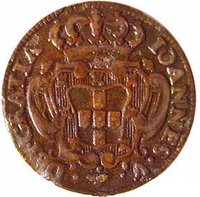
Obverse
Description:
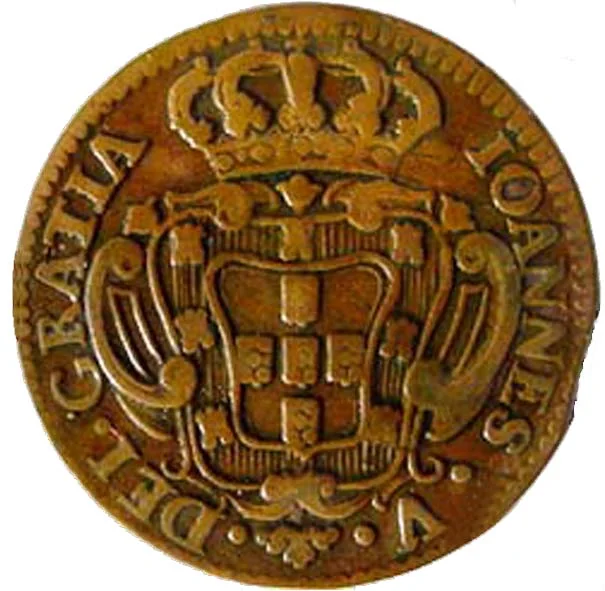
Portuguese coat of arms, baroque style, crowned.
Inscription:
IOANNES V DEI GRATIA
Script: Latin
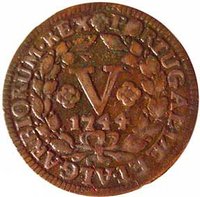
Reverse
Edge
Plain
Mints
| Name | Mark |
|---|---|
| Imprensa Nacional - Casa da Moeda | — |
Mintings
| Year | Mint Mark | Mintage | Quality | Collection |
|---|---|---|---|---|
| 1734 | — | — | ||
| 1737 | — | — | ||
| 1738 | — | — | ||
| 1744 | — | — |
Historical background
In 1734, Portugal's currency situation was dominated by the widespread circulation of Brazilian gold, which had begun flooding into the kingdom following the discovery of vast deposits in Minas Gerais decades earlier. This influx fundamentally transformed the Portuguese economy, leading King John V to initiate a major recoinage. The primary silver coin, the cruzado, was replaced by a new gold-based standard, with the moeda (or peça) becoming the central unit of account. The most famous coin to emerge from this period was the gold moeda or peça of 6400 réis, a large, high-value coin struck from Brazilian metal that symbolized the kingdom's Atlantic wealth.
However, this apparent prosperity masked significant structural problems. The sheer volume of gold caused inflation, particularly in basic goods, and the economy became dangerously dependent on a single colonial resource. Furthermore, the monetary system was complex and often chaotic. While gold coins like the moeda, half-moeda, and dobra circulated for large transactions, a chronic shortage of small-denomination copper and silver coins (réis and vinténs) plagued everyday commerce. This forced people to cut coins into pieces or use foreign currency, undermining official monetary authority and causing practical hardship for the common population.
The state's response, under the supervision of the Royal Treasury, was a continuous effort to control and standardize the coinage. The Lisbon Mint (Casa da Moeda) was active in producing new coins from Brazilian gold, but it struggled to manage the circulation effectively. The monetary policy of 1734 was thus one of transition and tension: it was an era of spectacular royal wealth and grandiose projects funded by gold, yet it was built upon a fragile system that exacerbated social inequalities and left the domestic economy vulnerable to future shocks when the gold boom eventually diminished.
However, this apparent prosperity masked significant structural problems. The sheer volume of gold caused inflation, particularly in basic goods, and the economy became dangerously dependent on a single colonial resource. Furthermore, the monetary system was complex and often chaotic. While gold coins like the moeda, half-moeda, and dobra circulated for large transactions, a chronic shortage of small-denomination copper and silver coins (réis and vinténs) plagued everyday commerce. This forced people to cut coins into pieces or use foreign currency, undermining official monetary authority and causing practical hardship for the common population.
The state's response, under the supervision of the Royal Treasury, was a continuous effort to control and standardize the coinage. The Lisbon Mint (Casa da Moeda) was active in producing new coins from Brazilian gold, but it struggled to manage the circulation effectively. The monetary policy of 1734 was thus one of transition and tension: it was an era of spectacular royal wealth and grandiose projects funded by gold, yet it was built upon a fragile system that exacerbated social inequalities and left the domestic economy vulnerable to future shocks when the gold boom eventually diminished.
⭐ Rare