

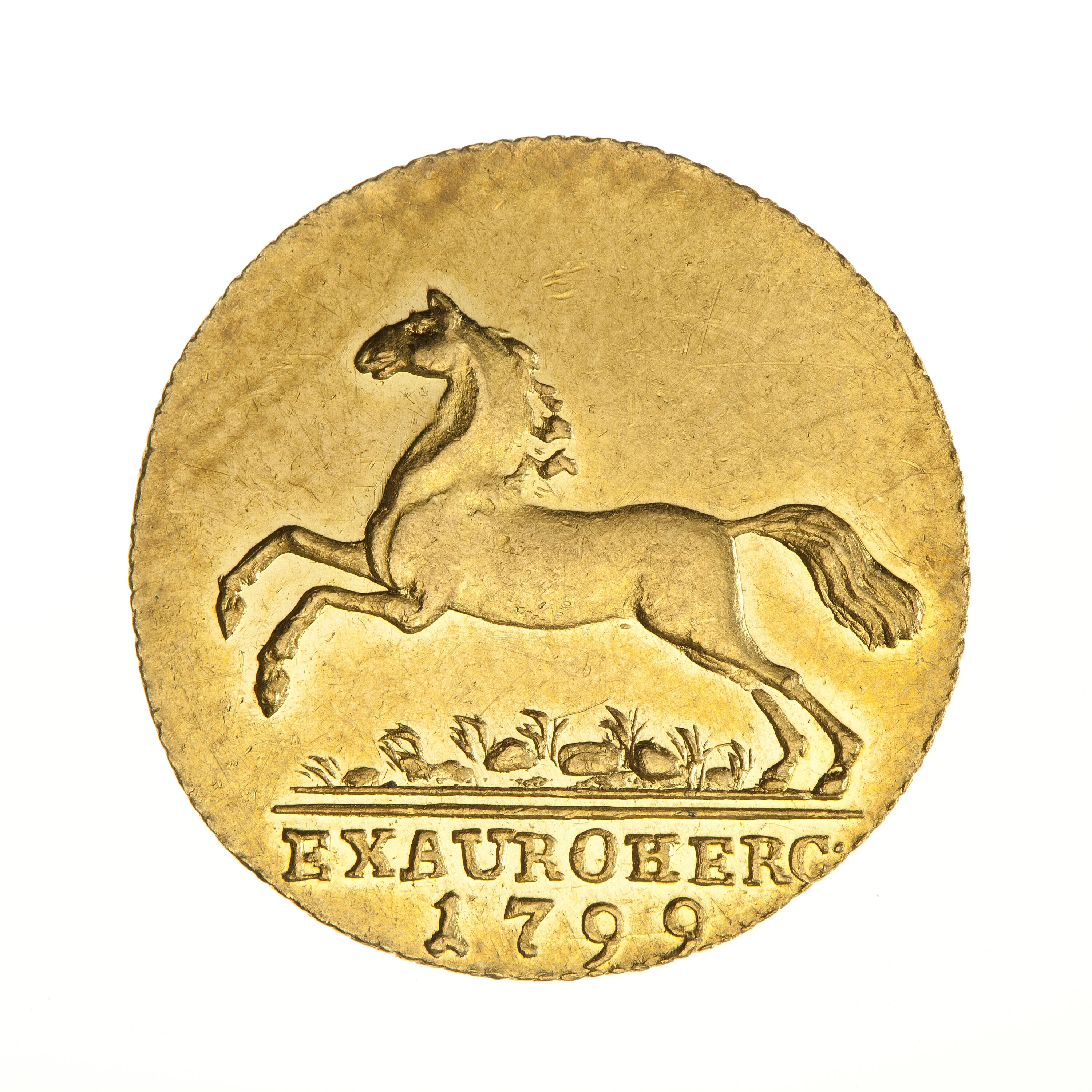
1 Ducat – Brunswick-Lüneburg-Calenberg-Hannover
Germany
Context

Material
References
KM: #Click to copy to clipboard396
Numista: #266125
Value
Bullion value: $572.88
Obverse
Description:
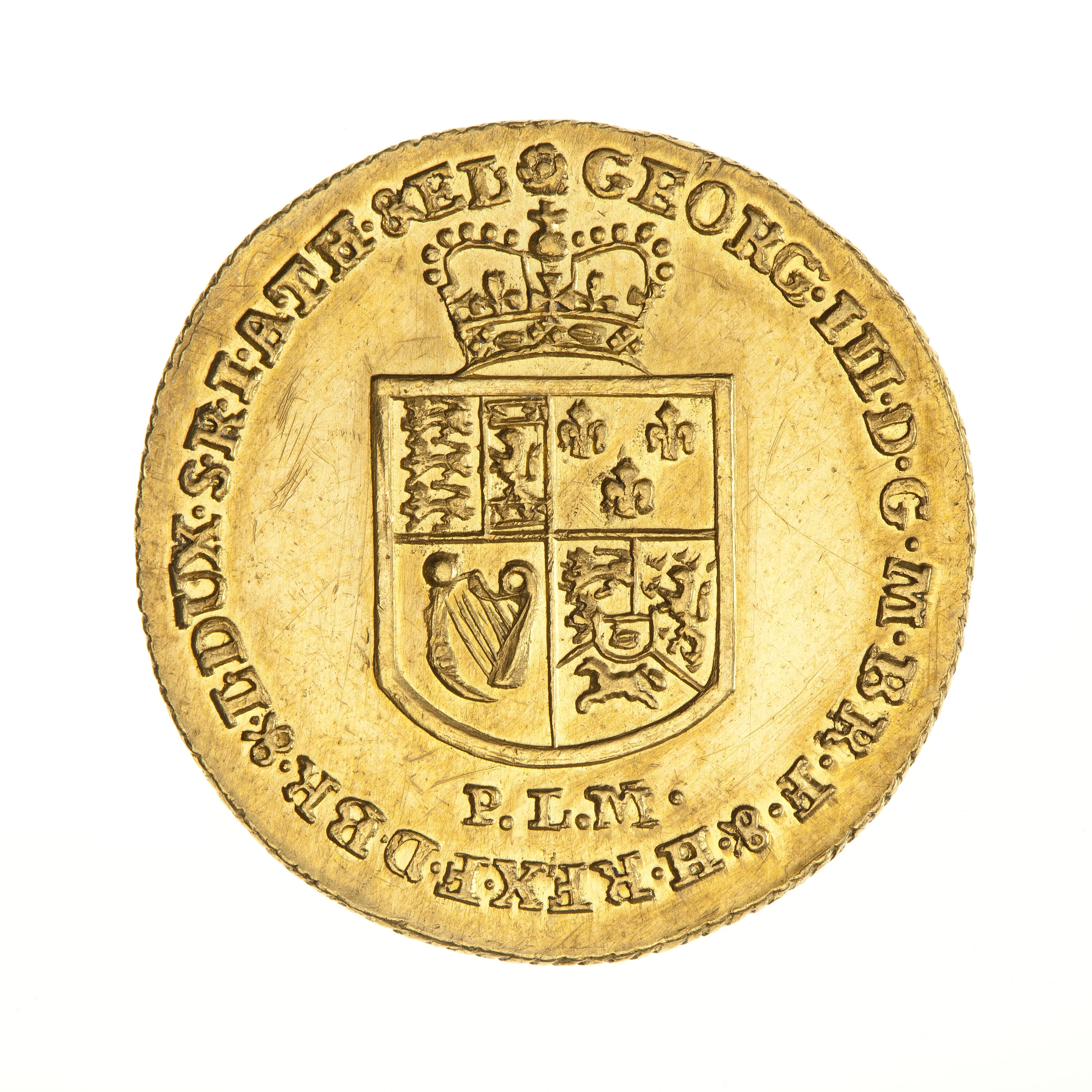
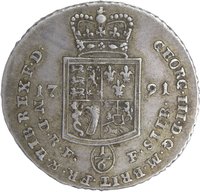
Quartered shield with a crown.
Inscription:
GEORG III D G M BR F & H REX F D H K & L DUX S R I A T E & EL
PLM
PLM
Script: Latin
Reverse
Edge
Mints
| Name | Mark |
|---|---|
| Clausthal | — |
Mintings
| Year | Mint Mark | Mintage | Quality | Collection |
|---|---|---|---|---|
| 1791 | c | — | ||
| 1793 | — | — | ||
| 1795 | — | — | ||
| 1796 | — | — | ||
| 1797 | — | — | ||
| 1798 | — | — | ||
| 1799 | — | — | ||
| 1800 | — | — |
Historical background
In 1791, the currency situation in the Duchy of Brunswick-Lüneburg, specifically the Principality of Calenberg (with its capital in Hanover), was complex and fragmented, reflecting the broader political structure of the Holy Roman Empire. The territory was part of the personal union with Great Britain under King George III, but its monetary system remained distinctly German and regional. It operated within the northern German Reichsthaler zone, where the primary accounting unit was the Reichsthaler (Imperial Thaler), divided into 24 Gute Groschen or 288 Pfennige. However, daily commerce saw a proliferation of actual circulating coins from various neighboring states and cities, leading to chronic confusion and the need for constant conversion.
This monetary fragmentation was exacerbated by the continued circulation of older, debased coins alongside newer issues. The Hanoverian mint produced its own Reichsthaler and fractional coins, but their acceptance and value were influenced by the Conventionsfuß (monetary standard) adopted by the region. Furthermore, a significant amount of lower-value transactional currency came from nearby minting authorities in Brunswick-Wolfenbüttel, Bremen, and even further afield, creating a patchwork of intrinsic values. This system required published exchange lists (Kurantzettel) and relied heavily on the expertise of money changers, hindering efficient trade.
The situation presented an administrative challenge for the Hanoverian government. While the British connection provided economic stability, it did not simplify the local currency chaos. Efforts at standardization were incremental and faced resistance from entrenched interests. Consequently, in 1791, merchants and the populace navigated a system that was not yet a unified state currency, but rather a negotiated landscape of multiple metallic coins, their values tied to a silver standard but practically determined by local custom and proclamation, awaiting the more sweeping reforms that would follow in the Napoleonic era.
This monetary fragmentation was exacerbated by the continued circulation of older, debased coins alongside newer issues. The Hanoverian mint produced its own Reichsthaler and fractional coins, but their acceptance and value were influenced by the Conventionsfuß (monetary standard) adopted by the region. Furthermore, a significant amount of lower-value transactional currency came from nearby minting authorities in Brunswick-Wolfenbüttel, Bremen, and even further afield, creating a patchwork of intrinsic values. This system required published exchange lists (Kurantzettel) and relied heavily on the expertise of money changers, hindering efficient trade.
The situation presented an administrative challenge for the Hanoverian government. While the British connection provided economic stability, it did not simplify the local currency chaos. Efforts at standardization were incremental and faced resistance from entrenched interests. Consequently, in 1791, merchants and the populace navigated a system that was not yet a unified state currency, but rather a negotiated landscape of multiple metallic coins, their values tied to a silver standard but practically determined by local custom and proclamation, awaiting the more sweeping reforms that would follow in the Napoleonic era.
✨ Legendary