

1 ducat – Sweden
Add to wishlist
Sweden
Context
Material
References
KM: #
Numista: #264845
Value
Bullion value: $523.71
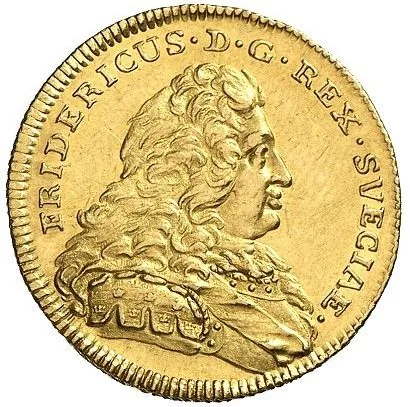
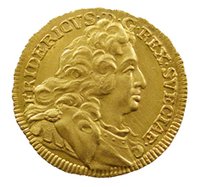
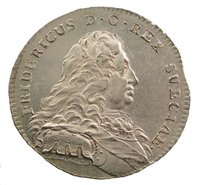
Obverse
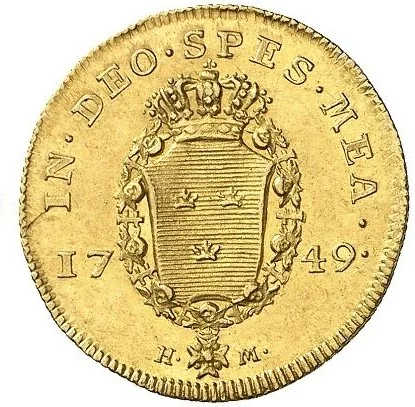
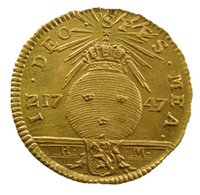
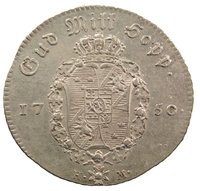
Reverse
Description:
Crowned shield with collar divides date.
Inscription:
IN DEO SPES MEA
1749
H M
1749
H M
Script: Latin
Edge
Mints
| Name | Mark |
|---|---|
| Stockholm | — |
Mintings
| Year | Mint Mark | Mintage | Quality | Collection |
|---|---|---|---|---|
| 1749 | — | — |
Historical background
In 1749, Sweden operated under a complex and strained monetary system, a legacy of its era as a European great power. The nation was on a silver-based standard, but its currency, the riksdaler, existed in multiple confusing forms: the riksdaler specie (valued in silver), the riksdaler banco (an accounting unit used by the central bank, the Riksens Ständers Bank), and the widely circulating riksdaler riksmynt in copper and silver coin. This fragmentation created constant exchange difficulties and hindered trade. Furthermore, the state treasury was deeply depleted following the costly Great Northern War (1700–1721), leading to chronic budget deficits and a reliance on debasement and foreign loans.
The period was part of the so-called "Age of Liberty" (1719–1772), where power rested with the Riksdag (parliament) and its competing political factions, the "Hats" and "Caps." The dominant Hats, pursuing mercantilist policies and military revanchism against Russia, financed their ambitions through inflationary measures. The Riksens Ständers Bank, under political influence, issued excessive amounts of paper money (sedlar) not fully backed by silver reserves. This, combined with a shortage of small-change copper coinage for everyday transactions, created inflationary pressures and eroded public trust in the currency's real value.
Consequently, 1749 fell within a prolonged period of monetary instability and experimentation. While not a single crisis year, it was characterized by ongoing debates about currency reform, the management of the bank, and the struggle to maintain the external value of the riksdaler in international exchange. The underlying tensions would eventually culminate in a more severe crisis in the 1750s, forcing a drastic devaluation and a failed attempt to stabilize the system with a new copper standard, highlighting the deep-seated fiscal and political roots of Sweden's mid-18th century currency challenges.
The period was part of the so-called "Age of Liberty" (1719–1772), where power rested with the Riksdag (parliament) and its competing political factions, the "Hats" and "Caps." The dominant Hats, pursuing mercantilist policies and military revanchism against Russia, financed their ambitions through inflationary measures. The Riksens Ständers Bank, under political influence, issued excessive amounts of paper money (sedlar) not fully backed by silver reserves. This, combined with a shortage of small-change copper coinage for everyday transactions, created inflationary pressures and eroded public trust in the currency's real value.
Consequently, 1749 fell within a prolonged period of monetary instability and experimentation. While not a single crisis year, it was characterized by ongoing debates about currency reform, the management of the bank, and the struggle to maintain the external value of the riksdaler in international exchange. The underlying tensions would eventually culminate in a more severe crisis in the 1750s, forcing a drastic devaluation and a failed attempt to stabilize the system with a new copper standard, highlighting the deep-seated fiscal and political roots of Sweden's mid-18th century currency challenges.
✨ Legendary