

¼ kronenthaler – Austrian Netherlands
Add to wishlist
Belgium
Context
Years: 1788–1790
Country: Belgium
Issuer: Austrian Netherlands
Ruler: Joseph II
Currency:
(1744—1798)
Demonetized: Yes
Material
References
KM: #
Numista: #26307
Value
Bullion value: $16.42
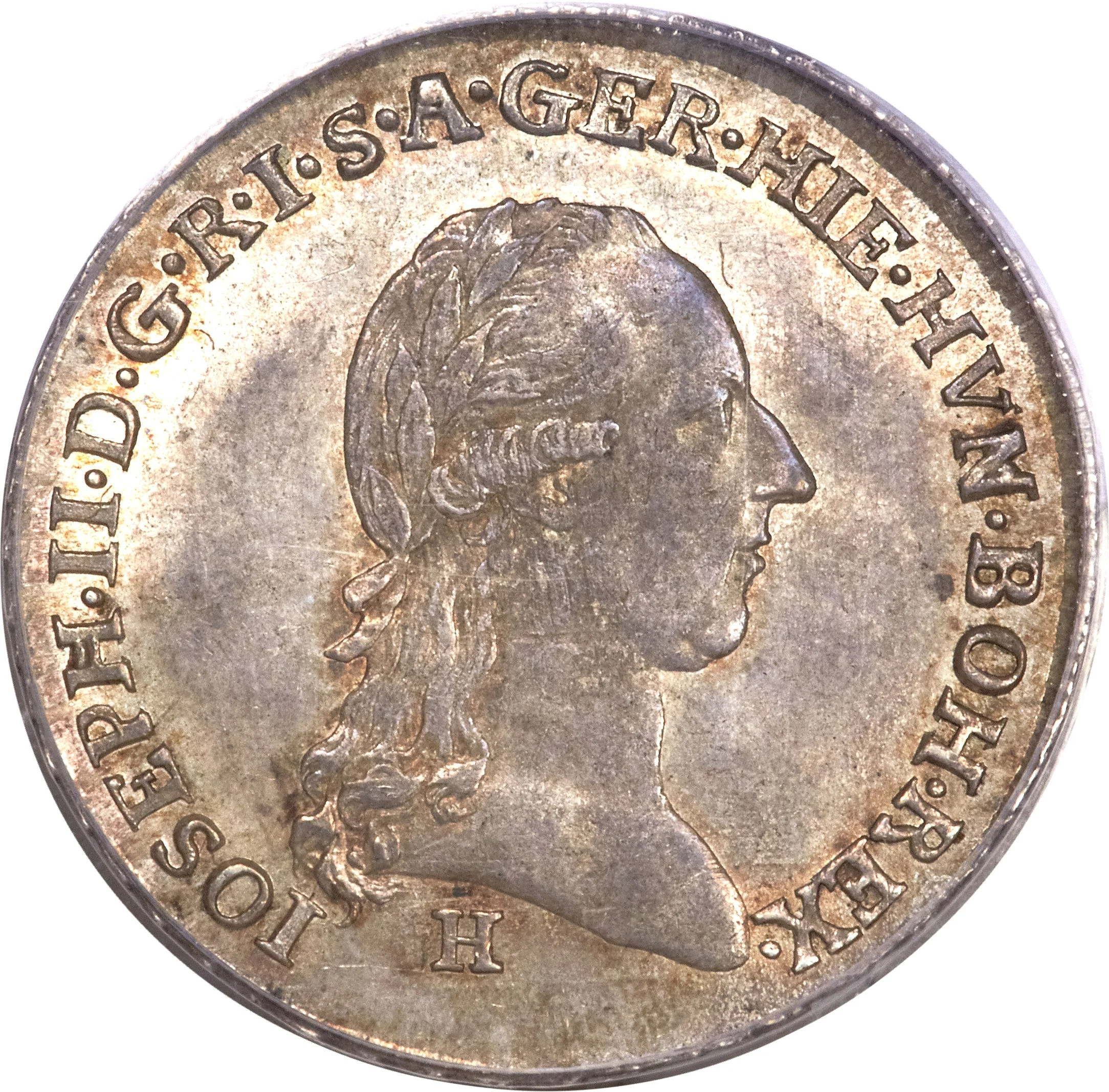
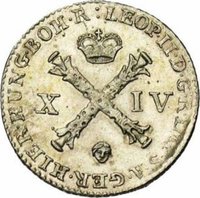
Obverse
Description:
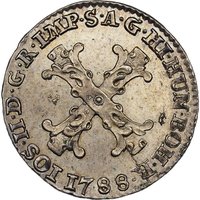
Laureate head right.
Inscription:
IOSEPH · II · D · G · R · I · S · A · GER · HIE · HVN · BOH · REX · H
Script: Latin
Engraver: Théodore Van Berckel
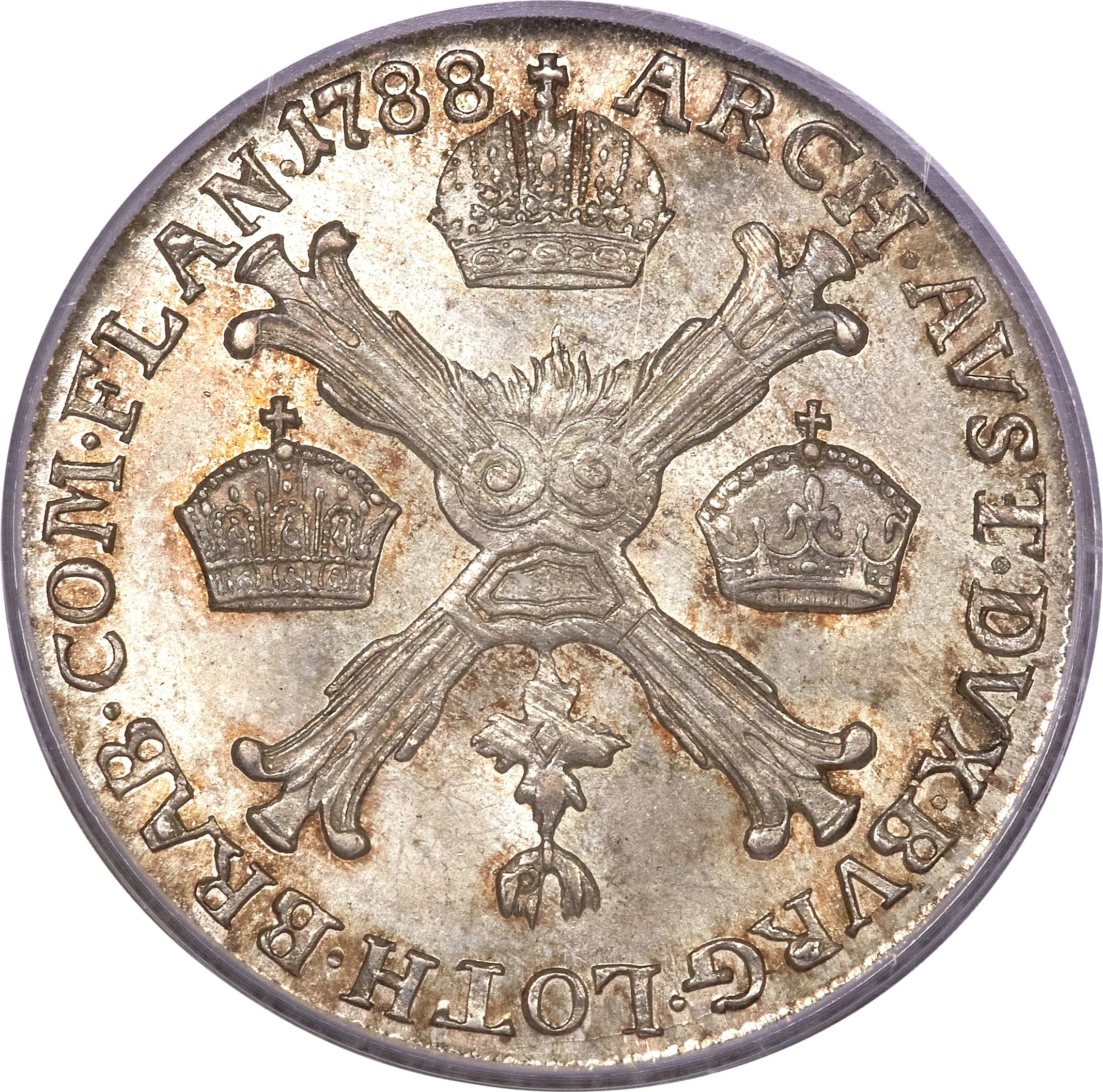
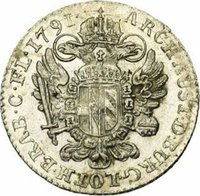
Reverse
Description:
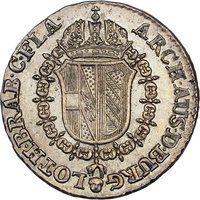
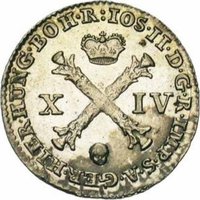
Burgundian cross with three crowns, the Golden Fleece below.
Inscription:
ARCH · AVST · DVX · BVRG · LOTH · BRAB · COM · FLAN ·
1788
1788
Script: Latin
Engraver: Théodore Van Berckel
Edge
Text
Legend:
VIRTUTE ET EXEMPLO
Mints
| Name | Mark |
|---|---|
| Münze Österreich | A |
| Kremnica | B |
| Günzburg | H |
Historical background
In 1788, the Austrian Netherlands (approximately modern-day Belgium and Luxembourg) was grappling with a severe and complex currency crisis, a direct consequence of the ambitious but destabilizing monetary reforms enacted by Emperor Joseph II. In 1786, the Emperor had introduced a new, standardized silver florin, aiming to replace the bewildering variety of domestic and foreign coins in circulation and to centralize monetary authority in Vienna. This policy, typical of Joseph's top-down Enlightenment absolutism, mandated the exchange of old coins for the new at rates that were widely perceived as unfavourable, effectively functioning as a forced devaluation.
The immediate result was economic chaos. The public, distrustful of the new coinage and fearing loss of value, hoarded the old coins, leading to a critical shortage of circulating specie. Trade and daily commerce seized up, as merchants refused the new florins or demanded exorbitant premiums. Simultaneously, the decree triggered a massive outflow of the older, full-value silver coins to neighbouring countries like the Dutch Republic and France, where they retained their worth, draining the region of its wealth. This compounded a pre-existing economic downturn, causing widespread business failures and soaring unemployment.
By 1788, the currency situation had become a focal point of deep-seated political resentment. The crisis was not merely economic but a symbol of Habsburg overreach and disregard for local institutions and traditions. It galvanized opposition across social classes, uniting merchants, guilds, and the privileged estates against Viennese rule. This financial turmoil thus became a key catalyst for the broader Brabant Revolution, which would erupt the following year, demonstrating how a poorly executed monetary policy could fatally undermine imperial authority.
The immediate result was economic chaos. The public, distrustful of the new coinage and fearing loss of value, hoarded the old coins, leading to a critical shortage of circulating specie. Trade and daily commerce seized up, as merchants refused the new florins or demanded exorbitant premiums. Simultaneously, the decree triggered a massive outflow of the older, full-value silver coins to neighbouring countries like the Dutch Republic and France, where they retained their worth, draining the region of its wealth. This compounded a pre-existing economic downturn, causing widespread business failures and soaring unemployment.
By 1788, the currency situation had become a focal point of deep-seated political resentment. The crisis was not merely economic but a symbol of Habsburg overreach and disregard for local institutions and traditions. It galvanized opposition across social classes, uniting merchants, guilds, and the privileged estates against Viennese rule. This financial turmoil thus became a key catalyst for the broader Brabant Revolution, which would erupt the following year, demonstrating how a poorly executed monetary policy could fatally undermine imperial authority.
🌟 Limited