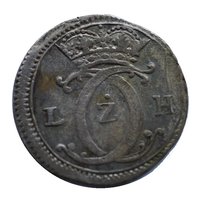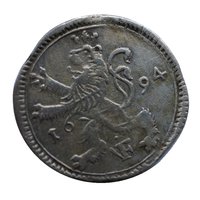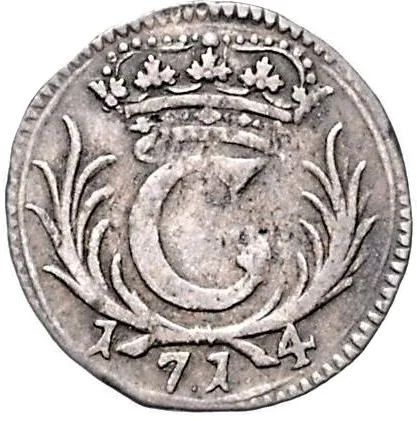
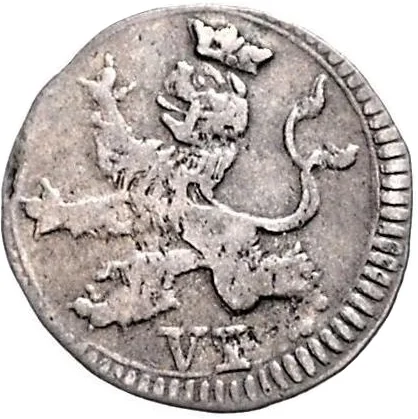
In 1701, the currency situation in the Landgraviate of Hesse-Cassel was complex and challenging, rooted in the fragmented monetary systems of the Holy Roman Empire. The landgraviate did not have a fully sovereign coinage; it operated within the framework of the Reichsmünzordnung (Imperial Coinage Ordinance), which attempted to standardize currency across the Empire's states. However, in practice, Hesse-Cassel issued its own coins—primarily talers, gulden, and kreuzers—alongside a multitude of foreign currencies circulating within its borders, particularly from neighboring states. This proliferation created chronic confusion and facilitated debasement, where coins' precious metal content was reduced, eroding public trust and economic stability.
The primary driver of monetary policy was the state's fiscal needs, heavily burdened by the costs of maintaining a standing army and the lavish court of Landgrave Charles I. To raise revenue, the minting of coinage was often exploited as a source of profit through "Kippermünze" (debased coinage) practices, where the state would issue coins with a face value higher than their intrinsic metal worth. This short-term fiscal strategy led to inflation, hindered legitimate commerce, and provoked public discontent. Furthermore, the landgraviate's economy was still largely agrarian, making it vulnerable to these monetary manipulations and to the economic disruptions that followed the Nine Years' War (1688-1697).
Consequently, by the turn of the century, Hesse-Cassel faced a dual crisis of currency devaluation and a lack of uniform monetary authority. Efforts at reform were piecemeal and struggled against entrenched interests and the sheer complexity of the imperial monetary landscape. The situation demanded a more stable and authoritative currency system, a need that would become even more pressing as the landgraviate geared up for future conflicts, most notably the impending War of the Spanish Succession, which would further strain its finances and highlight the deficiencies of its monetary regime.