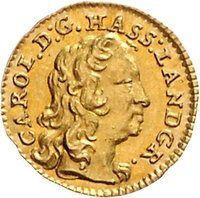
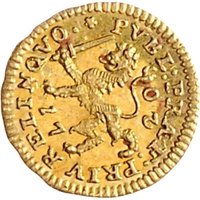
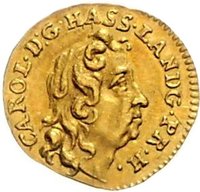
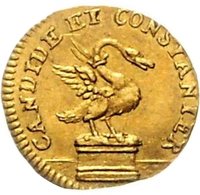
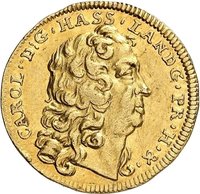
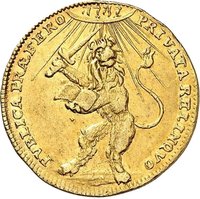
In 1720, the Landgraviate of Hesse-Cassel was navigating a complex and challenging monetary landscape, a legacy of the costly wars of the previous century. The Thirty Years' War and subsequent conflicts had forced rulers across the Holy Roman Empire, including Hesse-Cassel, to debase their coinage to fund military expenditures. By the early 18th century, this resulted in a chaotic circulation of multiple coin types—local issues, imperial talers, and foreign currencies—all with fluctuating intrinsic values and exchange rates. This "currency confusion" (Münzwirrwarr) hampered trade, created uncertainty, and made everyday transactions difficult for the populace.
Landgrave Charles I, who ruled from 1670 to 1730, was actively attempting to reform and stabilize the currency system. His policies aimed to restore confidence by standardizing coinage and aligning Hesse-Cassel's monetary standards with those of the wider Empire, particularly the Leipzig monetary standard. However, these efforts were a continuous struggle against the pressures of state finance and the fragmented nature of the Empire's political economy. The treasury's need for revenue often conflicted with the goal of maintaining a sound, stable currency.
Therefore, the situation in 1720 was one of transition and tension. While the Landgraviate was officially working toward monetary order and had a relatively robust economy based on trade and its famous mercenary soldiers, the practical reality was a market still burdened by a mix of old and new coins of uncertain value. The success of Charles's reforms was partial, setting a foundation for greater stability later in the century but not yet resolving the deep-seated monetary instability inherited from the era of war.