

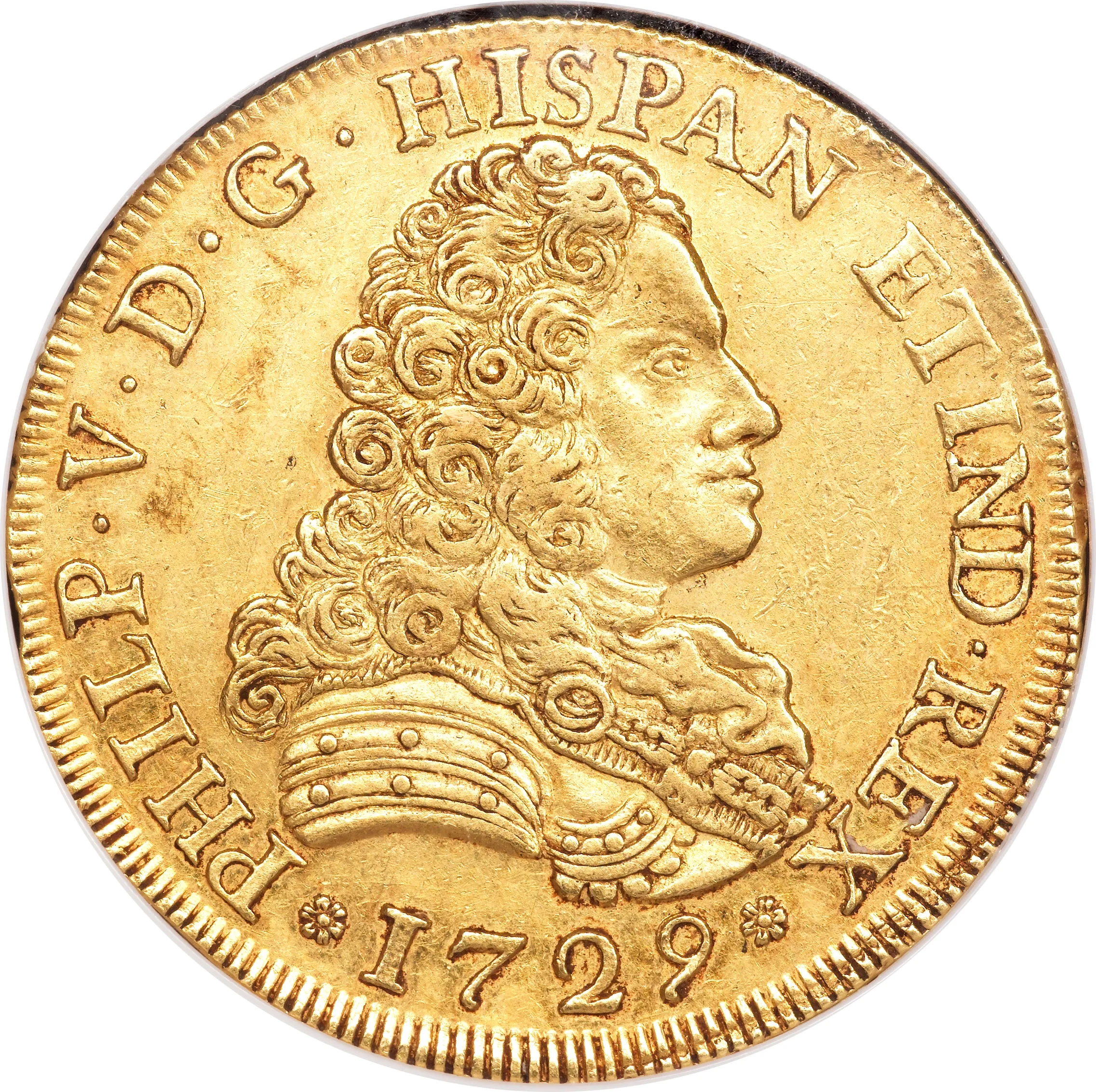
Obverse
Description:
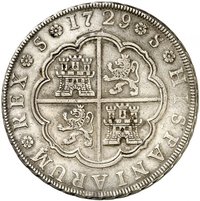
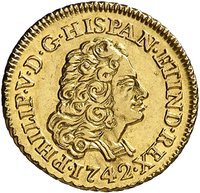
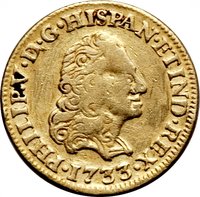
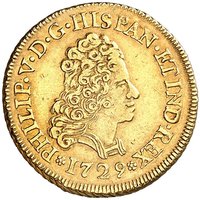
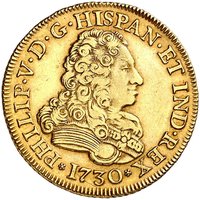
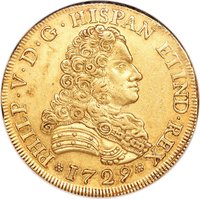
Armored bust of Philip V in profile.
Inscription:
PHILP · V · D · G · HISPAN ET IND · REX
❀ 1729 ❀
❀ 1729 ❀
Script: Latin
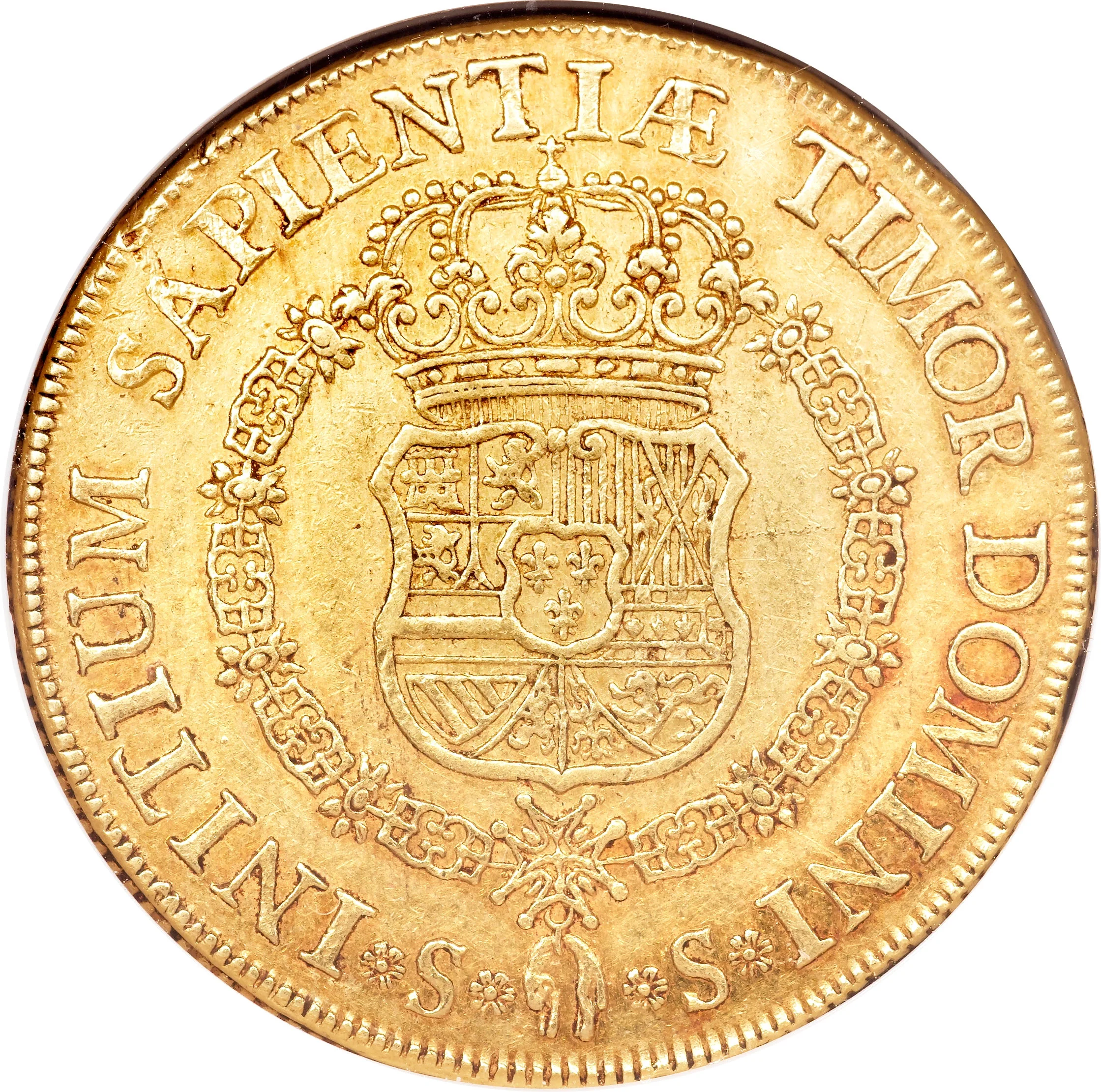
Reverse
Description:
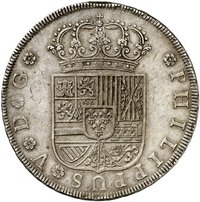
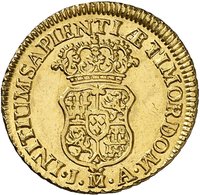
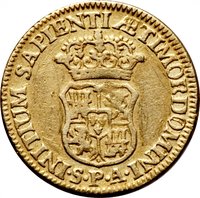
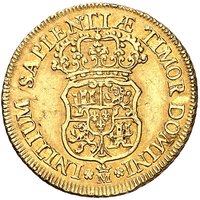
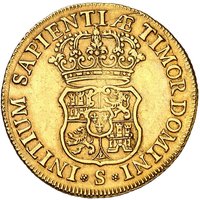
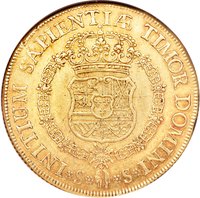
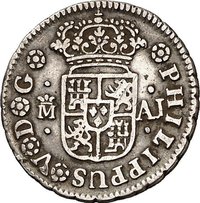
Crowned Spanish coat of arms with the Golden Fleece.
Inscription:
INITIUM SAPIENTIÆ TIMOR DOMINI
❀ S ❀ ❀ S ❀
❀ S ❀ ❀ S ❀
Script: Latin
Edge
Categories
| Symbols> Coat of Arms |
Mints
| Name | Mark |
|---|---|
| Royal Mint of Madrid | (M) |
| Royal Mint of Seville | (S) |
Mintings
| Year | Mint Mark | Mintage | Quality | Collection |
|---|---|---|---|---|
| 1729 | MJJ | — | ||
| 1729 | S | — | ||
| 1730 | MJJ | — | ||
| 1730 | S | — | ||
| 1731 | SPA | — | ||
| 1732 | SPA | — | ||
| 1733 | SPA | — | ||
| 1734 | SPA | — | ||
| 1735 | SPA | — | ||
| 1736 | SPA | — | ||
| 1737 | SPJ | — | ||
| 1738 | SPJ | — |
Historical background
In 1729, Spain operated under a complex and strained monetary system, a legacy of the Habsburg era that was proving difficult for the Bourbon monarchy to reform. The primary unit of account was the silver real, but the physical currency in circulation was a chaotic mix of domestic and foreign coins. Domestically, the most important coin was the silver peso (piece of eight), valued at 8 reales, but its quality and weight were inconsistent. Alongside these, a vast quantity of debased and clipped coins circulated, as did a flood of foreign silver, particularly from Spanish America, and gold coins like the escudo. This heterogeneity made everyday transactions cumbersome and fostered widespread distrust.
The core of Spain's monetary problems was a severe and chronic shortage of precious metal coinage, especially low-denomination coins for daily use. Decades of costly European wars, combined with inefficient tax collection and a reliance on American silver shipments that were often delayed or diverted to pay foreign debts, had drained the treasury. This scarcity was acutely felt in the domestic economy, hindering trade and causing significant hardship for the common people. Furthermore, the government's frequent attempts to solve fiscal shortfalls by altering the face value of coins (a practice known as vellón manipulation) had led to severe inflation and a deep loss of public confidence in the currency's value.
King Philip V and his ministers were aware of the need for stabilization. Efforts were underway to centralize minting and impose order, culminating in the planned monetary reform of 1730. This reform aimed to introduce new, uniform gold and silver coins based on Castilian standards and to withdraw the old, variable pieces from circulation. Therefore, the situation in 1729 was one of transition and mounting pressure, caught between the inherited chaos of the past and a concerted, though not yet implemented, Bourbon effort to create a modern, reliable monetary system to support state power and economic recovery.
The core of Spain's monetary problems was a severe and chronic shortage of precious metal coinage, especially low-denomination coins for daily use. Decades of costly European wars, combined with inefficient tax collection and a reliance on American silver shipments that were often delayed or diverted to pay foreign debts, had drained the treasury. This scarcity was acutely felt in the domestic economy, hindering trade and causing significant hardship for the common people. Furthermore, the government's frequent attempts to solve fiscal shortfalls by altering the face value of coins (a practice known as vellón manipulation) had led to severe inflation and a deep loss of public confidence in the currency's value.
King Philip V and his ministers were aware of the need for stabilization. Efforts were underway to centralize minting and impose order, culminating in the planned monetary reform of 1730. This reform aimed to introduce new, uniform gold and silver coins based on Castilian standards and to withdraw the old, variable pieces from circulation. Therefore, the situation in 1729 was one of transition and mounting pressure, caught between the inherited chaos of the past and a concerted, though not yet implemented, Bourbon effort to create a modern, reliable monetary system to support state power and economic recovery.
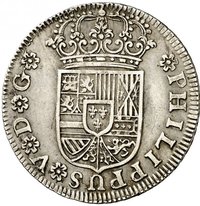
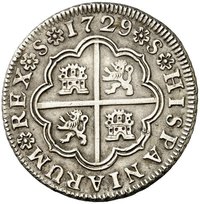
Series: 1729 Spain circulation coins
✨ Legendary