

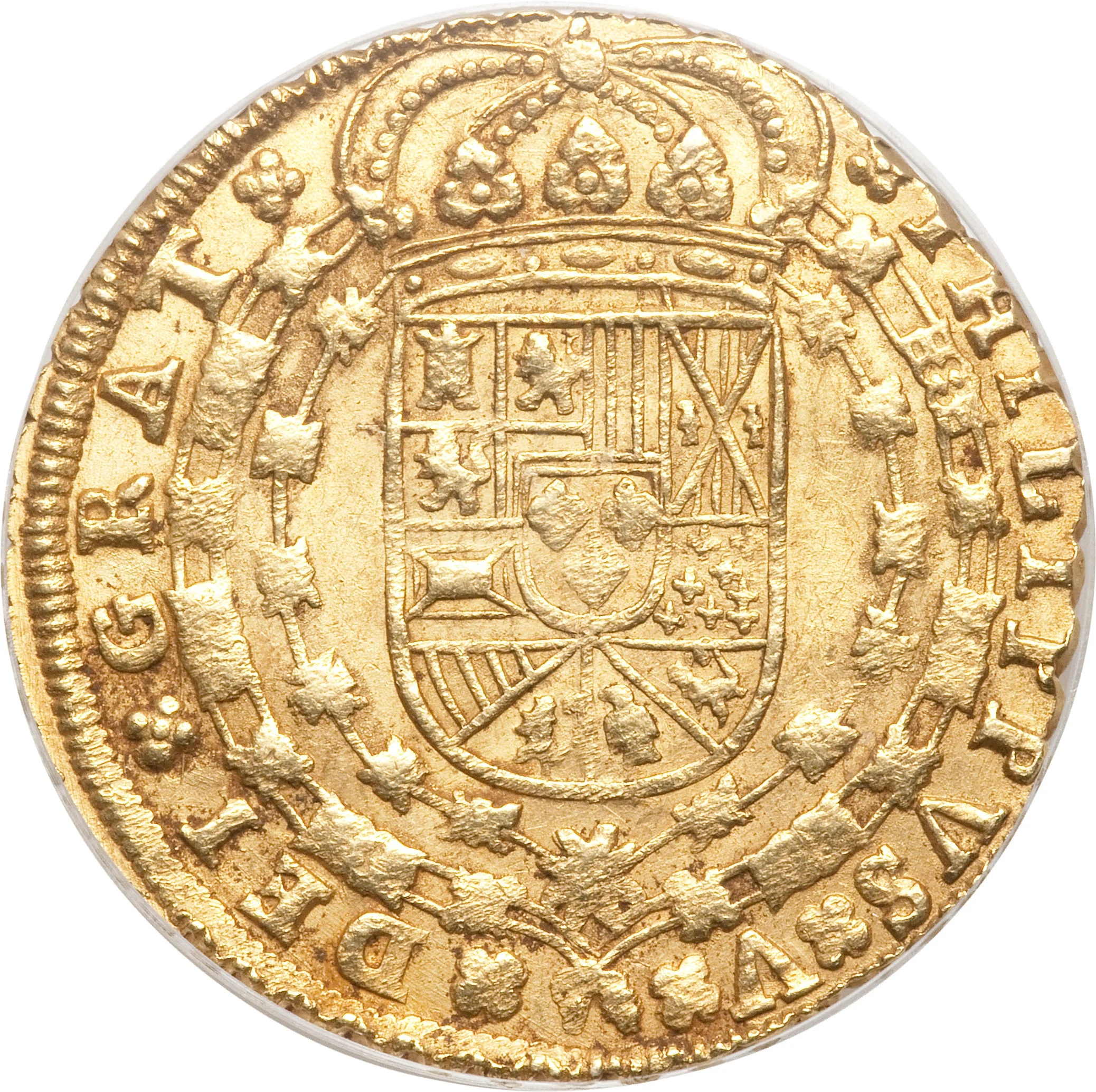
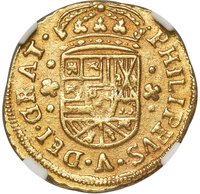
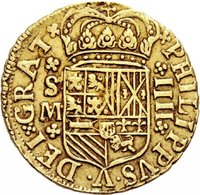
Obverse
Description:
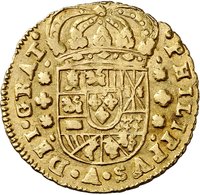
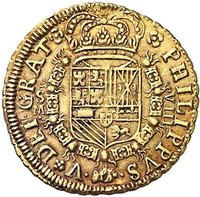
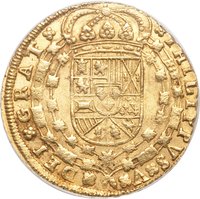
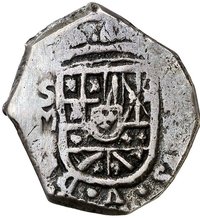
Crowned Spanish coat of arms encircled by the Golden Fleece collar.
Inscription:
✤ PHILIPPVS ✤ V ✤ ✤ DEI ✤ GRAT ✤
Script: Latin
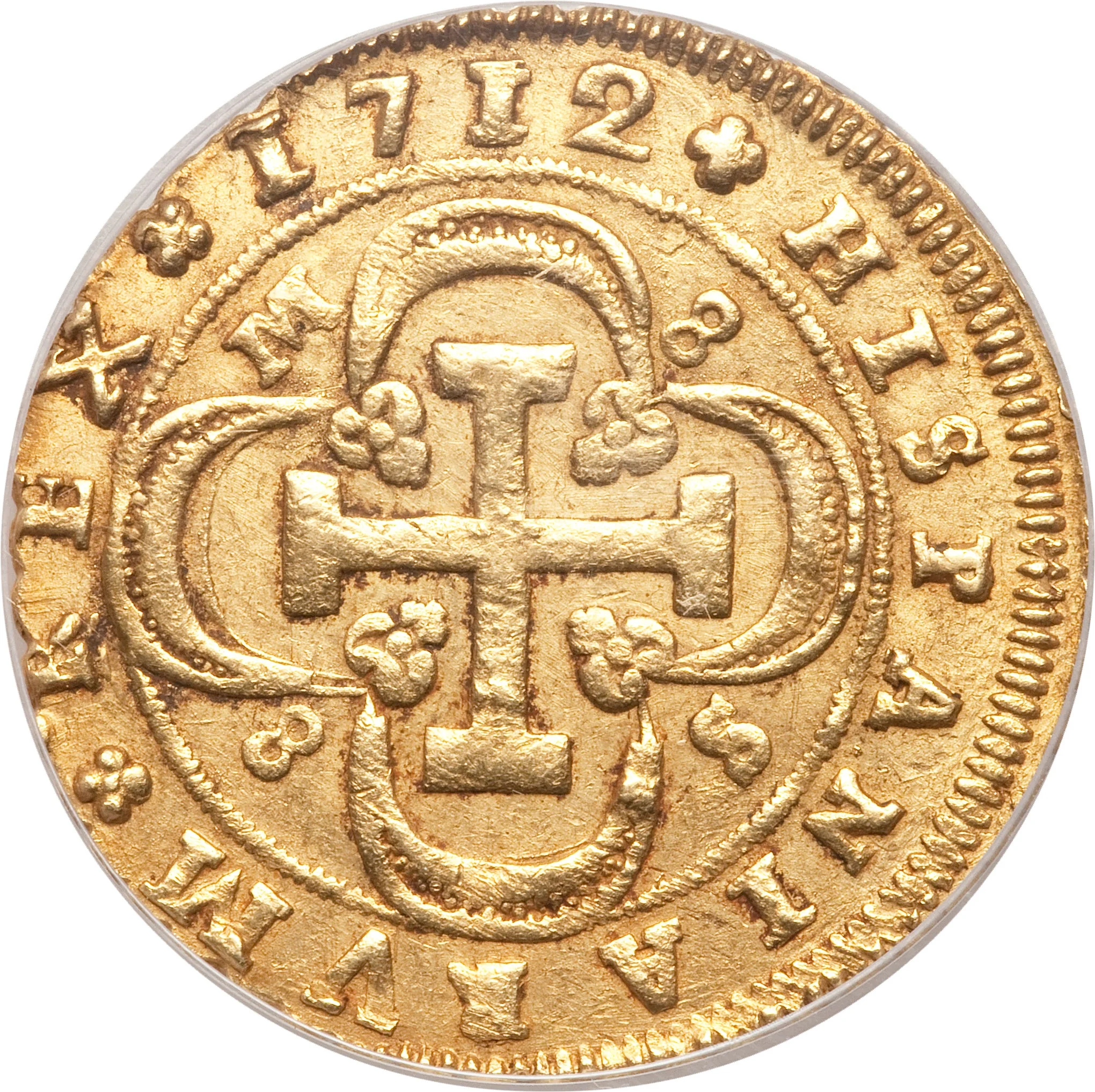
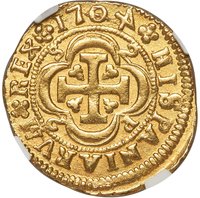
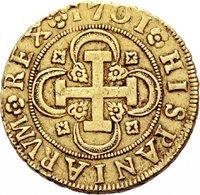
Reverse
Edge
Categories
| Symbols> Coat of Arms |
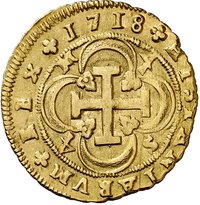
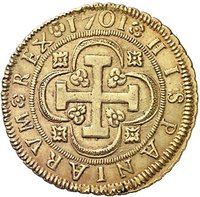
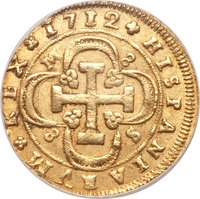
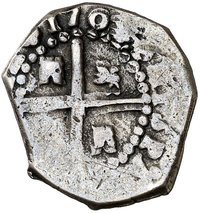
| Symbol> Cross |
Mints
| Name | Mark |
|---|---|
| Royal Mint of Seville | — |
Mintings
| Year | Mint Mark | Mintage | Quality | Collection |
|---|---|---|---|---|
| 1701 | SM | — | ||
| 1702 | SJ | — | ||
| 1702 | SM | — | ||
| 1703 | SJ | — | ||
| 1703 | SM | — | ||
| 1704 | SP | — | ||
| 1705 | SP | — | ||
| 1706 | SP | — | ||
| 1707 | SM | — | ||
| 1708 | SM | — | ||
| 1709 | SM | — | ||
| 1710 | SM | — | ||
| 1711 | SM | — | ||
| 1712 | SM | — | ||
| 1713 | SM | — | ||
| 1714 | SM | — | ||
| 1715 | SM | — | ||
| 1716 | SM | — | ||
| 1717 | SM | — | ||
| 1718 | SM | — | ||
| 1719 | SM | — |
Historical background
In 1701, Spain found itself in a precarious and complex monetary situation, a direct legacy of the prolonged economic decline and fiscal mismanagement under the last Habsburg king, Charles II, who had died just months earlier in November 1700. The century prior had seen repeated currency debasements, where the silver content of the ubiquitous real and the larger escudo was systematically reduced to finance the Crown's endless military campaigns and state debt. This resulted in a chaotic circulation of coins of varying intrinsic values, both domestic and foreign, severely undermining public confidence in the currency and hindering commerce. The treasury was effectively bankrupt, and the economy was struggling under the weight of inefficient taxes, stagnant production, and the loss of American silver fleets to foreign rivals and pirates.
The dynastic shift to the Bourbons with the accession of Philip V (grandson of Louis XIV of France) in 1701 introduced a new factor, as the War of the Spanish Succession (1701-1714) immediately began. This conflict forced the new king to prioritize war financing above all else, exacerbating the existing monetary crisis. Early in his reign, Philip V continued the Habsburg practice of debasement, issuing new copper-based vellón currency with a mandated face value far exceeding its metal worth to pay troops and suppliers. This aggressive expansion of the money supply, without economic growth to support it, triggered rapid inflation and further destabilized the already fragile monetary system.
Consequently, Spain in 1701 was caught between a bankrupt past and a war-driven present. Its currency system was characterized by a severe loss of trust, rampant inflation from debased coinage, and the competing circulation of older, purer coins hoarded by the public and newer, poorer ones issued by the state. True monetary reform would have to wait until after the War of the Spanish Succession concluded, when the victorious Philip V’s administration could begin the centralizing Bourbon reforms, including a recoinage and stabilization of the currency in the 1720s.
The dynastic shift to the Bourbons with the accession of Philip V (grandson of Louis XIV of France) in 1701 introduced a new factor, as the War of the Spanish Succession (1701-1714) immediately began. This conflict forced the new king to prioritize war financing above all else, exacerbating the existing monetary crisis. Early in his reign, Philip V continued the Habsburg practice of debasement, issuing new copper-based vellón currency with a mandated face value far exceeding its metal worth to pay troops and suppliers. This aggressive expansion of the money supply, without economic growth to support it, triggered rapid inflation and further destabilized the already fragile monetary system.
Consequently, Spain in 1701 was caught between a bankrupt past and a war-driven present. Its currency system was characterized by a severe loss of trust, rampant inflation from debased coinage, and the competing circulation of older, purer coins hoarded by the public and newer, poorer ones issued by the state. True monetary reform would have to wait until after the War of the Spanish Succession concluded, when the victorious Philip V’s administration could begin the centralizing Bourbon reforms, including a recoinage and stabilization of the currency in the 1720s.
Series: 1701 Spain circulation coins
✨ Legendary