

Obverse
Description:
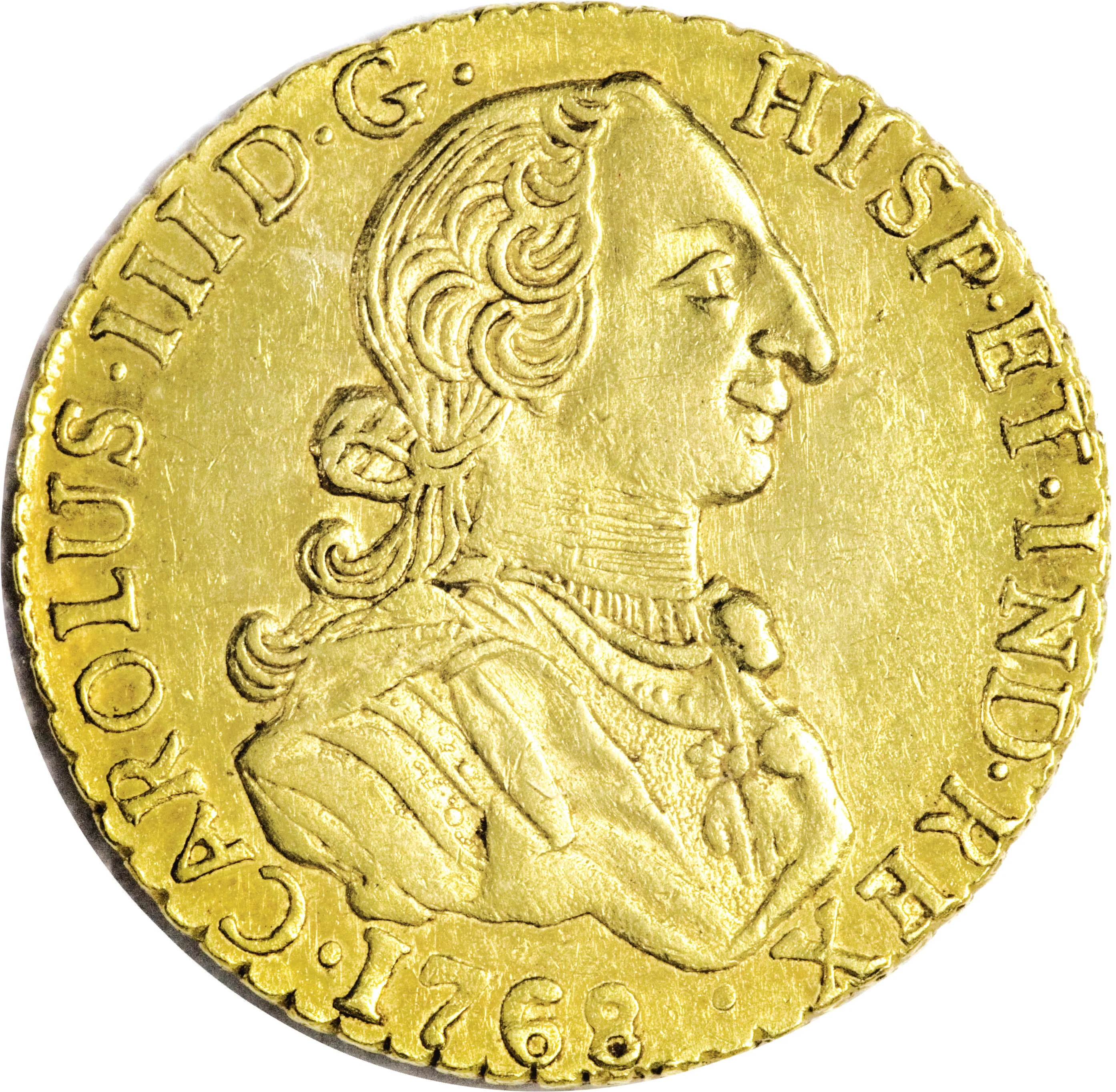
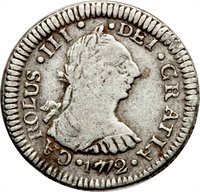
Bust right, legend around, date below.
Inscription:
CAROLUS • III • D • G • HISP • ETIND • REX
• 1768 •
• 1768 •
Script: Latin
Reverse
Description:
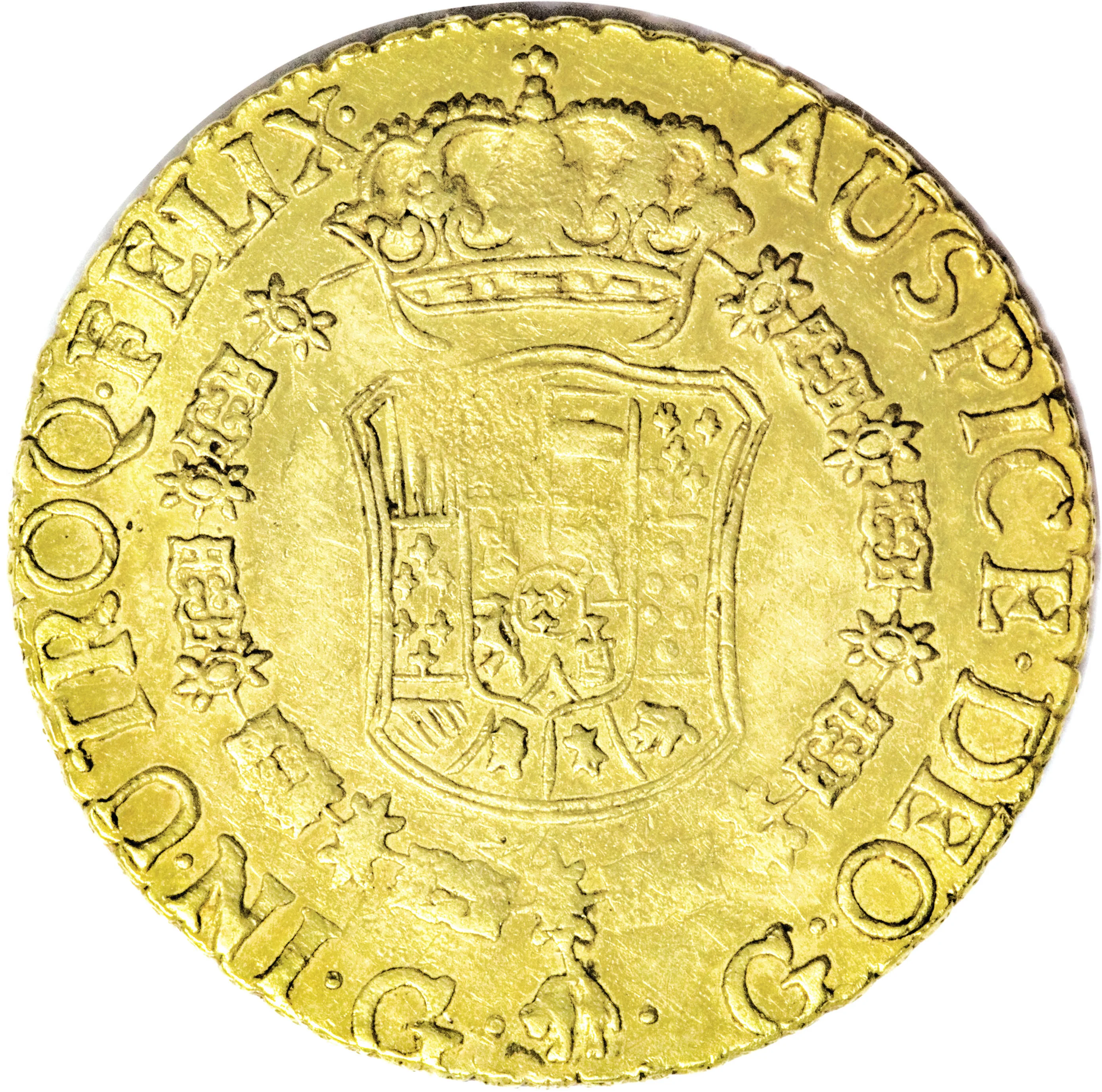
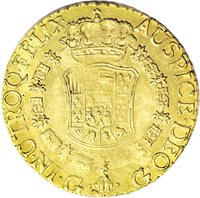
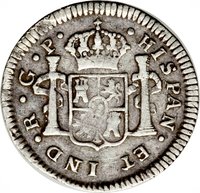
Crowned arms encircled by chain and legend.
Inscription:
IN UTROQ FELIX AUSPICE DEO
G G
G G
Script: Latin
Edge
Categories
| Symbols> Coat of Arms |
| Person> Monarch |
Mints
| Name | Mark |
|---|---|
| Casa de Moneda de Guatemala | G |
Historical background
In 1765, Guatemala, as the Captaincy General of Guatemala within the Spanish Empire, operated under a monetary system entirely dictated by the Spanish Crown. The official currency was the Spanish colonial real, with the silver peso (or "piece of eight," worth 8 reales) serving as the primary unit for larger transactions. However, a chronic and severe shortage of official coinage defined the economic reality. The limited supply of silver and gold coins arriving from Mexico (the nearest mint) and Peru was insufficient for local trade, as much of it was quickly exported to Spain or used for regional commerce.
This scarcity led to the widespread use of substitute currencies, creating a complex and often chaotic monetary environment. The most common substitute was cacao beans, a practice inherited from the pre-Columbian Maya that remained legally recognized for small-scale indigenous and local markets. For larger transactions, merchants and officials often used accounting units like the peso de cuentas or peso de mérito, which were not physical coins but ledger entries based on the theoretical value of silver. Additionally, foreign coins, particularly from other Spanish territories and even illicit Portuguese or French issues, circulated out of necessity, though their value was unstable and subject to discount.
The situation was a significant administrative headache for colonial authorities in Santiago de Guatemala (the capital). They constantly grappled with fraud, counterfeiting, and the difficulty of collecting taxes in a uniform medium. This monetary instability hindered economic development and trade efficiency within the captaincy general. The Crown's mercantilist policies, which prioritized the extraction of precious metals for Spain over local economic needs, were the root cause, leaving the regional economy to rely on a fragile and inadequate patchwork of official and improvised currencies.
This scarcity led to the widespread use of substitute currencies, creating a complex and often chaotic monetary environment. The most common substitute was cacao beans, a practice inherited from the pre-Columbian Maya that remained legally recognized for small-scale indigenous and local markets. For larger transactions, merchants and officials often used accounting units like the peso de cuentas or peso de mérito, which were not physical coins but ledger entries based on the theoretical value of silver. Additionally, foreign coins, particularly from other Spanish territories and even illicit Portuguese or French issues, circulated out of necessity, though their value was unstable and subject to discount.
The situation was a significant administrative headache for colonial authorities in Santiago de Guatemala (the capital). They constantly grappled with fraud, counterfeiting, and the difficulty of collecting taxes in a uniform medium. This monetary instability hindered economic development and trade efficiency within the captaincy general. The Crown's mercantilist policies, which prioritized the extraction of precious metals for Spain over local economic needs, were the root cause, leaving the regional economy to rely on a fragile and inadequate patchwork of official and improvised currencies.

✨ Legendary