

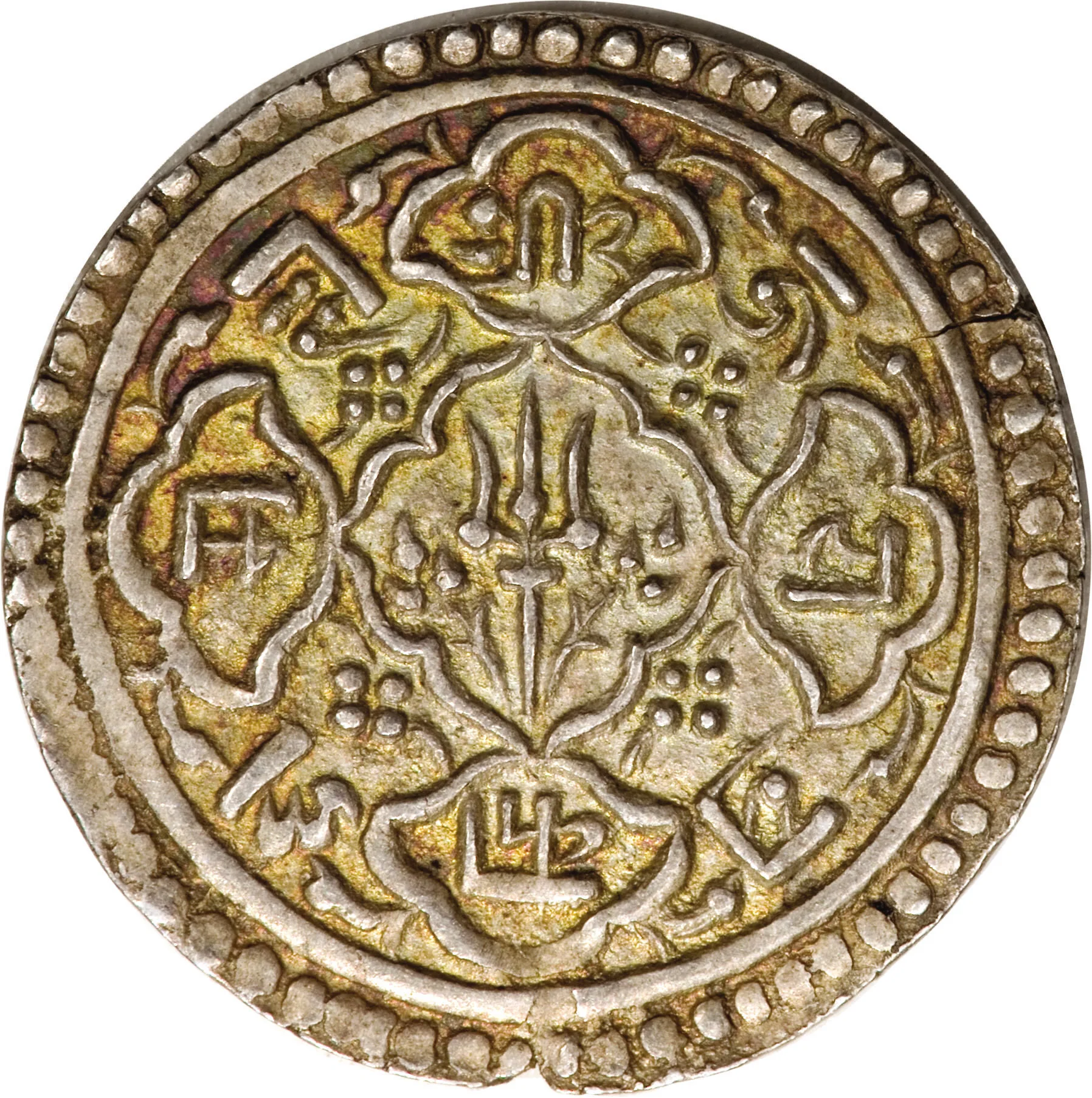
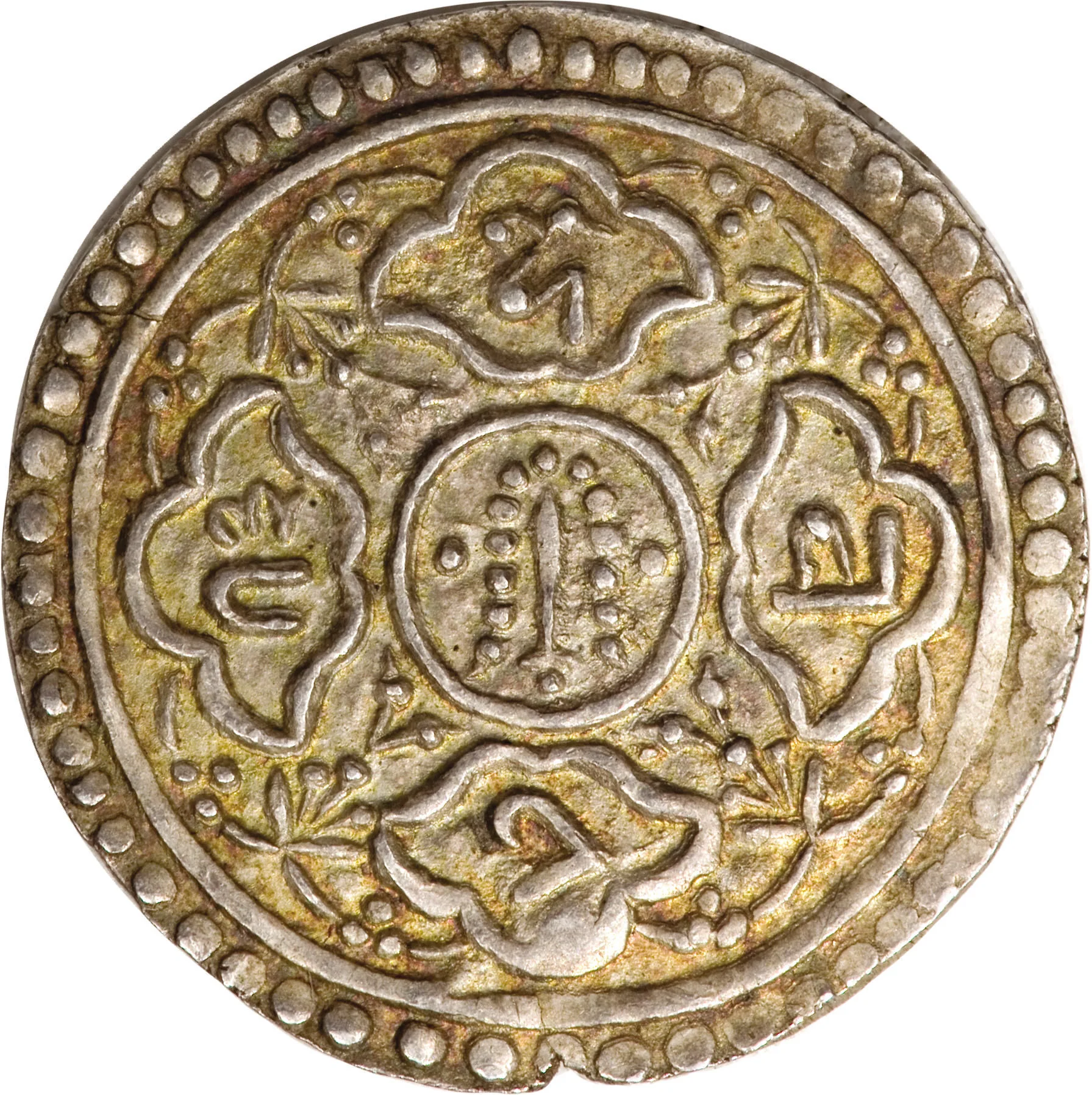
½ mohar – Kathmandu Kingdom
Add to wishlist
Nepal
Context
Year: 1753
Year:: 873
Country: Nepal
Issuer: Kathmandu Kingdom
Ruler: Jaya Prakash Malla
Currency:
(1546—1932)
Demonetized: Yes
References
KM: #
Numista: #26043
Obverse
Reverse
Edge
Mintings
| Year | Mint Mark | Mintage | Quality | Collection |
|---|---|---|---|---|
| 1753 | — | — |
Historical background
In 1753, the Kathmandu Valley was not a single kingdom but a constellation of three rival city-states: Kathmandu, Patan, and Bhaktapur, each ruled by its own Malla king. This period, the late Malla era, was marked by intense political fragmentation and competition, which directly influenced the monetary system. While the valley was economically prosperous due to its control of the trans-Himalayan trade route between Tibet and India, this wealth was channeled into lavish temple construction and courtly patronage rather than a unified fiscal policy. Consequently, each kingdom minted its own distinct coins, primarily silver mohars and copper dams, creating a complex multi-currency environment for merchants and peasants alike.
The currency situation was defined by localized minting and weight standards. Coins bore the symbols and script of their issuing kingdom—often featuring deities, royal insignia, or dynastic emblems—and their value was intrinsically tied to their precious metal content. The system was not decimalized; values were based on a traditional weight system linked to the tola. This led to constant evaluation and often contentious exchange between the coins of the three states, as well as with foreign currencies like Tibetan tangkas and Mughal Indian rupees, which also circulated widely due to the valley's critical role as a commercial hub.
This monetary fragmentation was a direct reflection of the political instability of the time. The competing Malla kings frequently engaged in economic warfare, debasing their coinage or altering standards to gain temporary advantage, which created uncertainty in trade and taxation. The lack of a unified currency was a significant weakness, hindering broader economic integration within the valley itself. This unstable financial landscape would persist for only a few more decades before the Gorkhali conquest under Prithvi Narayan Shah, who, upon unifying the valley by 1769, would systematically replace the Malla coinages with a single, centralized currency to solidify his new kingdom's economic foundation.
The currency situation was defined by localized minting and weight standards. Coins bore the symbols and script of their issuing kingdom—often featuring deities, royal insignia, or dynastic emblems—and their value was intrinsically tied to their precious metal content. The system was not decimalized; values were based on a traditional weight system linked to the tola. This led to constant evaluation and often contentious exchange between the coins of the three states, as well as with foreign currencies like Tibetan tangkas and Mughal Indian rupees, which also circulated widely due to the valley's critical role as a commercial hub.
This monetary fragmentation was a direct reflection of the political instability of the time. The competing Malla kings frequently engaged in economic warfare, debasing their coinage or altering standards to gain temporary advantage, which created uncertainty in trade and taxation. The lack of a unified currency was a significant weakness, hindering broader economic integration within the valley itself. This unstable financial landscape would persist for only a few more decades before the Gorkhali conquest under Prithvi Narayan Shah, who, upon unifying the valley by 1769, would systematically replace the Malla coinages with a single, centralized currency to solidify his new kingdom's economic foundation.
✨ Legendary