

60 Shillings – Scotland
United Kingdom
Context
Years: 1609–1625
Country: United Kingdom 
Issuer: Scotland 
Ruler: James VI
Currency:
(1136—1707)
Demonetized: Yes
Material
References
KM: #Click to copy to clipboard12
Numista: #25959
Obverse
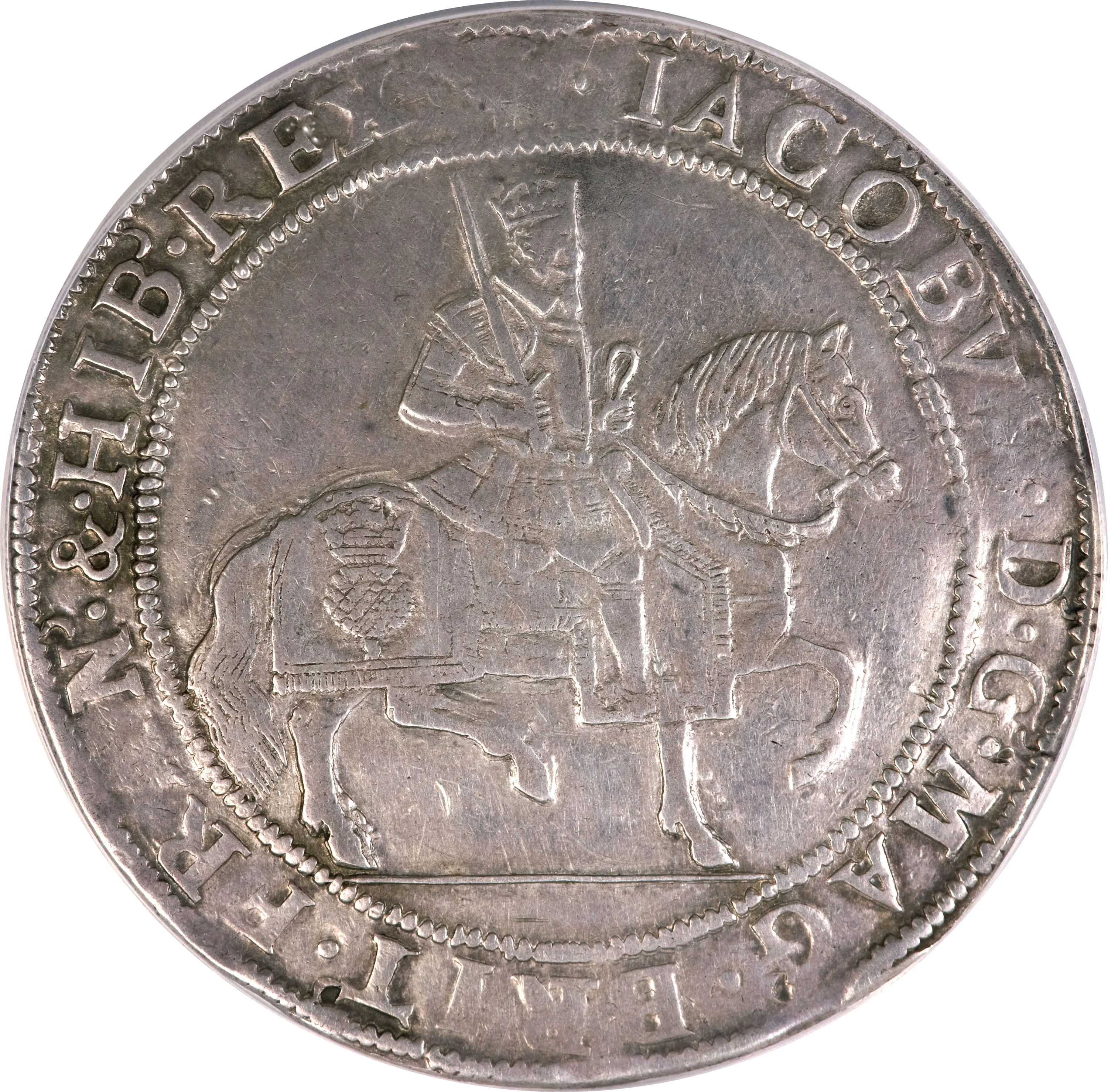
Description:
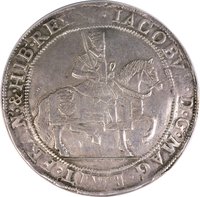
King James VI on horseback, facing right with a raised sword.
Inscription:
· IACOBVS · D · G · MAG · BRIT · FRANC · & · HIB · REX ·
Script: Latin
Reverse
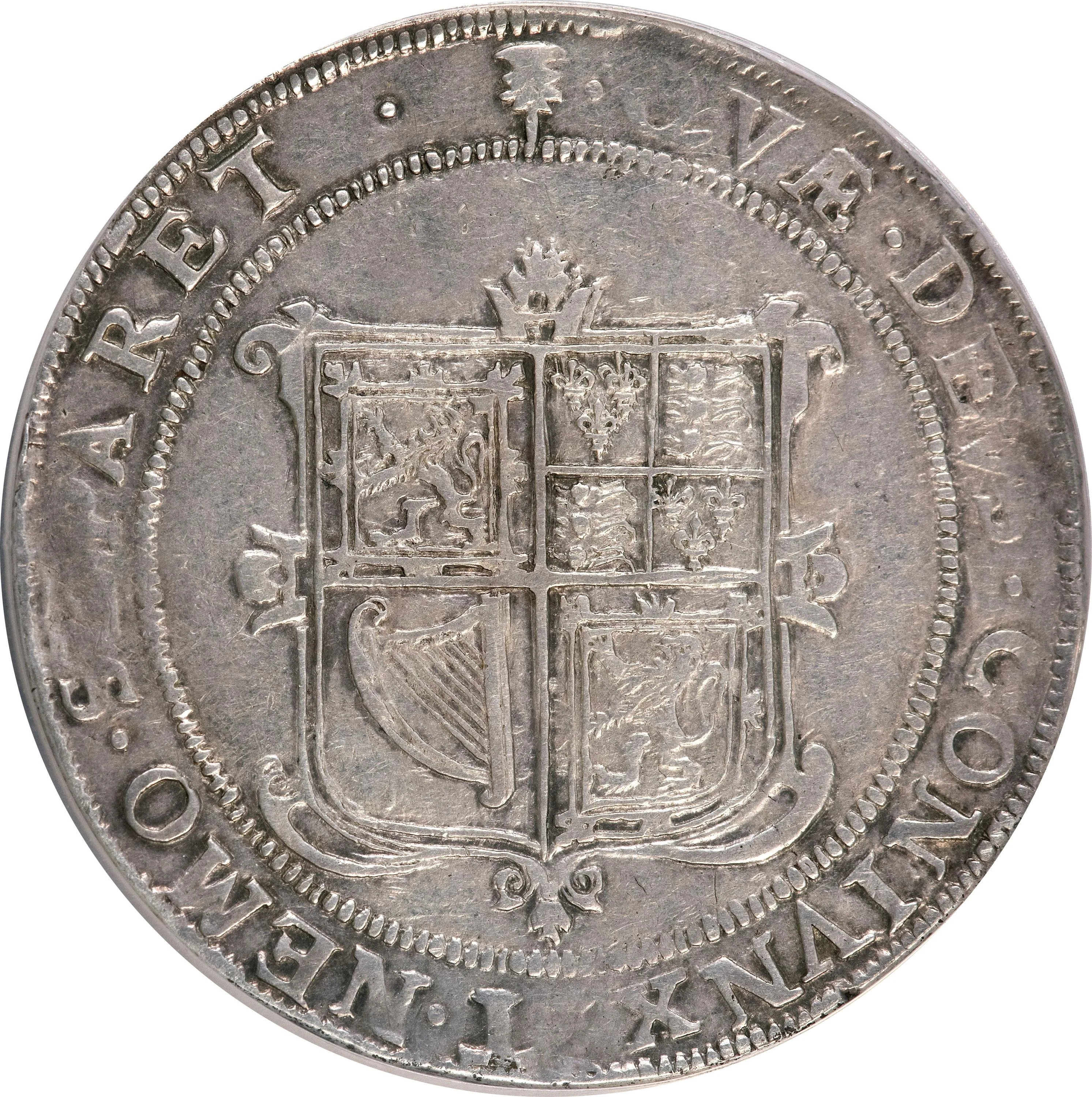
Description:
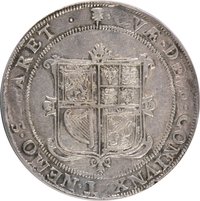
Royal arms with Scottish arms in the 1st and 4th quarters.
Inscription:
· QVÆ · DEVS · CONIVNXIT · NEMO · SEPARET ·
Script: Latin
Edge
Mints
| Name | Mark |
|---|---|
| Edinburgh | — |
Mintings
| Year | Mint Mark | Mintage | Quality | Collection |
|---|---|---|---|---|
| — | — | — |
Historical background
In 1609, Scotland's currency situation was characterised by instability and debasement, a legacy of the turbulent 16th century. The Scottish pound, or merk, was a separate currency from England's, valued at a fixed rate of 1:12 (one English pound to twelve Scottish merks). However, chronic shortages of coin, especially small denominations for everyday trade, plagued the economy. The coinage in circulation was a mixture of older, purer Scottish issues and newer, more debased coins from the reigns of Mary, Queen of Scots, and James VI, leading to confusion and a loss of public confidence in the currency's real value.
This monetary weakness was exacerbated by the practice of "crying up" or "crying down" coins—officially changing their face value by royal proclamation—which created further uncertainty. The situation was also influenced by the Union of the Crowns in 1603, when James VI of Scotland became James I of England. While the kingdoms remained politically and financially separate, the king's residence in London led to a drain of Scottish silver coinage southwards to pay for imports and the expenses of the court, worsening the scarcity within Scotland itself.
Efforts at reform were underway. In 1601, a major recoinage had attempted to stabilise the currency, but by 1609 its benefits were fading. The Scottish government and the Privy Council were acutely aware of the problems, recognising that a sound currency was vital for commerce and royal revenue. Discussions and proposals for further monetary reform were in the air, setting the stage for more systematic, though only partially successful, attempts at stabilisation in the following decades, as Scotland navigated its complex economic relationship with its richer southern neighbour.
This monetary weakness was exacerbated by the practice of "crying up" or "crying down" coins—officially changing their face value by royal proclamation—which created further uncertainty. The situation was also influenced by the Union of the Crowns in 1603, when James VI of Scotland became James I of England. While the kingdoms remained politically and financially separate, the king's residence in London led to a drain of Scottish silver coinage southwards to pay for imports and the expenses of the court, worsening the scarcity within Scotland itself.
Efforts at reform were underway. In 1601, a major recoinage had attempted to stabilise the currency, but by 1609 its benefits were fading. The Scottish government and the Privy Council were acutely aware of the problems, recognising that a sound currency was vital for commerce and royal revenue. Discussions and proposals for further monetary reform were in the air, setting the stage for more systematic, though only partially successful, attempts at stabilisation in the following decades, as Scotland navigated its complex economic relationship with its richer southern neighbour.
Series: 1609 Scotland circulation coins
✨ Legendary