

12 Xerafins – Portuguese India
India
Context
Years: 1762–1767
Country: India 
Issuer: Portuguese India
Ruler: Joseph I
Currency:
(1706—1880)
Demonetized: Yes
Material
Diameter: 20 mm
Weight: 4.87 g
Gold weight: 4.87 g
Shape: Irregular round
Composition: Gold
Magnetic: No
Technique: Hammered
References
KM: #Click to copy to clipboard142
Numista: #25940
Value
Bullion value: $810.76
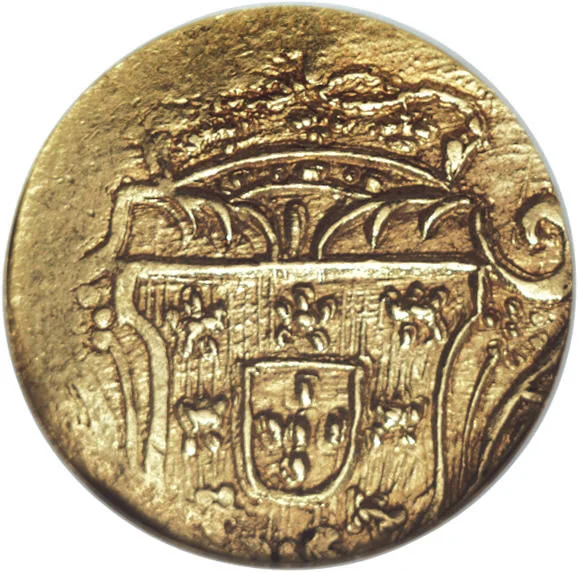
Obverse
Description:
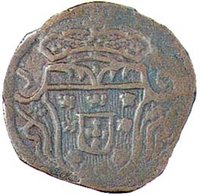
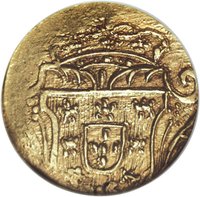
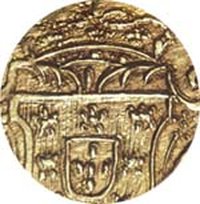
Heraldic emblem
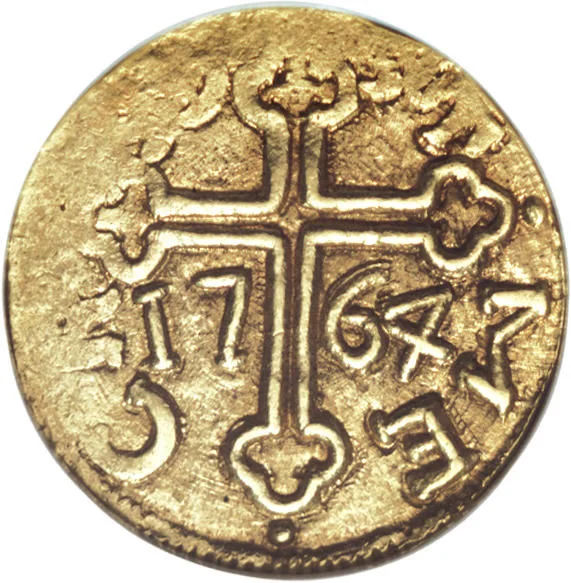
Reverse
Description:
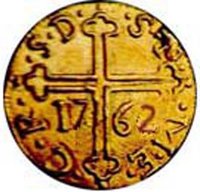
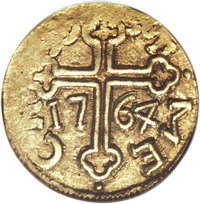
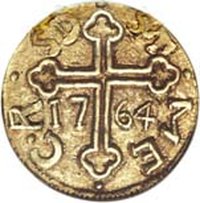
St. Thomas cross with date. Encircling text.
Inscription:
ST . ME . CR . SD
17 64
17 64
Script: Latin
Edge
Mints
| Name | Mark |
|---|---|
| Goa | — |
Mintings
| Year | Mint Mark | Mintage | Quality | Collection |
|---|---|---|---|---|
| 1762 | — | — | ||
| 1763 | — | — | ||
| 1764 | — | — | ||
| 1765 | — | — | ||
| 1767 | — | — |
Historical background
In 1762, the currency situation in Portuguese India was a complex tapestry of official colonial issues, pervasive foreign coinage, and severe economic strain. The official currency, the Portuguese Indian rupia (or xerafim), was theoretically the standard, but its circulation was overwhelmed by a multitude of foreign coins. The most dominant of these was the gold pagoda and various silver rupees from neighbouring Indian powers, particularly the Maratha Confederacy, reflecting Goa's deep integration into regional trade networks. This created a dual system where official Portuguese coinage existed alongside, and was often subordinate to, the more trusted and widely accepted indigenous and foreign currencies.
The period was marked by significant monetary instability and scarcity. Decades of declining Portuguese political and military power, compounded by the economic disruption of the Seven Years' War (1756-1763), had led to severe shortages of specie, especially silver. The local economy suffered from inflation and debasement, as authorities struggled to maintain the value of their coinage. Furthermore, the financial administration of the Estado da Índia was notoriously inefficient and corrupt, with revenue from trade dwindling, making it difficult to support a stable and unified currency system.
Consequently, transactions in Goa and other Portuguese enclaves like Damão and Diu relied heavily on a cumbersome system of currency conversion. Merchants and officials required constant reference to cambios (exchange rate bulletins) that listed the fluctuating values of dozens of different coin types in relation to the official xerafim. This chaotic monetary environment stifled commerce and was symptomatic of the broader decline of Portuguese imperial authority, as the colony's economic lifeblood flowed according to the rhythms of the Indian Ocean economy rather than Lisbon's decrees.
The period was marked by significant monetary instability and scarcity. Decades of declining Portuguese political and military power, compounded by the economic disruption of the Seven Years' War (1756-1763), had led to severe shortages of specie, especially silver. The local economy suffered from inflation and debasement, as authorities struggled to maintain the value of their coinage. Furthermore, the financial administration of the Estado da Índia was notoriously inefficient and corrupt, with revenue from trade dwindling, making it difficult to support a stable and unified currency system.
Consequently, transactions in Goa and other Portuguese enclaves like Damão and Diu relied heavily on a cumbersome system of currency conversion. Merchants and officials required constant reference to cambios (exchange rate bulletins) that listed the fluctuating values of dozens of different coin types in relation to the official xerafim. This chaotic monetary environment stifled commerce and was symptomatic of the broader decline of Portuguese imperial authority, as the colony's economic lifeblood flowed according to the rhythms of the Indian Ocean economy rather than Lisbon's decrees.

✨ Legendary