

1 Mohur – ERR Bengal PresidencyandAustralia
Context
Material
References
KM: #Click to copy to clipboard103
Numista: #25862
Value
Bullion value: $2052.07
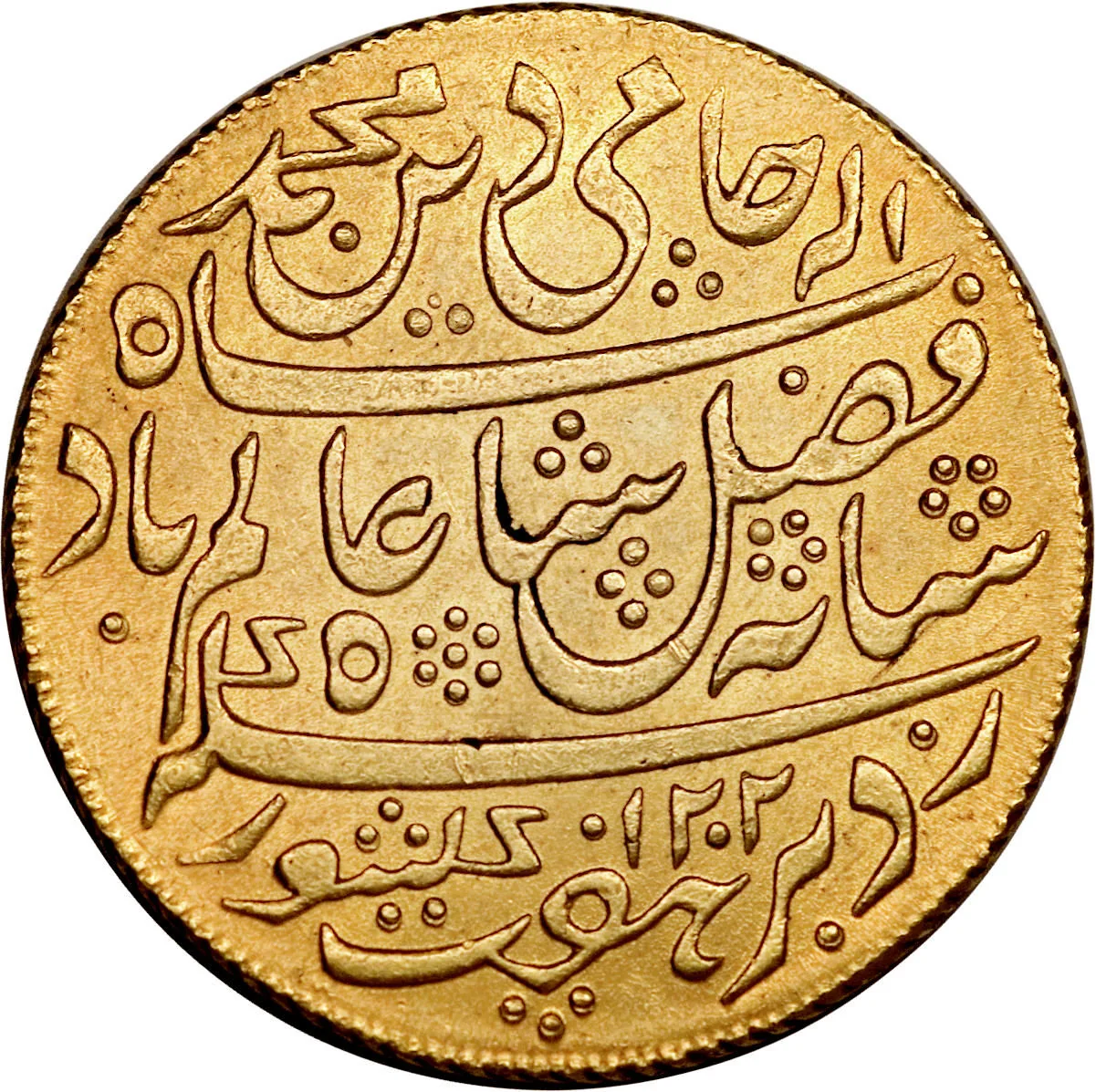
Obverse
Description:
Persian couplet inscription.
Script: Persian
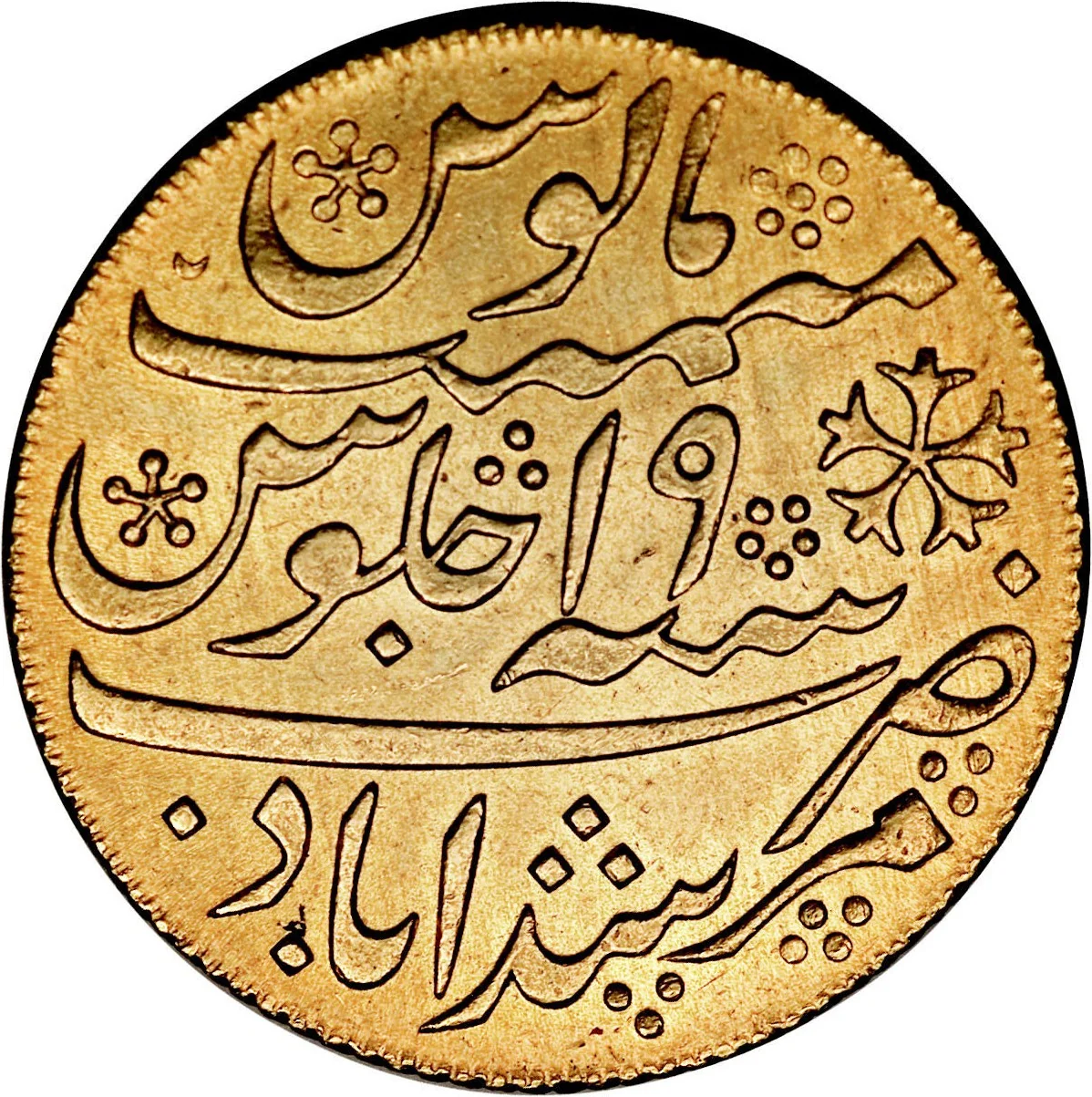
Reverse
Description:
Persian julus, mint name.
Script: Persian
Edge
Oblique milling.
Mints
| Name | Mark |
|---|---|
| Azimabad | — |
| Jahangirnagar | — |
| Kolkata / Calcutta / Murshidabad | — |
| Murshidabad | — |
Mintings
| Year | Mint Mark | Mintage | Quality | Collection |
|---|---|---|---|---|
| 1788 | — | — |
Historical background
In 1788, the Bengal Presidency, the heart of British India, operated under a complex monetary system dominated by the silver rupee. The East India Company, having secured the diwani (revenue rights) in 1765, struggled with a chronic shortage of specie (coin). This was exacerbated by the export of silver to China to pay for tea and the cost of ongoing wars. The result was a chaotic circulation of various Mughal-era and regional coins, alongside a proliferation of forged and debased currency. To impose order, the Company began moves towards standardisation, culminating in the Coinage Act of 1793 which established the Calcutta Mint and the "Company Rupee," but in 1788 this reform was still in its formative stages, leaving a landscape of financial uncertainty.
That same year, on the far side of the Indian Ocean, the fledgling colony of New South Wales in Australia faced a radically different currency crisis: an almost complete absence of official coinage. The First Fleet arrived in January 1788 with virtually no circulating money, as the British government envisioned a penal settlement based on barter and government stores. The economy initially relied on a system of credit recorded in ledgers and the promissory notes known as "store receipts." With trade developing, a motley assortment of foreign coins—including Spanish dollars, Dutch guilders, and Indian rupees—began to circulate, their value set by proclamation. The most famous and pragmatic solution, the use of rum as a de facto currency, was emerging by the late 1790s, but in 1788 the settlement was grappling with the fundamental problem of having no recognised medium of exchange.
Thus, while both regions were under British influence, their monetary situations were stark opposites. Bengal was drowning in a disorganised surplus of various coins, desperately requiring standardisation to stabilise Company finances and taxation. Australia, by contrast, was a monetary desert, requiring the invention of an entire system from scratch. Both predicaments, however, underscored the same imperial truth: economic control was essential for colonial governance, whether in a rich, ancient land or a new, isolated outpost.
That same year, on the far side of the Indian Ocean, the fledgling colony of New South Wales in Australia faced a radically different currency crisis: an almost complete absence of official coinage. The First Fleet arrived in January 1788 with virtually no circulating money, as the British government envisioned a penal settlement based on barter and government stores. The economy initially relied on a system of credit recorded in ledgers and the promissory notes known as "store receipts." With trade developing, a motley assortment of foreign coins—including Spanish dollars, Dutch guilders, and Indian rupees—began to circulate, their value set by proclamation. The most famous and pragmatic solution, the use of rum as a de facto currency, was emerging by the late 1790s, but in 1788 the settlement was grappling with the fundamental problem of having no recognised medium of exchange.
Thus, while both regions were under British influence, their monetary situations were stark opposites. Bengal was drowning in a disorganised surplus of various coins, desperately requiring standardisation to stabilise Company finances and taxation. Australia, by contrast, was a monetary desert, requiring the invention of an entire system from scratch. Both predicaments, however, underscored the same imperial truth: economic control was essential for colonial governance, whether in a rich, ancient land or a new, isolated outpost.
💎 Extremely Rare