

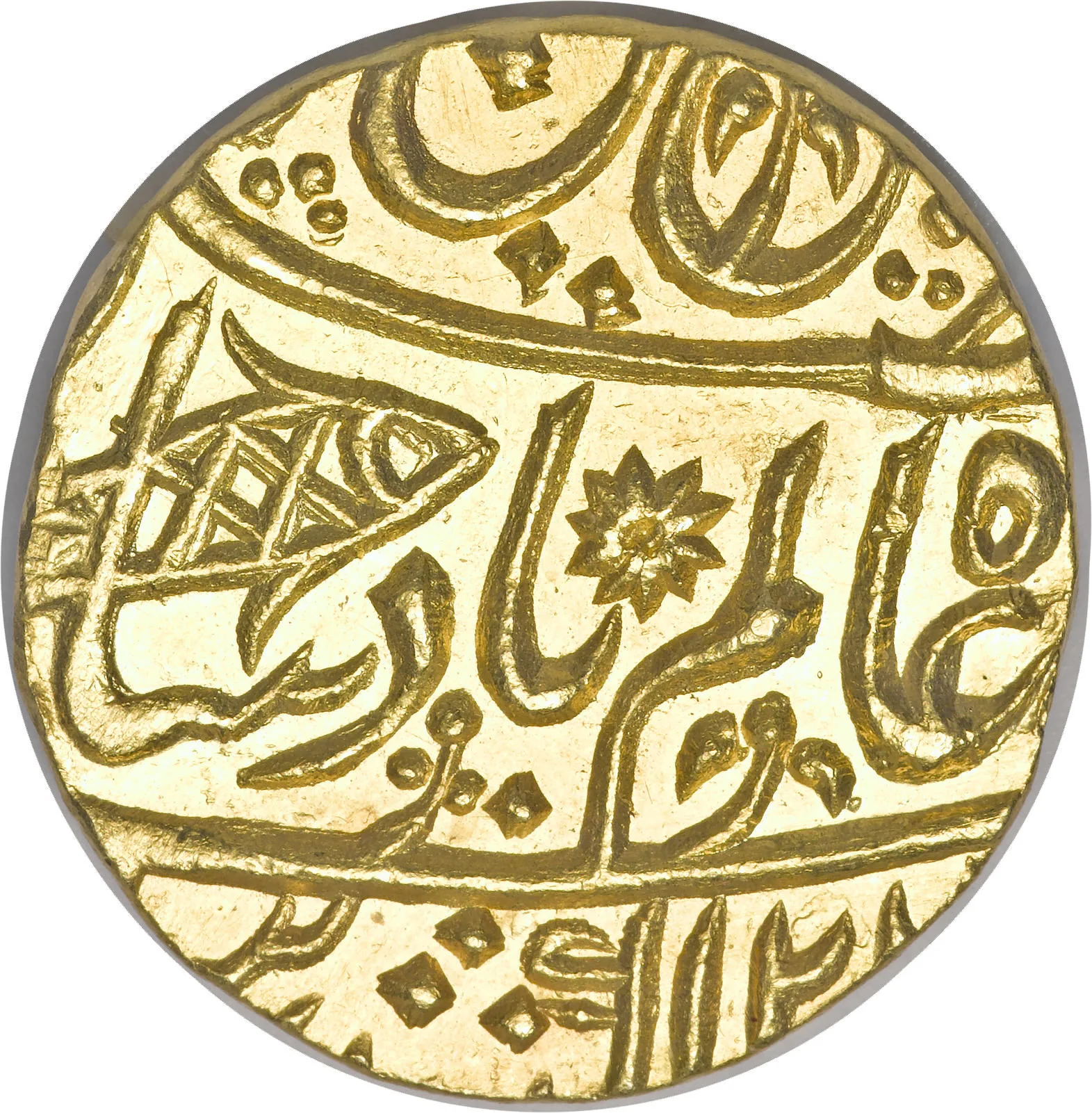
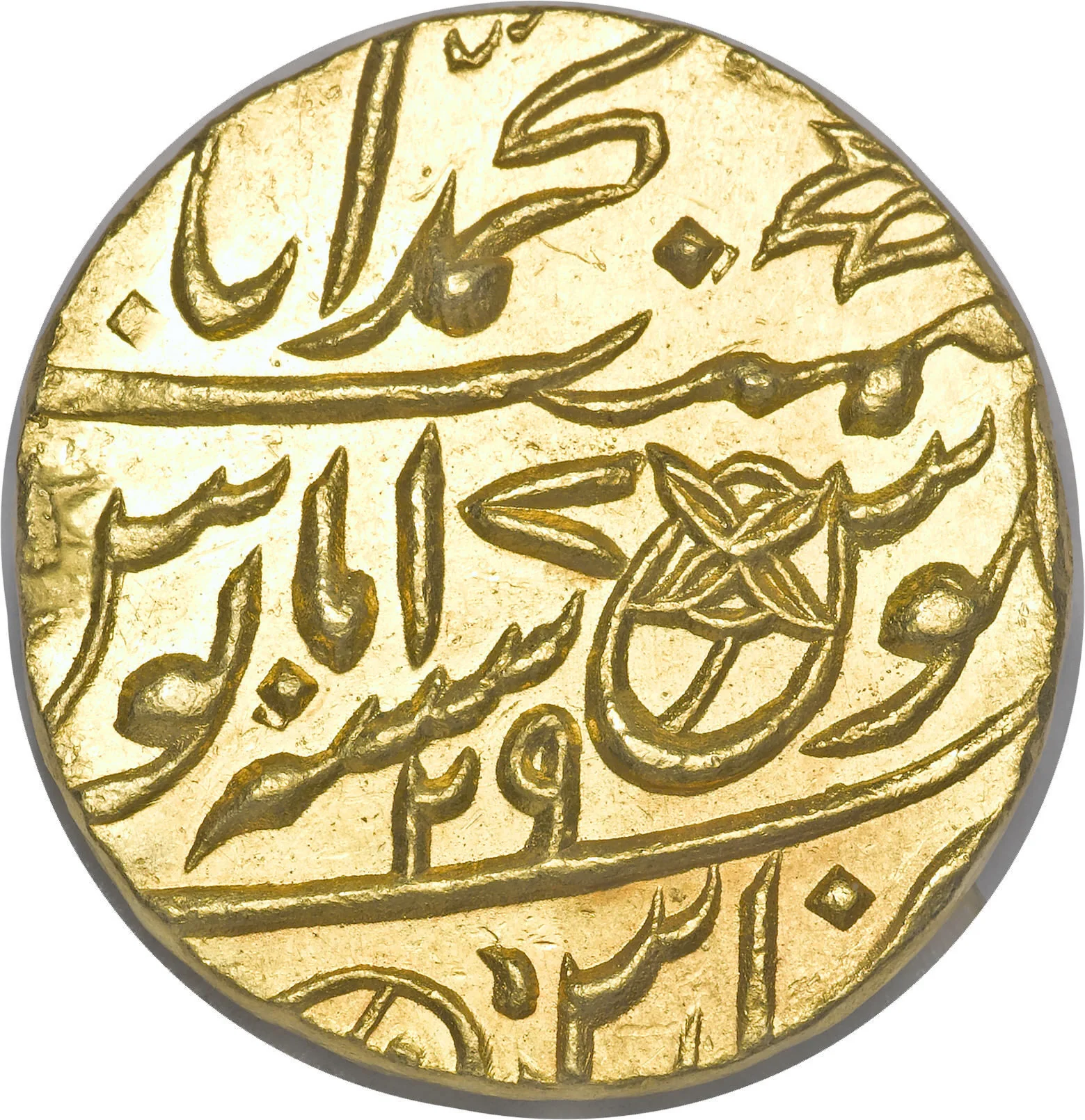
1 Mohur – Bengal Presidency
India

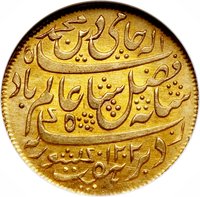
Obverse
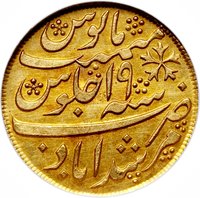
Reverse
Edge
Mintings
| Year | Mint Mark | Mintage | Quality | Collection |
|---|---|---|---|---|
| 1785 | — | — | ||
| 1787 | — | — | ||
| 1788 | — | — | ||
| 1789 | — | — | ||
| 1790 | — | — | ||
| 1795 | — | — | ||
| 1799 | — | — |
Historical background
By 1785, the currency situation in the Bengal Presidency was a complex and debilitating crisis, a direct legacy of the East India Company's transition from merchant to sovereign. The system was a chaotic patchwork of Mughal-era silver rupees, gold mohurs, and a vast array of local and foreign coins, all circulating with fluctuating values. Most critically, the Company's own Bengal silver rupee had suffered severe debasement and widespread forgery to finance its wars and administration, destroying public trust. This monetary anarchy stifled commerce, corrupted revenue collection, and made coherent economic planning almost impossible for the fledgling colonial state.
The root of the crisis lay in the absence of a unified and authoritative mint. While the Company operated the Calcutta Mint, its output was insufficient and its standards unreliable. Furthermore, a multitude of "native" or sikka rupees, minted by various Nawabs and local rulers in mints at Murshidabad, Patna, and Dacca, remained in circulation, each with different weights and purity. This proliferation created a paradise for money-changers (shroffs) but a nightmare for merchants and tax collectors, who faced constant uncertainty and loss in every transaction. The Company's own financial demands, extracting vast land revenue (diwani) to be paid in specific rupees, exacerbated the confusion and hardship.
Recognizing that currency stability was fundamental to its fiscal control, the Governor-General, Sir John Macpherson, took decisive action in 1785. He initiated a major reform by closing all irregular mints and concentrating coinage at the renovated Calcutta Mint. His government also began the meticulous process of calling in the old, debased rupees to be melted down and reminted to a uniform standard. This marked the first serious step toward imposing a single, Company-controlled currency system across Bengal, laying the essential monetary foundation for the centralized colonial economy that would emerge in the decades to follow.
The root of the crisis lay in the absence of a unified and authoritative mint. While the Company operated the Calcutta Mint, its output was insufficient and its standards unreliable. Furthermore, a multitude of "native" or sikka rupees, minted by various Nawabs and local rulers in mints at Murshidabad, Patna, and Dacca, remained in circulation, each with different weights and purity. This proliferation created a paradise for money-changers (shroffs) but a nightmare for merchants and tax collectors, who faced constant uncertainty and loss in every transaction. The Company's own financial demands, extracting vast land revenue (diwani) to be paid in specific rupees, exacerbated the confusion and hardship.
Recognizing that currency stability was fundamental to its fiscal control, the Governor-General, Sir John Macpherson, took decisive action in 1785. He initiated a major reform by closing all irregular mints and concentrating coinage at the renovated Calcutta Mint. His government also began the meticulous process of calling in the old, debased rupees to be melted down and reminted to a uniform standard. This marked the first serious step toward imposing a single, Company-controlled currency system across Bengal, laying the essential monetary foundation for the centralized colonial economy that would emerge in the decades to follow.
✨ Legendary