

2 Mariengroschen – Brunswick-Lüneburg-Calenberg
Germany
Context
Years: 1692–1693
Country: Germany 
Issuer: Brunswick-Lüneburg-Calenberg
Ruler: Ernest Augustus
Currency:
Demonetized: Yes
Material
References
KM: #Click to copy to clipboard362
Numista: #258446
Value
Bullion value: $2.86
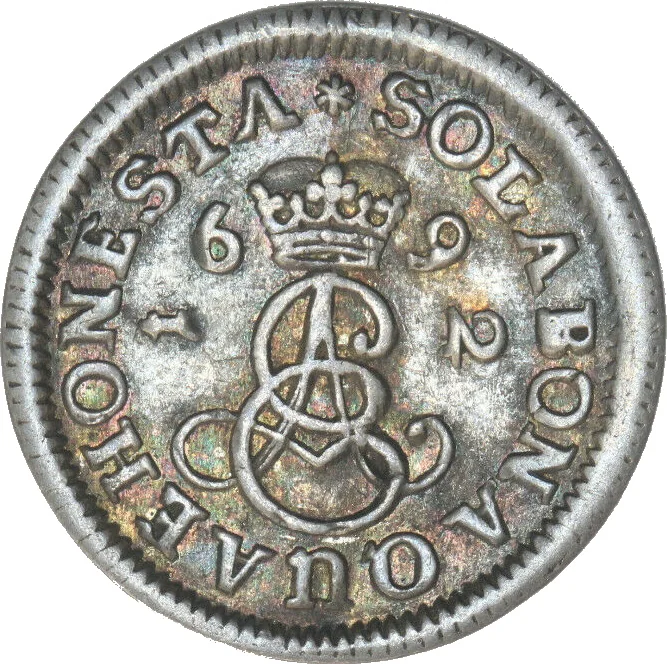
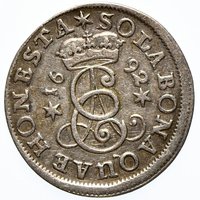
Obverse
Description:
Crowned EA monogram divides date, encircled by legend.
Inscription:
*SOLA BONA QUAE HONESTA
EA
1692
EA
1692
Script: Latin
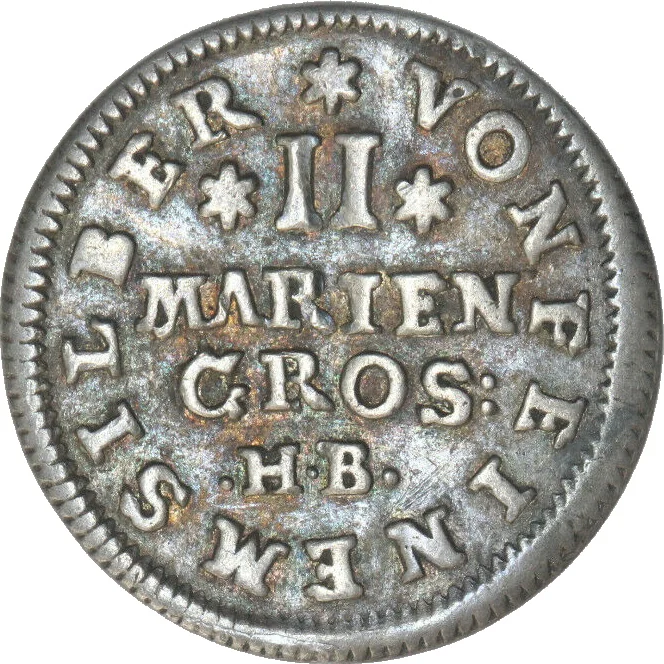
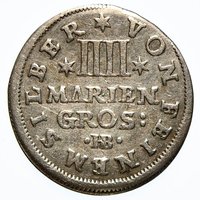
Reverse
Description:
Value and mint in four lines, legend encircling.
Inscription:
* VON FEINEM SILBER
*II*
MARIEN
GROS:
·H·B·
*II*
MARIEN
GROS:
·H·B·
Script: Latin
Edge
Mints
| Name | Mark |
|---|---|
| Clausthal | — |
Mintings
| Year | Mint Mark | Mintage | Quality | Collection |
|---|---|---|---|---|
| 1692 | — | — | ||
| 1693 | — | — |
Historical background
In 1692, the Duchy of Brunswick-Lüneburg, specifically the sub-principality of Calenberg under Duke Ernst August, was navigating a complex and challenging monetary landscape typical of the Holy Roman Empire. The region was part of a fragmented system where numerous states issued their own coinage, leading to a proliferation of currencies of varying quality and value. This period was marked by the widespread debasement of coinage, as rulers sought to generate revenue by reducing the precious metal content in coins, thereby causing inflation and eroding public trust in the currency.
The situation in Calenberg was further complicated by its political ambitions. Ernst August was intensely focused on securing the prestigious title of Elector of Hanover (achieved in 1692), a costly endeavor that required substantial funds for imperial diplomacy, military support, and maintaining a fitting court. The financial pressures of this pursuit likely exacerbated the temptation to manipulate the currency for seigniorage profit. Furthermore, the duchy was economically integrated with neighboring territories, meaning it had to constantly manage the exchange and acceptance of dozens of different coins circulating within its borders, from local Thalers and Groschen to foreign denominations.
Consequently, monetary policy was a critical but problematic tool of state. While attempts were made to regulate currency through ordinances, the pervasive debasement across Germany created a vicious cycle of instability. Trade and daily commerce were hindered by uncertainty, as the intrinsic value of coins often fell below their face value. This environment set the stage for later, more centralized reforms, but in 1692, the currency situation in Brunswick-Lüneburg-Calenberg remained a reflection of the empire's broader monetary disorder and the fiscal strains of princely ambition.
The situation in Calenberg was further complicated by its political ambitions. Ernst August was intensely focused on securing the prestigious title of Elector of Hanover (achieved in 1692), a costly endeavor that required substantial funds for imperial diplomacy, military support, and maintaining a fitting court. The financial pressures of this pursuit likely exacerbated the temptation to manipulate the currency for seigniorage profit. Furthermore, the duchy was economically integrated with neighboring territories, meaning it had to constantly manage the exchange and acceptance of dozens of different coins circulating within its borders, from local Thalers and Groschen to foreign denominations.
Consequently, monetary policy was a critical but problematic tool of state. While attempts were made to regulate currency through ordinances, the pervasive debasement across Germany created a vicious cycle of instability. Trade and daily commerce were hindered by uncertainty, as the intrinsic value of coins often fell below their face value. This environment set the stage for later, more centralized reforms, but in 1692, the currency situation in Brunswick-Lüneburg-Calenberg remained a reflection of the empire's broader monetary disorder and the fiscal strains of princely ambition.
✨ Legendary