

20 Pence – Scotland
United Kingdom
Context
Years: 1637–1638
Country: United Kingdom 
Issuer: Scotland 
Ruler: Charles I
Currency:
(1136—1707)
Demonetized: Yes
References
KM: #Click to copy to clipboard75
Numista: #25460
Obverse
Description:
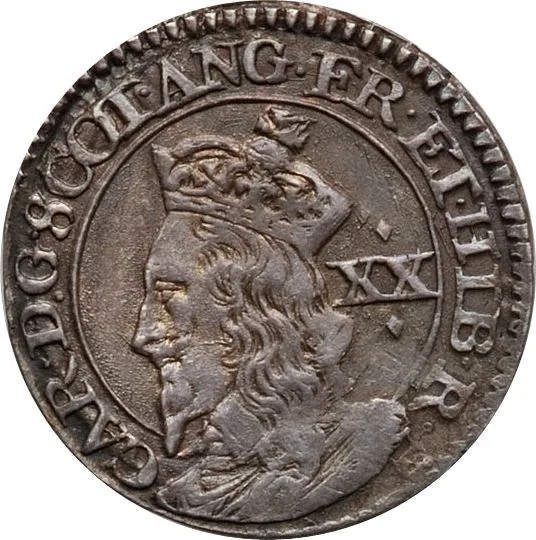
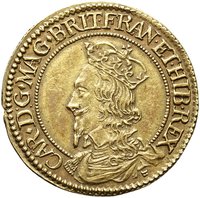
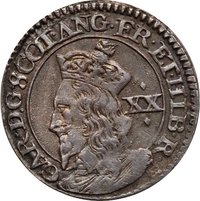
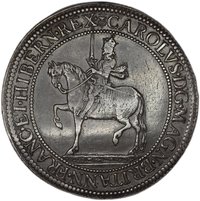
Charles I left-facing bust, value mark right with flanking lozenges, 'B' below.
Inscription:
CAR · D . G · SCOT · ANG · FR · ET · HIB · R ·
Script: Latin
Reverse
Description:
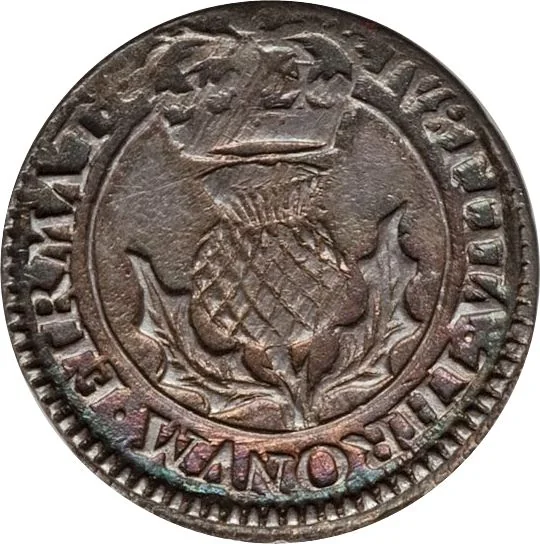
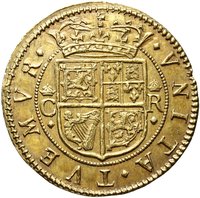
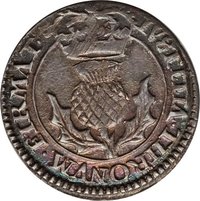
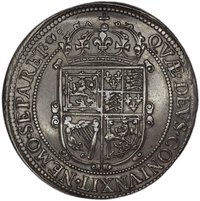
Crowned thistle. Legend ends in 'B'.
Inscription:
IVSTITIA · THRONVM · FIRMAT ·
Script: Latin
Edge
Mints
| Name | Mark |
|---|---|
| Edinburgh | — |
Mintings
| Year | Mint Mark | Mintage | Quality | Collection |
|---|---|---|---|---|
| — | — | — |
Historical background
In 1637, Scotland existed within a complex and often contentious monetary union with England, operating under a shared currency but with significant economic and political strain. The foundational principle, established by King James VI & I upon the Union of the Crowns in 1603, was that the Scottish pound (£ Scots) and the English pound (£ Sterling) were fixed at an exchange rate of 12:1. However, this official parity belied a stark economic reality. The Scottish coinage in circulation was often debased, lighter, and less reliable than its English counterpart, leading to practical difficulties in trade and a chronic imbalance that favoured England.
The situation was exacerbated by a severe shortage of physical coin, particularly small denomination coins essential for everyday transactions. This scarcity, a problem throughout the early 17th century, caused significant hardship for the common people and disrupted local commerce. While the Scottish government had attempted reforms, most notably under James VI, the monetary system remained fragile. Economic power was increasingly concentrated in the hands of a few merchant elites and the crown, who operated more readily within the broader Sterling-based economy.
Crucially, this currency instability existed within a tinderbox of political and religious controversy. When King Charles I attempted to impose a new Anglican-style Prayer Book in 1637, sparking the National Covenant and the Bishops' Wars, the monetary grievances became intertwined with broader issues of sovereignty and authority. The Crown's financial demands and perceived economic neglect fed into a growing Scottish nationalist sentiment. Thus, on the eve of revolution, Scotland's currency was not merely an economic issue but a potent symbol of the unequal union and a contributing factor to the crisis that would engulf the British Isles.
The situation was exacerbated by a severe shortage of physical coin, particularly small denomination coins essential for everyday transactions. This scarcity, a problem throughout the early 17th century, caused significant hardship for the common people and disrupted local commerce. While the Scottish government had attempted reforms, most notably under James VI, the monetary system remained fragile. Economic power was increasingly concentrated in the hands of a few merchant elites and the crown, who operated more readily within the broader Sterling-based economy.
Crucially, this currency instability existed within a tinderbox of political and religious controversy. When King Charles I attempted to impose a new Anglican-style Prayer Book in 1637, sparking the National Covenant and the Bishops' Wars, the monetary grievances became intertwined with broader issues of sovereignty and authority. The Crown's financial demands and perceived economic neglect fed into a growing Scottish nationalist sentiment. Thus, on the eve of revolution, Scotland's currency was not merely an economic issue but a potent symbol of the unequal union and a contributing factor to the crisis that would engulf the British Isles.
Series: 1637 Scotland circulation coins
💎 Extremely Rare