

5 cents – United States
Add to wishlist
United States
Context
Years: 1794–1795
Issuer: United States
Period:
(since 1776)
Currency:
(since 1785)
Total mintage: 86,416
Material
References
KM: #
Numista: #25314
Value
Exchange value: 0.05 USD = $0.05
Bullion value: $3.02
Obverse
Description:
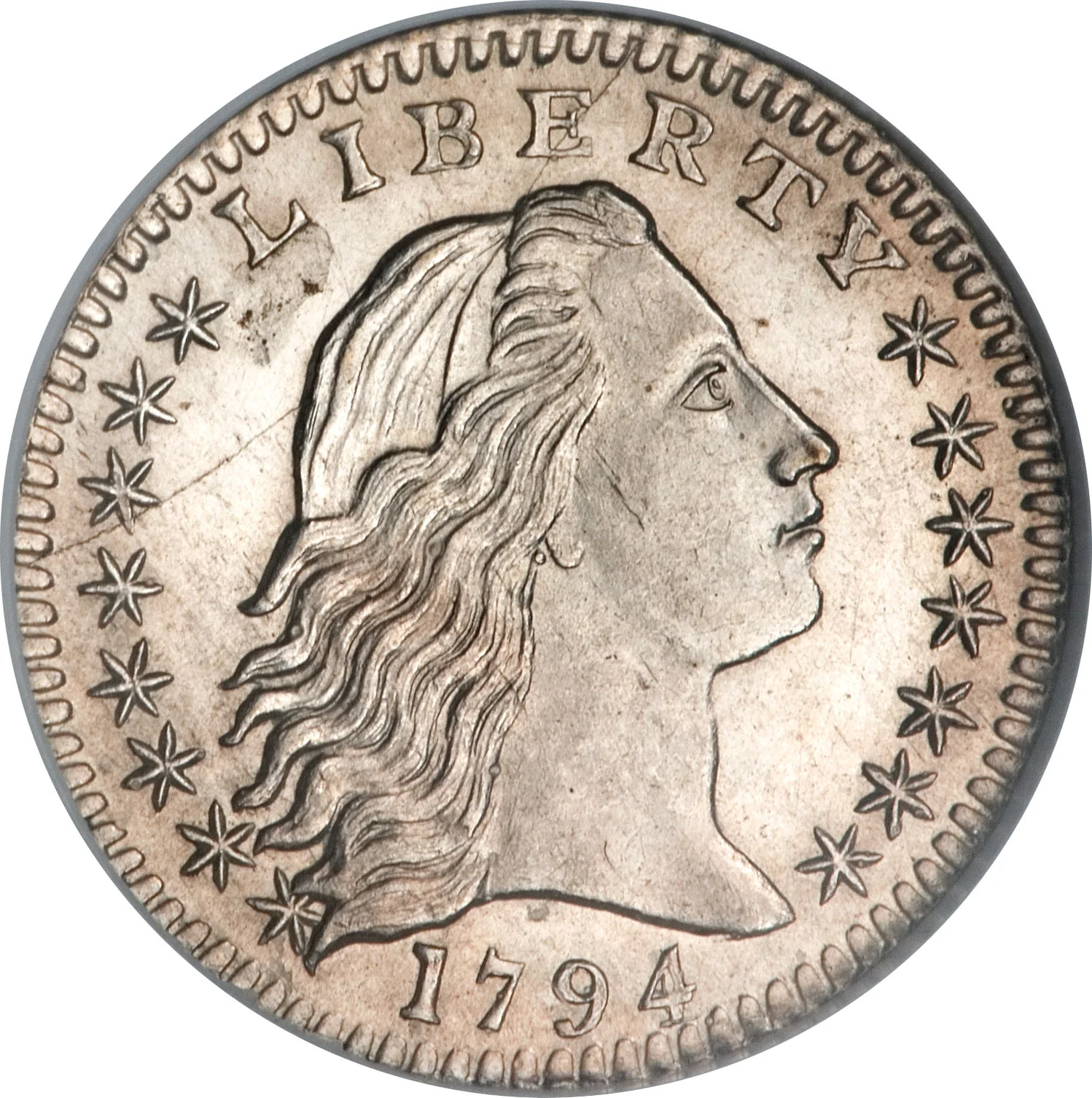
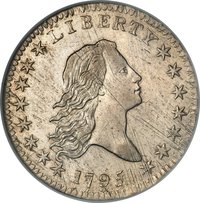
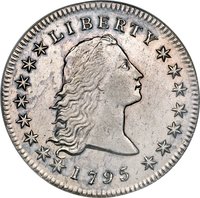
Right-facing "Flowing Hair" Liberty with thirteen stars. The daring design was poorly received.
Inscription:
LIBERTY
1794
1794
Script: Latin
Engraver: Robert Scot
Designer: Gilbert Stuart
Reverse
Description:
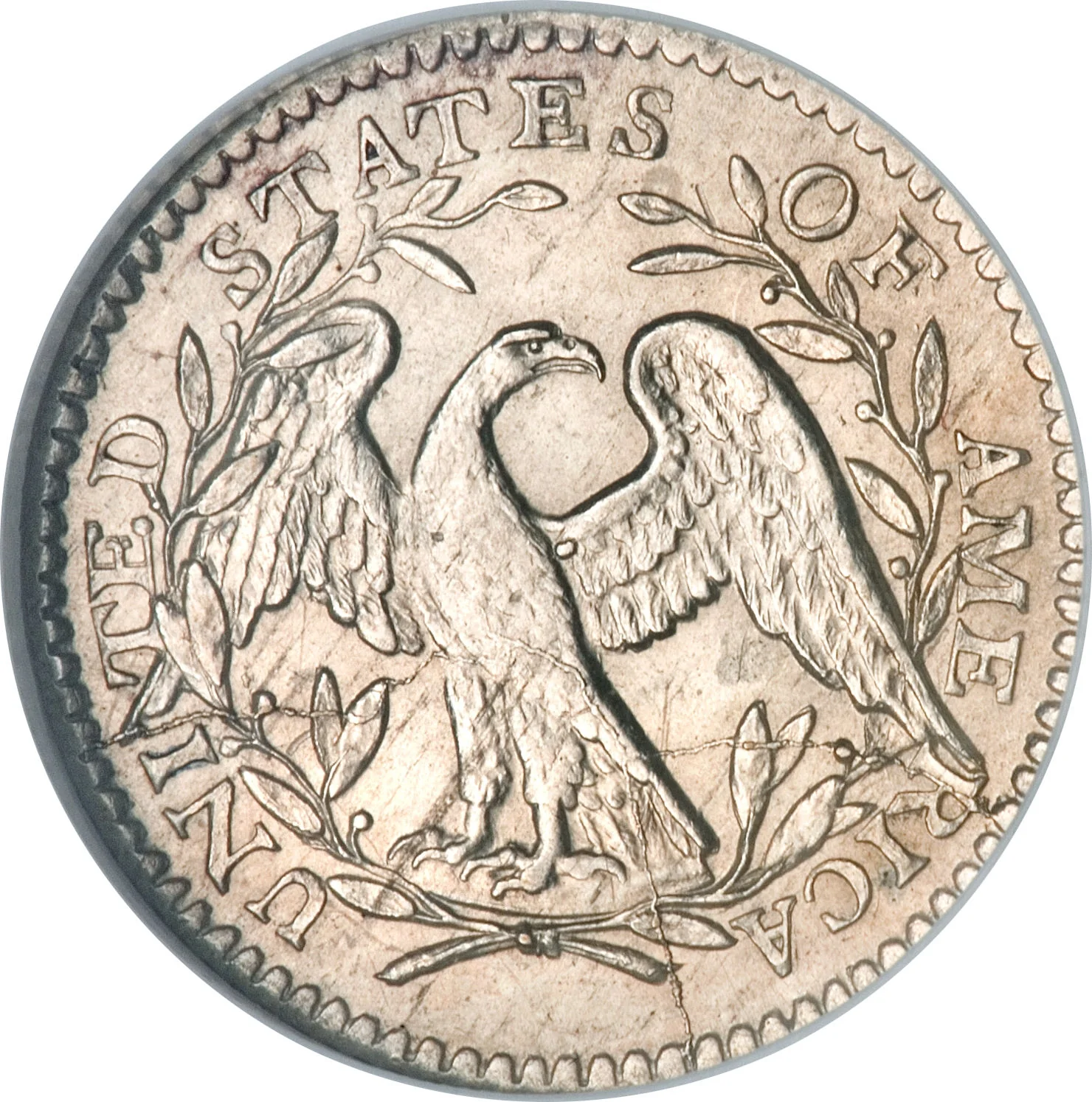
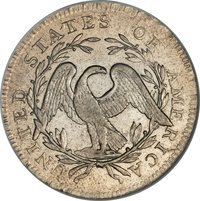
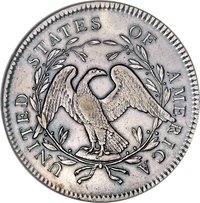
A small eagle, facing right with wings spread, perched on an olive branch above the country's name.
Inscription:
UNI TED STATES OF AME RICA
Script: Latin
Engraver: Robert Scot
Designer: Gilbert Stuart
Edge
Milled
Mints
| Name | Mark |
|---|---|
| United States Mint of Philadelphia | — |
Mintings
| Year | Mint Mark | Mintage | Quality | Collection |
|---|---|---|---|---|
| 1794 | — | 7,756 | ||
| 1795 | — | 78,660 |
Historical background
In 1794, the United States was in the early stages of establishing a stable and unified monetary system under the new federal government. The chaotic patchwork of foreign coins, state banknotes, and Continental currency from the Revolutionary War still circulated, creating confusion and hindering national commerce. The foundational legislation, the Coinage Act of 1792, had established the U.S. Mint in Philadelphia and defined a bimetallic standard based on gold and silver, with the dollar as the primary unit. However, the Mint's initial output was minuscule, struggling with technical difficulties and a critical shortage of precious metal bullion deposited by the public.
It was in this context that the first federal coins for general circulation were struck in 1794: the silver dollar and half dollar. The production of the 1794 dollar, in particular, was a symbolic milestone for national sovereignty. Yet, only 1,758 silver dollars were minted that year, and evidence suggests many were likely used as presentation pieces or saved as curiosities rather than entering daily commerce. The half dollar saw a larger mintage but remained scarce in the wider economy. The primary circulating "dollars" were still often Spanish pieces of eight (milled Spanish dollars), which were legally recognized and abundant due to trade.
Thus, the currency situation in 1794 was one of transition and anticipation. While the framework for a national coinage was now law and the first tangible symbols of it had been produced, the reality on the ground was a mixed monetary stew. The federal government had yet to solve the practical challenges of minting sufficient quantities of coin to drive foreign and obsolete currencies out of circulation, a process that would take decades. The true unification of American currency under the dollar remained a stated goal rather than an achieved reality.
It was in this context that the first federal coins for general circulation were struck in 1794: the silver dollar and half dollar. The production of the 1794 dollar, in particular, was a symbolic milestone for national sovereignty. Yet, only 1,758 silver dollars were minted that year, and evidence suggests many were likely used as presentation pieces or saved as curiosities rather than entering daily commerce. The half dollar saw a larger mintage but remained scarce in the wider economy. The primary circulating "dollars" were still often Spanish pieces of eight (milled Spanish dollars), which were legally recognized and abundant due to trade.
Thus, the currency situation in 1794 was one of transition and anticipation. While the framework for a national coinage was now law and the first tangible symbols of it had been produced, the reality on the ground was a mixed monetary stew. The federal government had yet to solve the practical challenges of minting sufficient quantities of coin to drive foreign and obsolete currencies out of circulation, a process that would take decades. The true unification of American currency under the dollar remained a stated goal rather than an achieved reality.
💎 Extremely Rare