

2 Liards – Austrian Netherlands
Belgium
Context
Years: 1777–1780
Country: Belgium 
Issuer: Austrian Netherlands
Ruler: Maria Theresa
Currency:
(1744—1798)
Demonetized: Yes
Total mintage: 2,814,873
Material
References
KM: #Click to copy to clipboard29
Numista: #25231
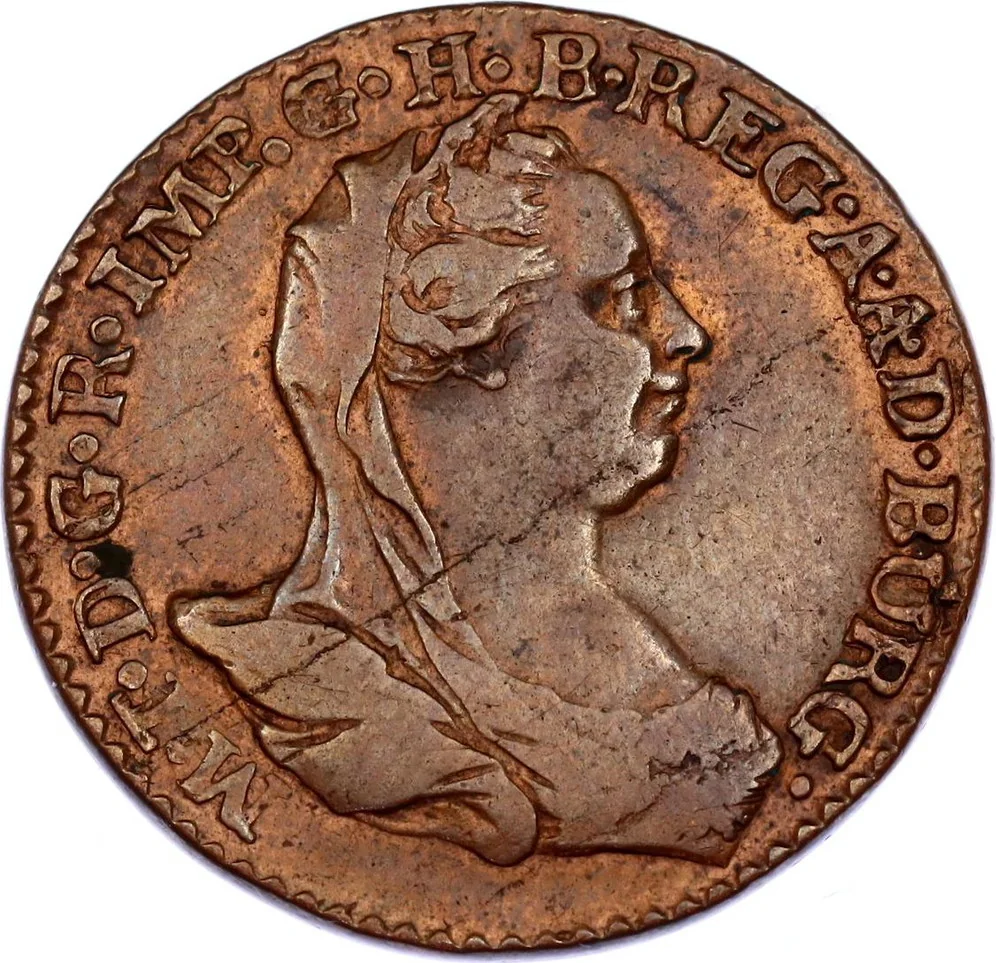
Obverse
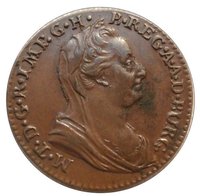
Description:
Veiled right-facing portrait. Legend: "ARIA • HERESIA • EI : RATIA • ROMANORUM IMERATRIX • GERMANIAE • VNGARIE • BOHEMIE • REINA • ARCHIDUX • AVSTRIAE • DVX BVRGVNDIAE"
Inscription:
M·T·D·G·R·IMP·G·H·B·REG·A·A·D·BURG·
Script: Latin
Engraver: Théodore Van Berckel
Reverse
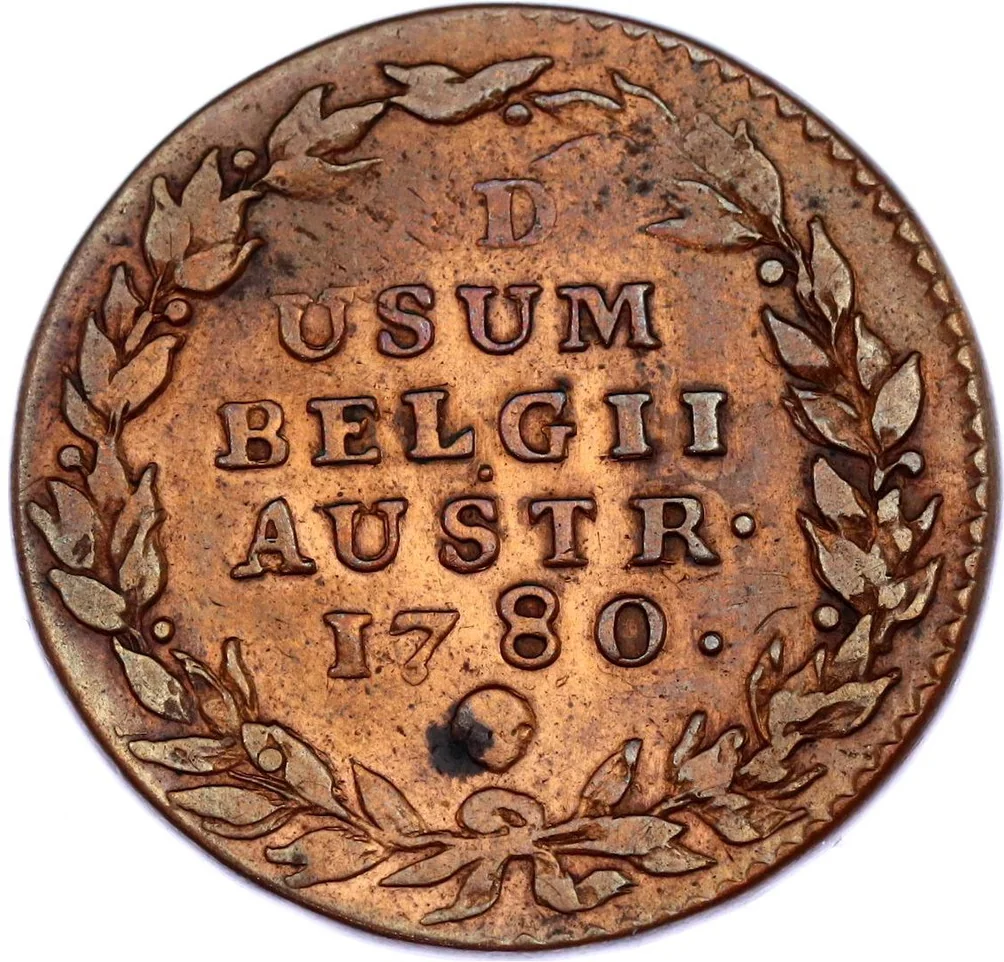
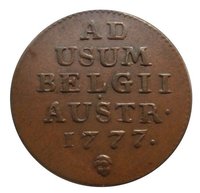
Description:
Inscription in five lines, date and mint mark within wreath.
Inscription:
AD USUM BELGII AUSTR·
1778·
(marque d'atelier)
1778·
(marque d'atelier)
Script: Latin
Engraver: Théodore Van Berckel
Edge
Plain
Mintings
| Year | Mint Mark | Mintage | Quality | Collection |
|---|---|---|---|---|
| 1777 | — | 1,371,501 | ||
| 1778 | — | 1,443,372 | ||
| 1780 | — | — |
Historical background
In 1777, the Austrian Netherlands, roughly comprising modern-day Belgium and Luxembourg, faced a complex and deteriorating monetary situation. The region was a patchwork of different currencies, including domestic issues like Brabant patards and Flemish stuivers, alongside a heavy circulation of foreign coins, particularly Dutch guilders and French louis d'or. This proliferation of coins of varying intrinsic metal values, set by disparate local and foreign authorities, created chronic confusion, facilitated clipping and counterfeiting, and hindered commerce. The core problem was a lack of a unified, authoritative currency system under the Habsburg monarchy's control.
The situation was exacerbated by the global phenomenon of the "Price Revolution," where the influx of silver from the Americas had gradually debased the real value of small silver coinage over centuries. By 1777, the intrinsic silver value of many low-denomination coins in circulation had risen above their official face value. This led to the widespread hoarding or melting down of full-weight coins for profit, leaving primarily worn and lightweight coins in daily use—a classic example of Gresham's Law, where "bad money drives out good." Consequently, public confidence in the currency eroded, causing inflation, market disputes, and economic instability.
Attempting to address this crisis, the government in Vienna, under Empress Maria Theresa, had introduced a new monetary standard in 1755. However, by 1777, these reforms had proven insufficient. The state struggled to enforce its regulations and could not stem the tide of foreign coins or the flight of good domestic specie. The persistent currency chaos of 1777 reflected the broader administrative challenges of governing the Austrian Netherlands and contributed to the economic grievances that would later surface during the Brabant Revolution against Habsburg rule in the late 1780s.
The situation was exacerbated by the global phenomenon of the "Price Revolution," where the influx of silver from the Americas had gradually debased the real value of small silver coinage over centuries. By 1777, the intrinsic silver value of many low-denomination coins in circulation had risen above their official face value. This led to the widespread hoarding or melting down of full-weight coins for profit, leaving primarily worn and lightweight coins in daily use—a classic example of Gresham's Law, where "bad money drives out good." Consequently, public confidence in the currency eroded, causing inflation, market disputes, and economic instability.
Attempting to address this crisis, the government in Vienna, under Empress Maria Theresa, had introduced a new monetary standard in 1755. However, by 1777, these reforms had proven insufficient. The state struggled to enforce its regulations and could not stem the tide of foreign coins or the flight of good domestic specie. The persistent currency chaos of 1777 reflected the broader administrative challenges of governing the Austrian Netherlands and contributed to the economic grievances that would later surface during the Brabant Revolution against Habsburg rule in the late 1780s.
🌟 Uncommon