


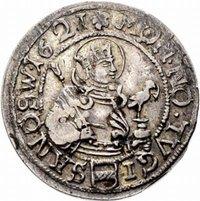
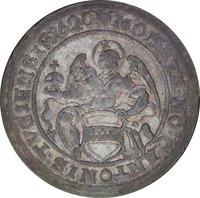
Obverse
Description:
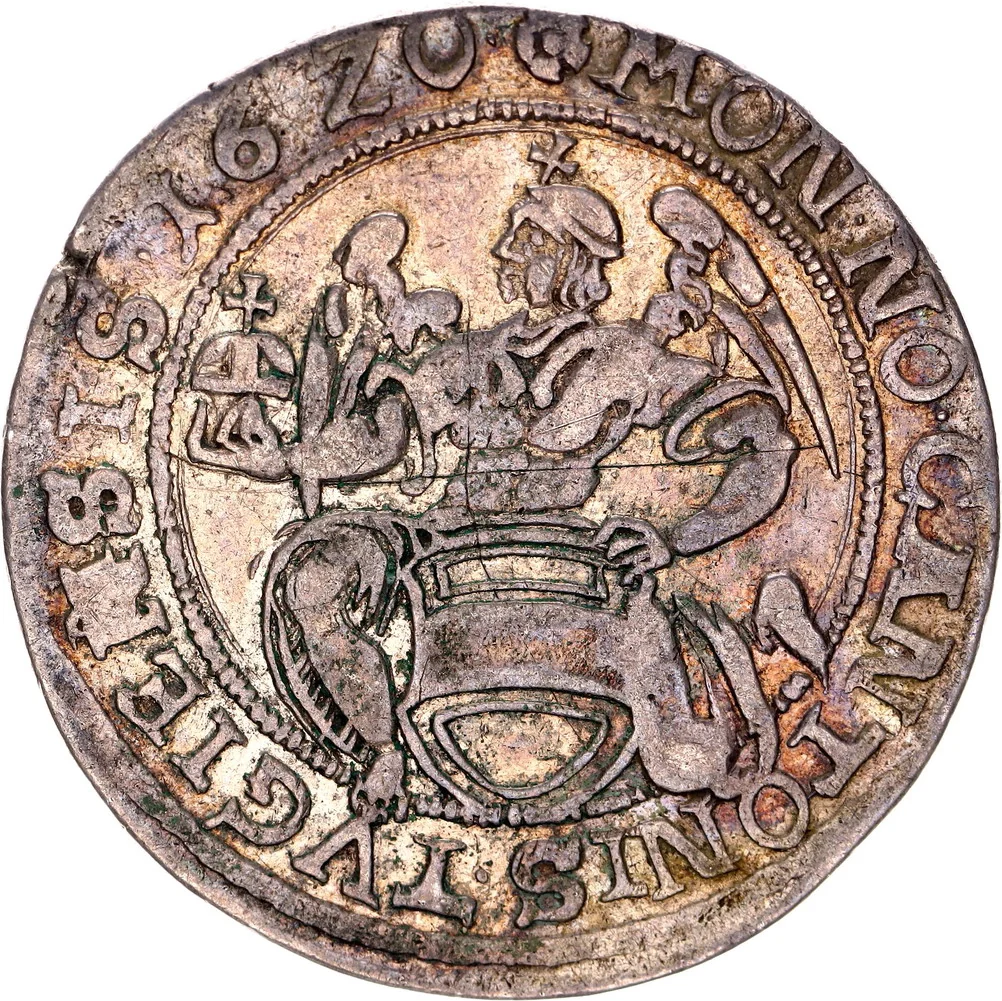
Angel with orb and shield.
Inscription:
*MON•NO•CANTONSIS TVGIEENSIS 1621
Script: Latin
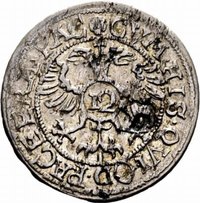
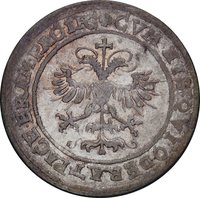
Reverse
Description:
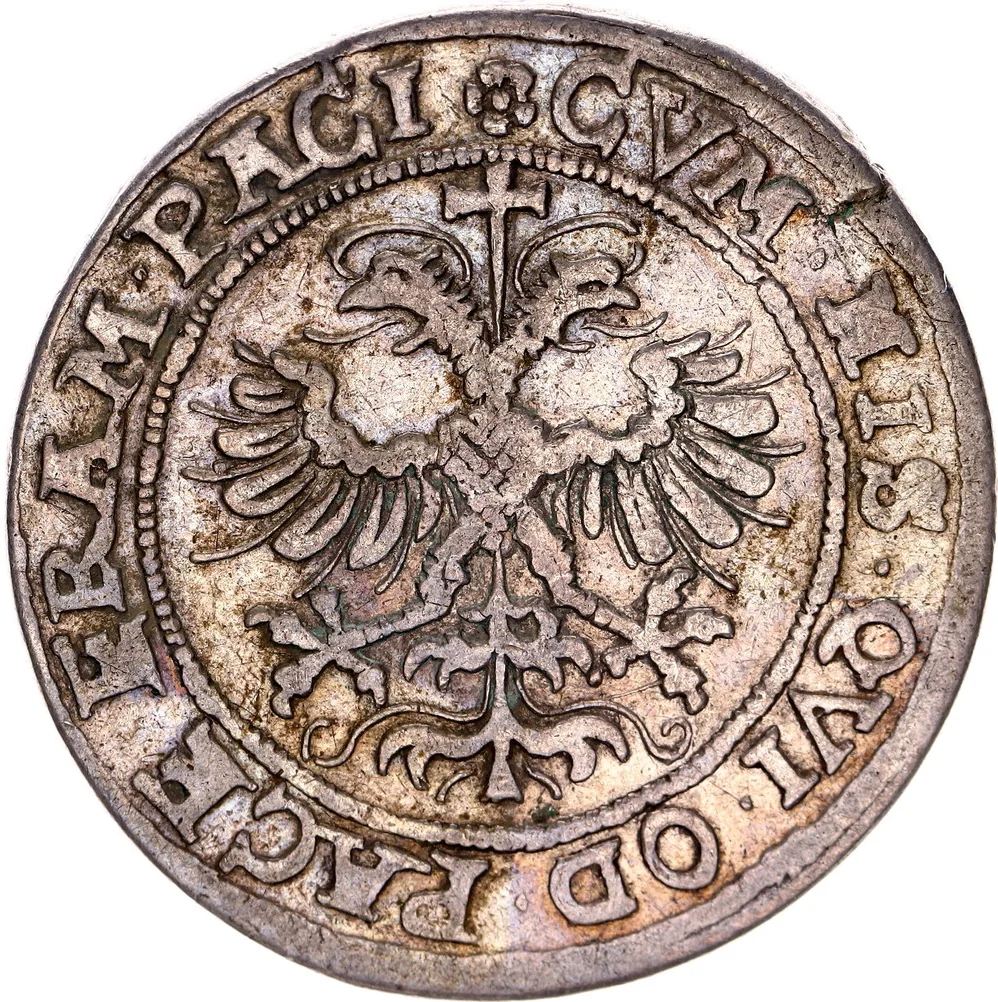
Cross over double-headed eagle.
Inscription:
CVM•MIS•QVI•OD•PACE•ERAM•PACI
Script: Latin
Edge
Mintings
| Year | Mint Mark | Mintage | Quality | Collection |
|---|---|---|---|---|
| 1620 | — | — | ||
| 1621 | — | — | ||
| 1622 | — | — |
Historical background
In 1620, Zug, like other Swiss cantons, operated within a complex and fragmented monetary landscape. It did not mint its own coins but relied heavily on the currency systems of its powerful neighbours and trade partners. The primary large-denomination coins in circulation were foreign: the gold Gulden from the Holy Roman Empire, the silver Taler (or Thaler), and various silver Kreuzers. These coins entered Zug through trade, mercenary service (a major source of income for Swiss men), and payments from foreign powers. Their value, however, was not stable, creating constant challenges for commerce and public finance.
The canton’s authorities faced the perpetual task of setting and adjusting the official exchange rates (Tarife) between these many foreign coins and the smaller local units of account used in daily market transactions. The most important of these units was the Pfennig, with 4 Pfennig making a Batzen and 15 Batzen (or 60 Pfennig) theoretically equalling one Schilling. In practice, the Schilling was a money of account used for bookkeeping, not a physical coin. The constant inflow of coins of varying silver content from France, Italy, and the German states led to frequent official re-evaluations to prevent the outflow of good coinage (Gresham’s Law) and to stabilise local prices.
This monetary fragmentation mirrored the political reality of the Old Swiss Confederacy, where each canton managed its own economic affairs. For the farmers, craftspeople, and officials of Zug in 1620, this meant daily commerce required careful attention to both the type and the wear of each coin. The outbreak of the Thirty Years’ War (1618-1648) in neighbouring regions would soon exacerbate these difficulties, leading to increased monetary chaos, inflationary pressures, and a greater reliance on debased foreign coinage, setting the stage for a period of significant economic strain in the decades to follow.
The canton’s authorities faced the perpetual task of setting and adjusting the official exchange rates (Tarife) between these many foreign coins and the smaller local units of account used in daily market transactions. The most important of these units was the Pfennig, with 4 Pfennig making a Batzen and 15 Batzen (or 60 Pfennig) theoretically equalling one Schilling. In practice, the Schilling was a money of account used for bookkeeping, not a physical coin. The constant inflow of coins of varying silver content from France, Italy, and the German states led to frequent official re-evaluations to prevent the outflow of good coinage (Gresham’s Law) and to stabilise local prices.
This monetary fragmentation mirrored the political reality of the Old Swiss Confederacy, where each canton managed its own economic affairs. For the farmers, craftspeople, and officials of Zug in 1620, this meant daily commerce required careful attention to both the type and the wear of each coin. The outbreak of the Thirty Years’ War (1618-1648) in neighbouring regions would soon exacerbate these difficulties, leading to increased monetary chaos, inflationary pressures, and a greater reliance on debased foreign coinage, setting the stage for a period of significant economic strain in the decades to follow.
✨ Legendary