

2 Pence – United Kingdom
United Kingdom
Context
Material
References
KM: #Click to copy to clipboard615
Numista: #24848
Value
Bullion value: $2.68
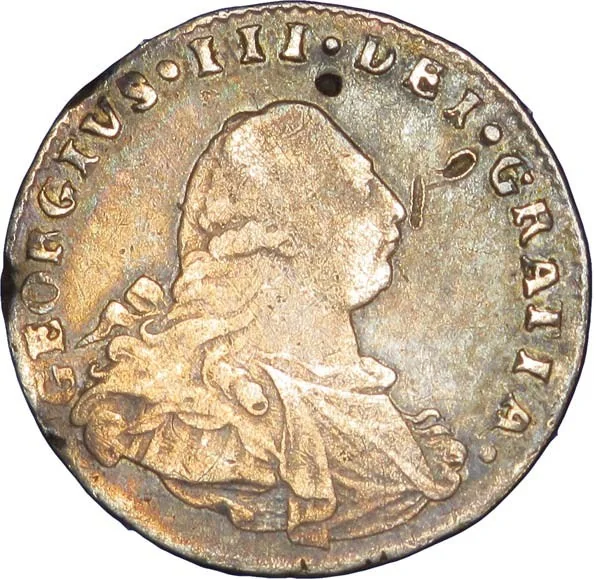
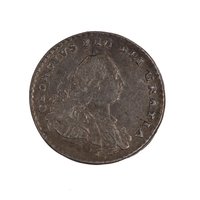
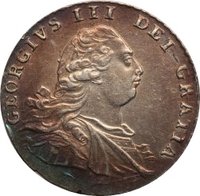
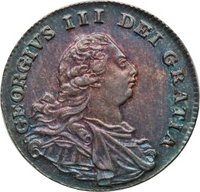
Obverse
Description:
King George III bust right, legend around.
Inscription:
GEORGIVS III DEI GRATIA
Script: Latin
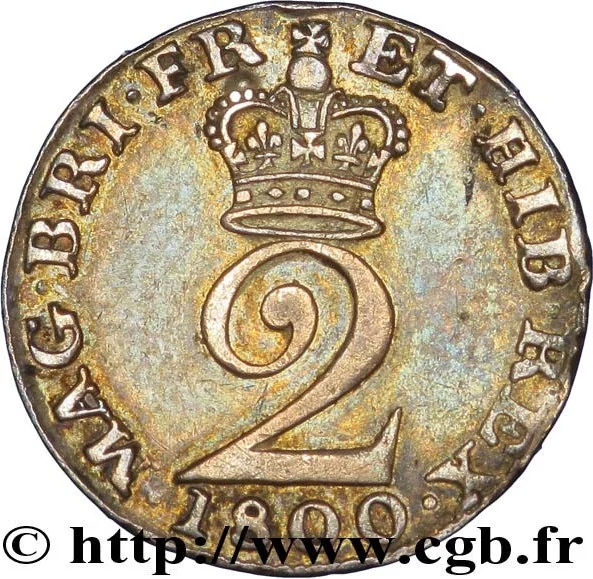
Reverse
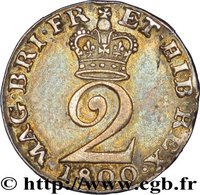
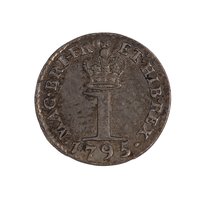
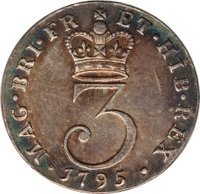
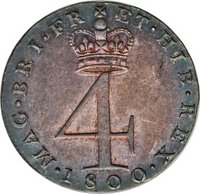
Description:
Crowned denomination above date, legend surrounding.
Inscription:
MAG·BRI·FR·ET·HIB·REX
2
·1800·
2
·1800·
Script: Latin
Edge
Mintings
| Year | Mint Mark | Mintage | Quality | Collection |
|---|---|---|---|---|
| 1795 | — | — | ||
| 1800 | — | — |
Historical background
In 1795, the United Kingdom was grappling with a severe currency crisis rooted in the financial strains of the ongoing French Revolutionary Wars. The government, under Prime Minister William Pitt the Younger, was financing the conflict through heavy borrowing and the issuance of paper money, while also requiring vast amounts of gold to fund allies and armies abroad. This led to a critical drain of gold bullion from the Bank of England, which served as the foundation for the country's paper currency. As public confidence in the convertibility of banknotes into gold waned, a classic run on the Bank began, threatening its solvency and the stability of the entire monetary system.
The situation was exacerbated by poor harvests in 1794 and 1795, which drove up food prices and caused widespread social unrest, including the "Food Riots." The scarcity of small-denomination coinage for everyday wages and market purchases became acute, as the Royal Mint had ceased large-scale production of gold and silver coins for circulation. This forced communities and employers to resort to makeshift solutions, such as issuing private trade tokens and local promissory notes, further highlighting the breakdown of the official currency system. The combination of wartime expenditure, bullion drain, and domestic economic hardship created a perfect storm of monetary instability.
In response, the government took the extraordinary measure of authorising the Bank of England, via an Order in Council in February 1797, to suspend cash payments. This meant the Bank was no longer obliged to convert its banknotes into gold upon demand, a policy that would be formalised by the Bank Restriction Act later that year. Thus, 1795 stands as the pivotal year of strain that directly led to the establishment of the "Restriction Period" (1797-1821), marking Britain's departure from the gold standard and its first experiment with an inconvertible paper currency.
The situation was exacerbated by poor harvests in 1794 and 1795, which drove up food prices and caused widespread social unrest, including the "Food Riots." The scarcity of small-denomination coinage for everyday wages and market purchases became acute, as the Royal Mint had ceased large-scale production of gold and silver coins for circulation. This forced communities and employers to resort to makeshift solutions, such as issuing private trade tokens and local promissory notes, further highlighting the breakdown of the official currency system. The combination of wartime expenditure, bullion drain, and domestic economic hardship created a perfect storm of monetary instability.
In response, the government took the extraordinary measure of authorising the Bank of England, via an Order in Council in February 1797, to suspend cash payments. This meant the Bank was no longer obliged to convert its banknotes into gold upon demand, a policy that would be formalised by the Bank Restriction Act later that year. Thus, 1795 stands as the pivotal year of strain that directly led to the establishment of the "Restriction Period" (1797-1821), marking Britain's departure from the gold standard and its first experiment with an inconvertible paper currency.
💎 Very Rare