

6 Kreuzers – Austrian Empire
Austria

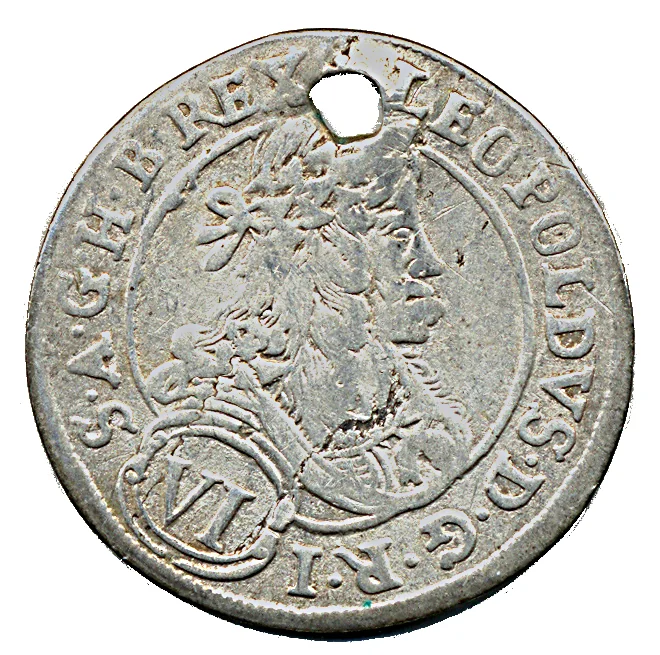
Obverse
Description:
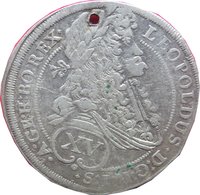
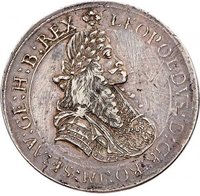
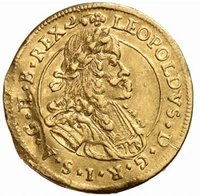
Leopold I portrait right; value in Roman numerals in circles.
Inscription:
LEOPOLDVS·D·G·R·I / S·A·G·H·B REX
Script: Latin
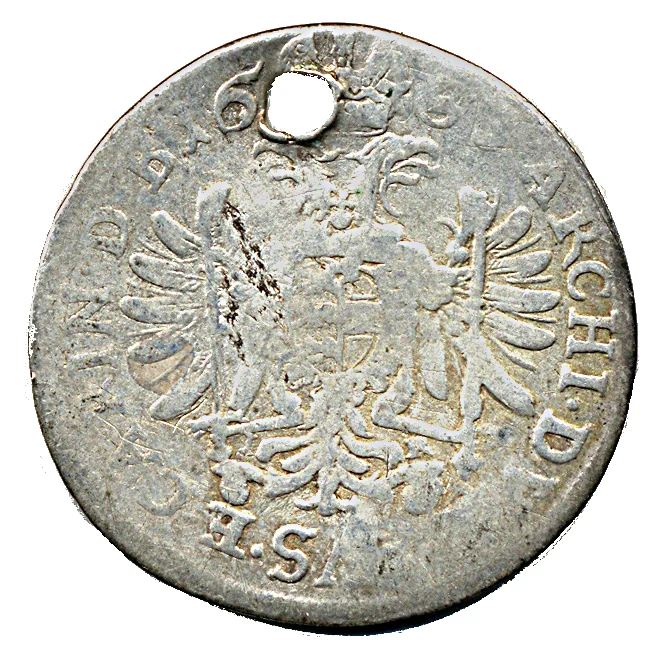
Reverse
Description:
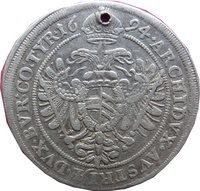
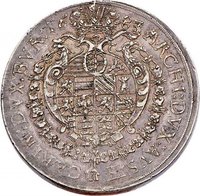
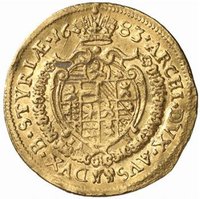
Double-headed eagle holding a shield with Carinthian and Austrian arms.
Inscription:
ARCHIDVX AVS ET CARIN D B 1686
Script: Latin
Edge
Plain
Mints
| Name | Mark |
|---|---|
| Sankt Veit | — |
Mintings
| Year | Mint Mark | Mintage | Quality | Collection |
|---|---|---|---|---|
| 1683 | IR | — | ||
| 1684 | IR | — | ||
| 1686 | H-L | — | ||
| 1690 | CS | — |
Historical background
In 1683, the Austrian Empire, more accurately referred to as the Habsburg Monarchy, operated under a complex and often chaotic monetary system. There was no single, unified imperial currency. Instead, the system was a fragmented mosaic of various silver and gold coins minted by different territories within the Habsburg realms, alongside a flood of foreign coins from trade. The most important large silver coin was the Reichsthaler (Imperial Thaler), a standard used across the Holy Roman Empire. However, the everyday currency for most transactions was the smaller Kreuzer, with 60 to 70 Kreuzer theoretically equal to one Reichsthaler, though exchange rates fluctuated wildly.
This fragmentation was exacerbated by chronic financial strain, primarily due to the near-constant state of warfare against the Ottoman Empire, culminating in the siege of Vienna itself in 1683. To fund massive military expenditures, the Habsburg state frequently resorted to debasement—reducing the precious metal content in coins while keeping their face value the same. This practice, alongside the circulation of underweight foreign coins (particularly from the German states), led to severe inflation, a loss of public trust in the currency, and complicated trade. The government's attempts to fix legal exchange rates often failed against market realities.
Consequently, the year 1683 represented a peak of monetary disorder within a financially desperate empire. The successful defense of Vienna and the subsequent offensive would, however, create a turning point. The vast resources required to finance the long wars of reconquest and expansion into Hungary later in the 1680s and 1690s would eventually force significant financial and monetary reforms. These efforts laid the groundwork for a more standardized system, most notably the creation of the Conventionsthaler in the following century, marking the slow journey toward a more unified Austrian currency.
This fragmentation was exacerbated by chronic financial strain, primarily due to the near-constant state of warfare against the Ottoman Empire, culminating in the siege of Vienna itself in 1683. To fund massive military expenditures, the Habsburg state frequently resorted to debasement—reducing the precious metal content in coins while keeping their face value the same. This practice, alongside the circulation of underweight foreign coins (particularly from the German states), led to severe inflation, a loss of public trust in the currency, and complicated trade. The government's attempts to fix legal exchange rates often failed against market realities.
Consequently, the year 1683 represented a peak of monetary disorder within a financially desperate empire. The successful defense of Vienna and the subsequent offensive would, however, create a turning point. The vast resources required to finance the long wars of reconquest and expansion into Hungary later in the 1680s and 1690s would eventually force significant financial and monetary reforms. These efforts laid the groundwork for a more standardized system, most notably the creation of the Conventionsthaler in the following century, marking the slow journey toward a more unified Austrian currency.
✨ Legendary