

1 cent – United States
Add to wishlist
United States
Context
Material
References
KM: #
Numista: #24559
Value
Exchange value: 0.01 USD = $0.01
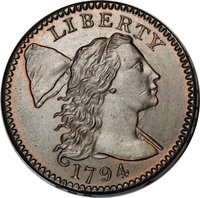
Obverse
Description:
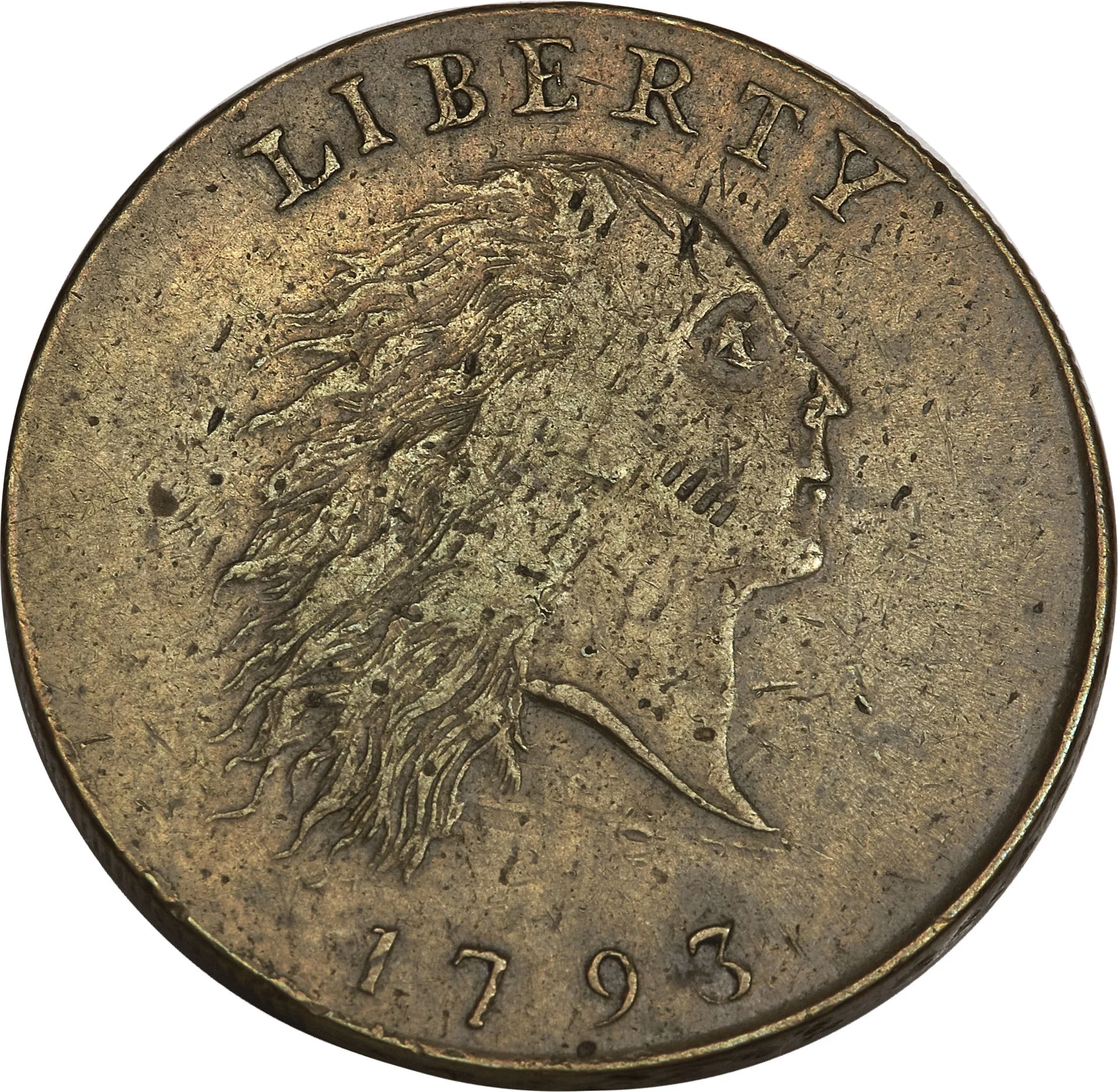
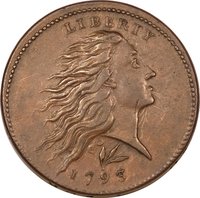
The "Flowing Hair" Liberty head was considered daring and poorly received by the public.
Inscription:
LIBERTY
1793
1793
Script: Latin
Engraver: Henry Voigt
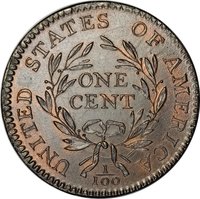
Reverse
Description:
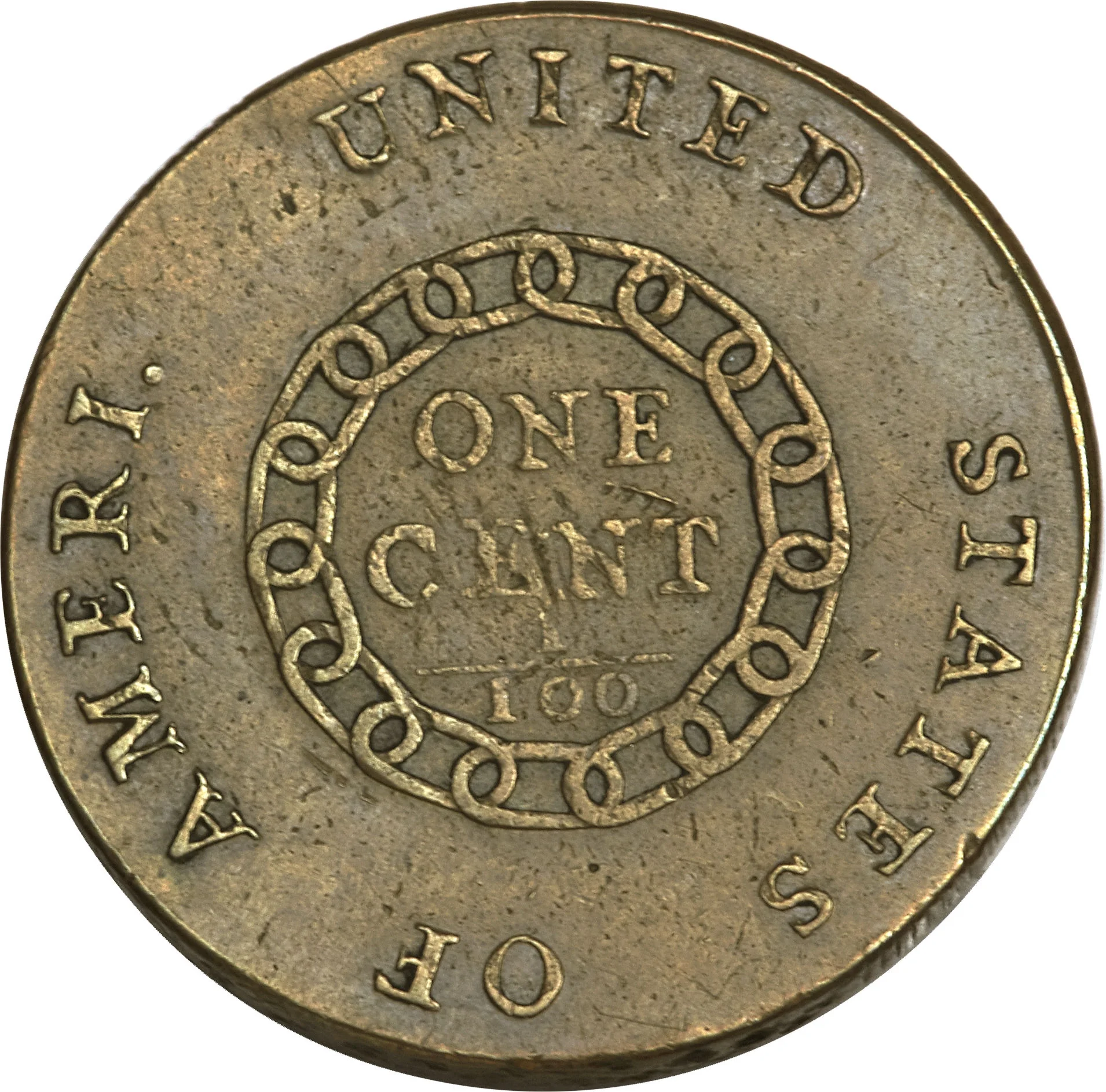
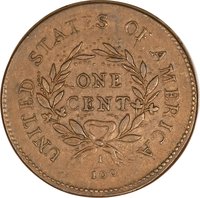
A chain design, representing face value, was poorly received for evoking confinement and later replaced with a plant crown for a sense of freedom.
Inscription:
UNITED STATES OF AMERI.
ONE CENT
1/100
ONE CENT
1/100
Script: Latin
Engraver: Henry Voigt
Edge
Vine with leaves and bars are found on the edge of this coin.
Mints
| Name | Mark |
|---|---|
| United States Mint of Philadelphia | — |
Mintings
| Year | Mint Mark | Mintage | Quality | Collection |
|---|---|---|---|---|
| 1793 | — | 36,103 |
Historical background
In 1793, the United States was navigating the complex and often chaotic aftermath of its financial revolution. The new federal government, operating under the Constitution ratified just four years prior, was actively constructing a national monetary system to replace the patchwork of foreign and state currencies that had dominated the colonial and Confederation periods. The cornerstone of this effort was the Coinage Act of 1792, which established the U.S. Mint in Philadelphia and defined the nation's currency in a bimetallic standard, pegging both gold and silver to the dollar. However, the Mint's operations in 1793 were in their infancy, producing only a limited number of copper cents and half cents; the first silver coins would not be struck until 1794, and gold coins until 1795.
Consequently, a diverse mix of older currencies remained in widespread daily use, creating a challenging economic environment. Spanish milled dollars (pieces of eight), British guineas, and French livres circulated alongside various state banknotes and private scrip, all with fluctuating and locally determined values. This proliferation of currencies made commerce cumbersome, requiring merchants and citizens to consult published "currency tables" to navigate exchange rates and metal purity. The federal government's own financial instruments, particularly the "Bank of the United States" notes (the national bank had been chartered in 1791), were gaining traction but were not yet a universal medium of exchange, especially in rural areas.
Thus, 1793 represents a year of transition between two monetary worlds. While Alexander Hamilton, Secretary of the Treasury, had successfully laid the theoretical and legislative foundation for a uniform national currency, the physical reality lagged behind. The American economy still largely ran on a confusing jumble of foreign specie and unreliable paper, even as the machinery of the Mint slowly began to produce the symbols of a sovereign financial identity. The full realization of a stable, uniform federal currency remained a work in progress, awaiting both greater mint output and public confidence.
Consequently, a diverse mix of older currencies remained in widespread daily use, creating a challenging economic environment. Spanish milled dollars (pieces of eight), British guineas, and French livres circulated alongside various state banknotes and private scrip, all with fluctuating and locally determined values. This proliferation of currencies made commerce cumbersome, requiring merchants and citizens to consult published "currency tables" to navigate exchange rates and metal purity. The federal government's own financial instruments, particularly the "Bank of the United States" notes (the national bank had been chartered in 1791), were gaining traction but were not yet a universal medium of exchange, especially in rural areas.
Thus, 1793 represents a year of transition between two monetary worlds. While Alexander Hamilton, Secretary of the Treasury, had successfully laid the theoretical and legislative foundation for a uniform national currency, the physical reality lagged behind. The American economy still largely ran on a confusing jumble of foreign specie and unreliable paper, even as the machinery of the Mint slowly began to produce the symbols of a sovereign financial identity. The full realization of a stable, uniform federal currency remained a work in progress, awaiting both greater mint output and public confidence.
💎 Very Rare